If your dog hides, shakes, paces, or tries to bolt the moment the sky starts banging, you are not alone, and he is not being dramatic. A dog scared of fireworks is genuinely frightened: the noise is sudden, loud, and impossible to escape. He isn't being naughty, he's scared, and the good news is that's something you can help with. Below is a calm-down plan for the night itself, plus the longer game that makes next year easier.
Why a dog scared of fireworks reacts the way he does
Fireworks tick every box for a dog's alarm system. The bangs are sudden and loud, they come at random so there's no warning, and they're paired with bright flashes and a smell of smoke. Worst of all, there's nowhere to run to. To a dog, this can feel like the world is exploding for no reason, with no off switch.
That mix of unpredictable and inescapable is exactly what tips a noise-sensitive dog over the edge. For the full breakdown of what's going on in his head, see why are dogs scared of fireworks.
On the night: a calm-down plan
You can do a lot to help your dog feel safer, even with no advance notice. Work through these in order, and lean on whatever helps your particular dog most.
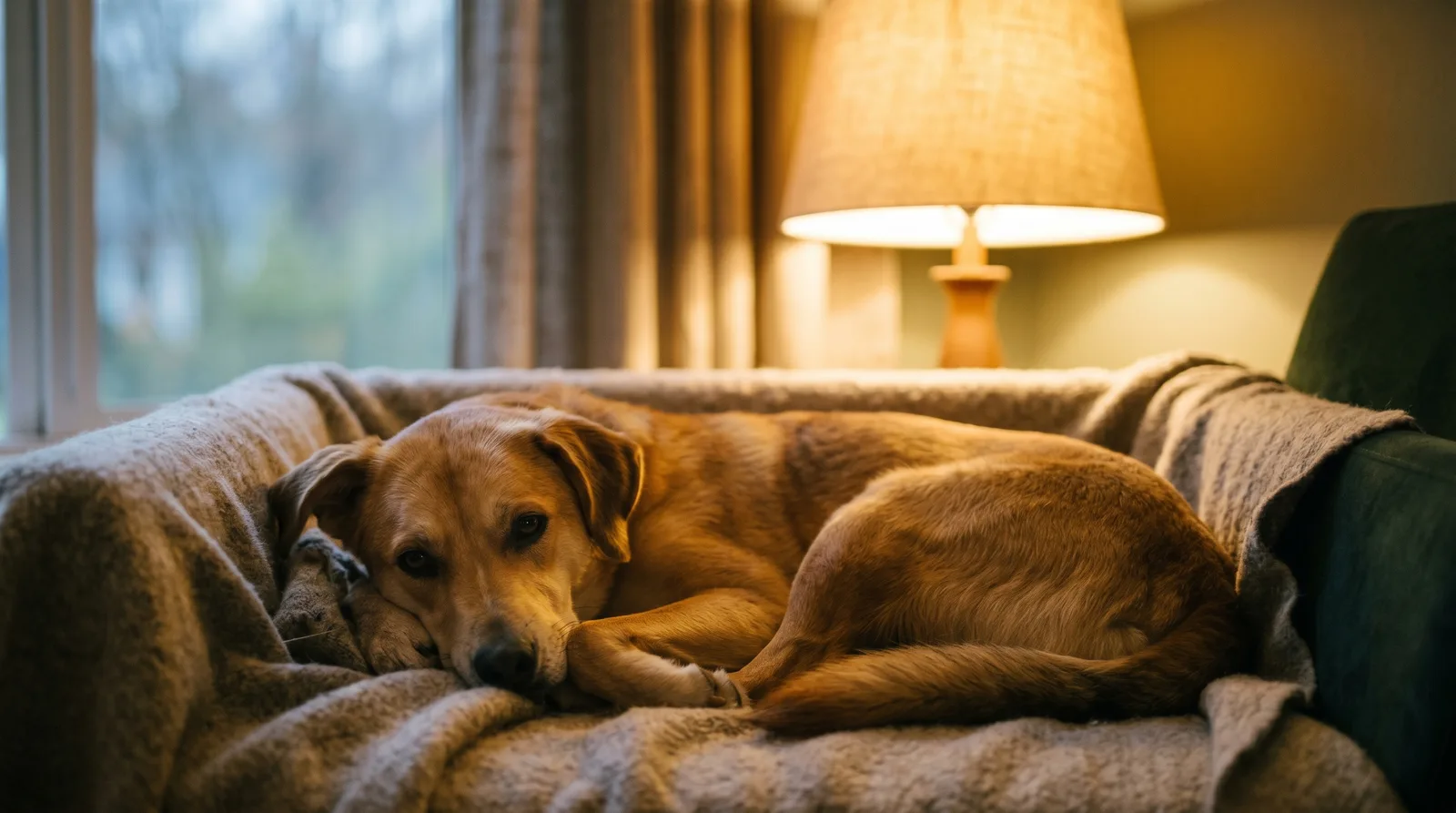
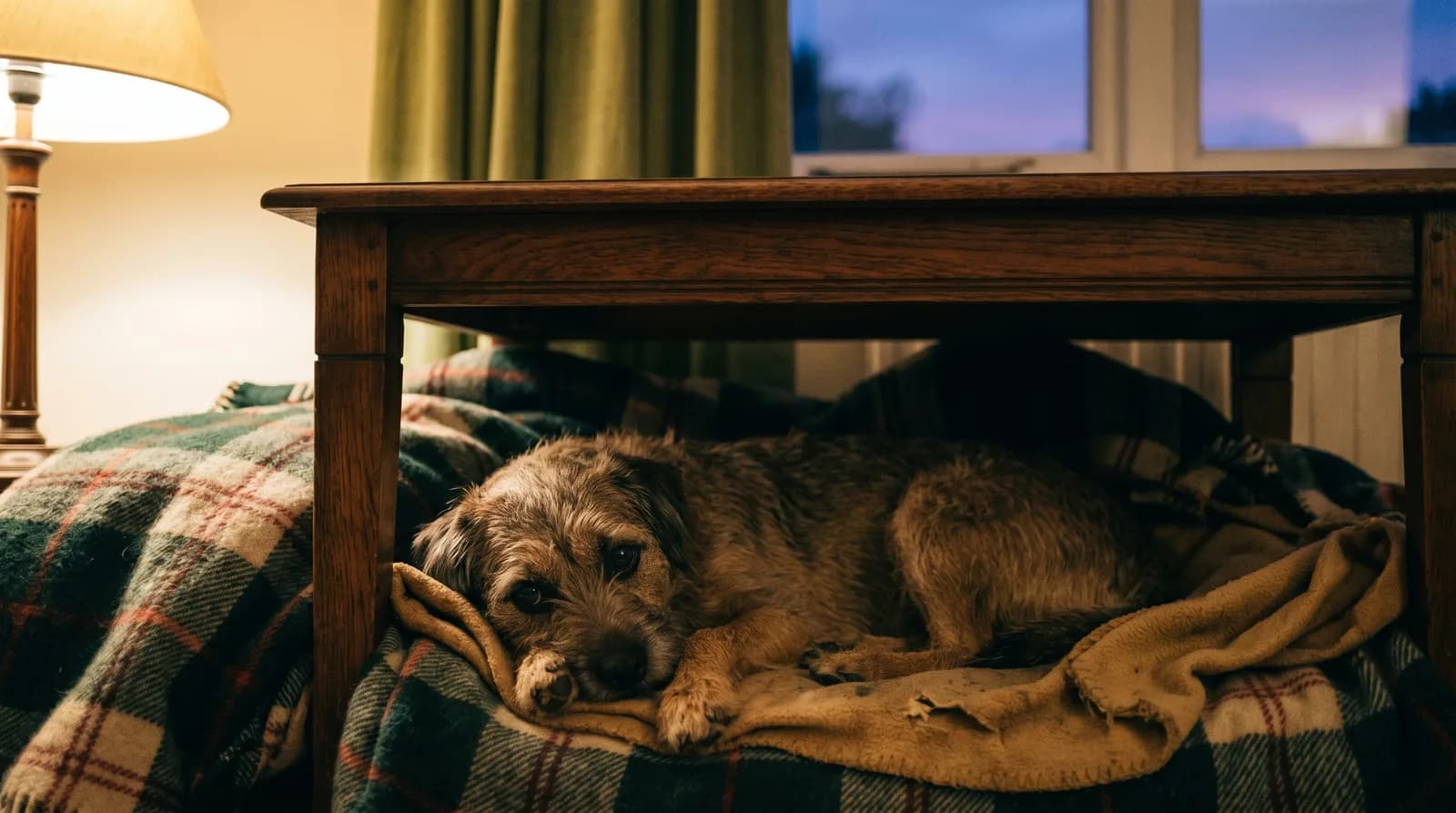
- Build him a safe den. A covered crate or a quiet inner room, ideally one he already chooses to hide in. Add his bed and a t-shirt that smells like you, and let him come and go freely.
- Muffle the sound. White noise, a fan, the TV, or calm music, with the curtains closed to hide the flashes. A good walk earlier in the day, well before dark, helps too.
- Stay calm and act normal. Your dog reads you. If you carry on as usual, you're telling him this is no big deal. Comfort him if he wants it: a calm voice, a steady hand, sitting nearby. You cannot make fear worse by being kind.
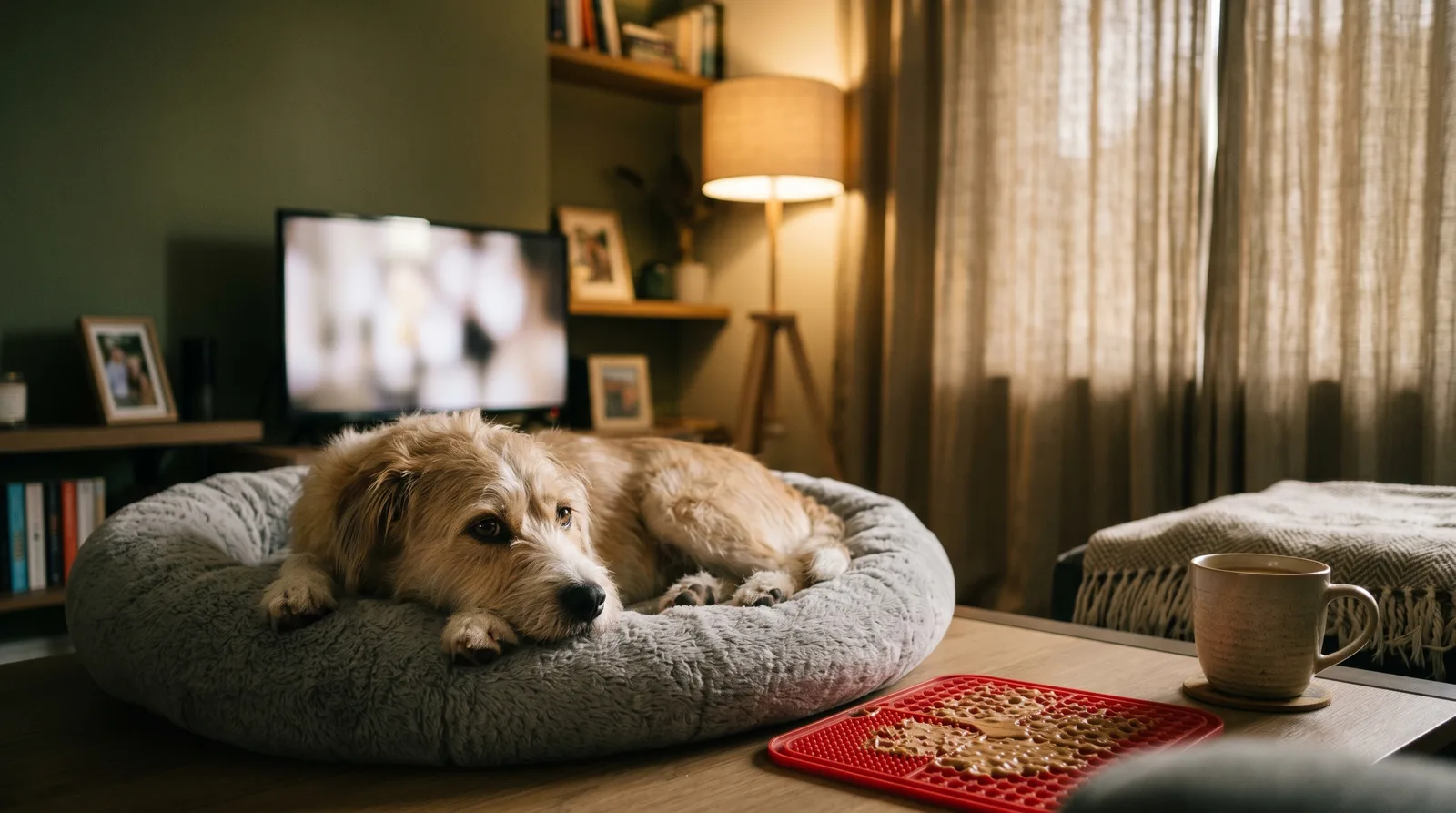
- Give him something good to do. A stuffed lick mat, a stuffed Kong, or a long-lasting chew. Calm chewing and licking help some dogs settle and ride it out.
- Start sound desensitization off-season. This is the longer game (more on it below), and it's what makes future fireworks genuinely easier.
If he's already over threshold
Some nights the fireworks win, and your dog is too frightened to eat, settle, or take any food you offer. That's your signal he's over threshold, and the plan changes: stop trying to train or tempt him, and just keep him safe.
Don't force a chew, a wrap, or eye contact on him. Let him hide wherever he feels safest, sit nearby if he wants you, and dim as much of the chaos as you can: lights low, curtains shut, sound up to mask the bangs. Make sure doors and gates are latched, because a panicking dog may try to bolt. Your only job now is to be his calm, safe anchor until the noise passes.
The longer game: sound desensitization
Management gets you through the night. To actually change how your dog feels, the work happens in the quiet weeks between events. Slowly and gently exposing him to recorded firework sounds at a low volume, always paired with good things and always below his threshold, teaches his nervous system that the bangs no longer mean danger. This is the heart of helping a noise-sensitive dog, and it's covered in depth in our pillar guide on dog noise phobia, fireworks, and thunderstorms.
If you want the step-by-step version, our off-season sound desensitization guide walks through the volume ladder week by week, and our July 4th plan covers the run-up to the big night when time is short. Whichever you start with, the principle is the same: tiny steps, always below threshold, always paired with something he loves.
You haven't failed your dog because he's scared of fireworks, and he isn't broken. With a calm den, a bit of management on the night, and some patient practice off-season, most dogs cope far better than their owners expect. He's scared, not naughty, and that's something you can work on. If the fear is severe, your vet or a qualified force-free behaviour professional can help.
This is training guidance, not veterinary or medical advice.