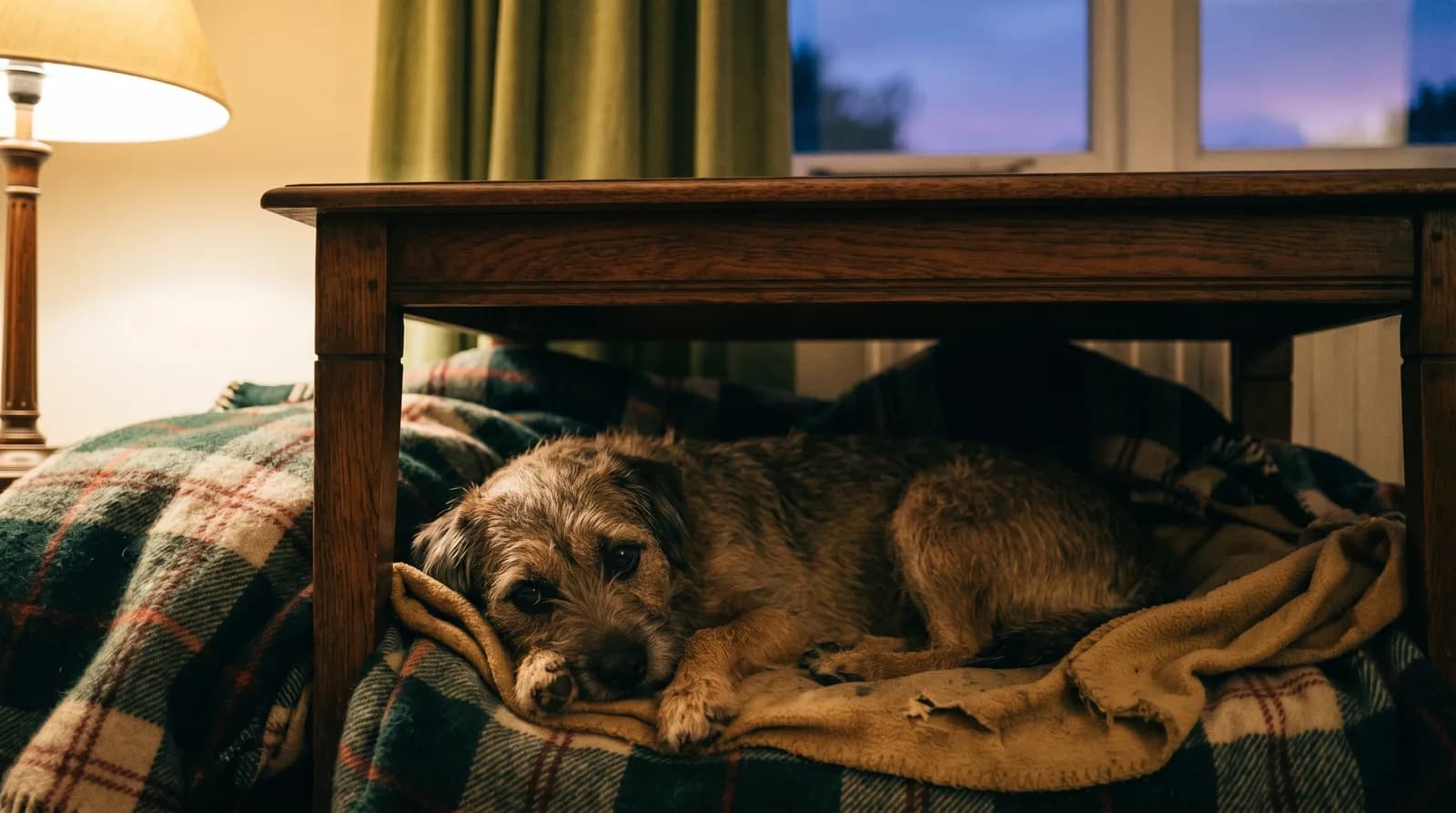
The first bang goes off, and he's shaking behind the toilet
Trembling, panting, scratching at the back door, and lately he won't go out after dark either. He isn't being dramatic. That's fear, and fear of noise can be trained, ideally starting weeks before the next big night. Your coach makes a 30-day plan for your dog, with short daily sound sessions you do at home.
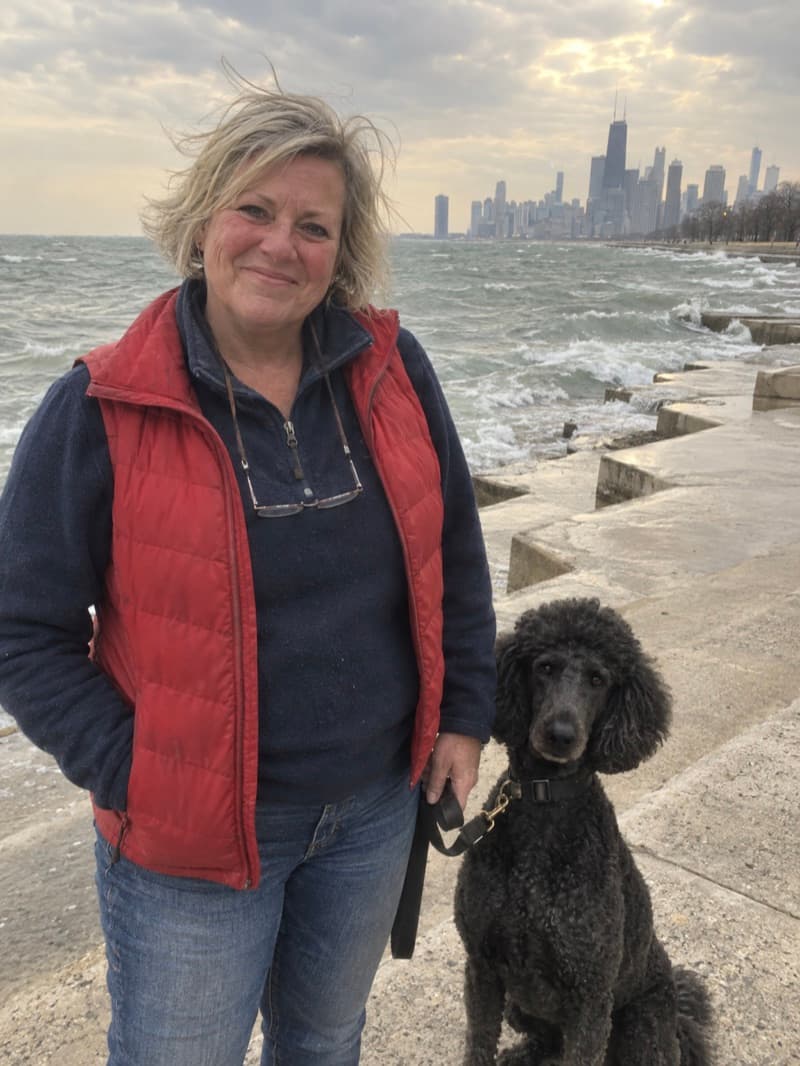
Your plan is made by Hannah Kowalski. Dog behavior consultant, specializing in fearful, sensitive, and senior dogs.
 4.4 on Trustpilot. 2,966 dog owners started before you.
What noise anxiety in dogs really is
A dog scared of fireworks isn't reacting to loudness alone. He's reacting to a sound he can't predict, can't locate and can't get away from, and his body goes into alarm before he has any chance to think. Each bad night teaches him a little more, which is why the fear rarely stays with the fireworks. It spreads to thunder, to a car door slamming, to the smell of smoke, to the dark itself. The good news is that the same learning works in reverse. If he hears the sound at a volume he can handle, and something good follows every time, the sound slowly stops meaning danger. That work happens on quiet days, weeks before July 4, New Year's Eve, Guy Fawkes Night or Diwali, not on the night itself.
Does this sound familiar?
You plan your evenings around the calendar
You know the dates by heart. You skip the neighbor's party, stay home on the Fourth and check the forecast every summer afternoon, because you can't leave him alone when the sky starts banging.
He won't go out after dark anymore
It started after one bad night. Now he plants his feet at the door once the sun goes down, and you're standing in the yard at 10pm hoping he'll pee before something pops two streets away.
His favorite treat suddenly means nothing
Normally he'd do anything for cheese. With thunder rolling in he's panting in the bathtub, ears flat, and won't even sniff it. That's how you know he's past the point where he can take anything in.
Now it's the vacuum and the oven timer too
A dropped pan, a slammed cupboard, the smoke alarm beeping for a new battery. Every month there seems to be one more sound that sends him running, and you've started tiptoeing around your own house.
Why waiting it out usually makes the next time harder
Most owners do the sensible thing: get through the night, then hope it's better next year. The trouble is that every frightening night is a lesson too. His brain links the bangs to everything around them, the early dark, the smell in the air, the hours between 8pm and midnight, even you closing the curtains. So by next year he's not only scared of fireworks, he's scared of the whole evening that leads up to them. That is one reason the fear often grows over the years instead of fading.
The approach that changes how he feels is slow and quiet. You play the sounds he fears at a volume so low he barely flicks an ear, and every time the sound plays, something he loves follows. That's desensitization paired with counter-conditioning. Only when he stays relaxed twice in a row does the volume go up a notch. At the same time you build a safe den, a covered spot he already likes, and make it a good place on ordinary days with meals and chews, so it isn't only the place he goes when the world is exploding. Starting a few weeks ahead gives this time to settle in before the real thing.
On the night itself the goal is to keep him safe, not to train. Comforting him is fine: kindness doesn't reinforce fear, and a calm hand on his back won't teach him to be scared. Let him hide where he wants and don't pull him out, and keep kids from reaching into his hiding spot. Frightened dogs bolt, often through a door that's open for only a second, so walk him on a leash before dark, keep him leashed in the yard and make sure his ID tag and microchip details are up to date. If he hurts himself trying to escape or the panic lasts for hours, talk to your vet. Some dogs need more support than training alone can give.
What your first seven days look like
No class to drive to and no long sessions. A few minutes a day at home, on days when nothing is going off outside. This is how a plan for noise anxiety usually starts. Yours changes where your answers call for it, for example if thunder is his worst trigger or if he's started refusing evening walks.
Write down his sounds and pick his den
List every sound that worries him, from fireworks down to the dishwasher, and how he shows it: panting, pacing, hiding, trying to get out. Then choose the den, usually the spot he already runs to, like a closet, under a desk or a crate with a blanket over it.
Make the den the best place in the house
Feed his meals there, give him a long chew there, leave the door open so he can come and go. You're teaching him the den is good on a calm Tuesday, so on a loud night it already feels safe.
The first sounds, at a whisper
A recording of the sound he fears least, at a volume where he notices it but keeps eating. Sound plays, chicken follows. Five minutes, and you stop while he's still relaxed, never after he's stopped taking food.
A calm evening routine and a safe exit plan
Walk him on a leash before dusk, check his tag and collar fit, and rehearse your night setup on a quiet evening: curtains, soft background sound, den ready. That way the setup itself doesn't become a warning that bangs are coming.
Someone who adjusts the plan when a night goes badly
Your coach reads your answers, which sounds set him off, how long he takes to calm down, if you live on a quiet street or in an apartment with fireworks every weekend, and makes your plan around that. When a storm catches you halfway through, or he suddenly won't touch his food during practice, you tell your coach what happened and get the next step for your dog, not a generic tip.
Hannah Kowalski · Dog behavior consultant, specializing in fearful, sensitive, and senior dogs
Works with dogs who startle easily: at fireworks, storms, new places, or a new home. Hannah shaped the calm routines and gentle pacing in DoggoPlan, and builds the plans for fearful and newly adopted dogs, so every exercise stays within their limits and never moves too fast.
Owners whose dogs used to hide from every bang

After a few weeks she's noticeably calmer, though the doorbell is still a thing. For the price I didn't expect this. Only downside: I'd have liked a few more videos.

The plan built it up minute by minute, exactly around what I'd filled in. Now he stays calm in his bed when I run errands.

The exercises are short and playful, which works far better with a pup than being strict. He now comes back nine times out of ten when I call.
What owners ask us about noise anxiety
The fireworks start before 30 days are up. Is it still worth starting now?
Since the fireworks he won't go outside after dark. What can I do?
We live where fireworks go off for weeks. Can we still train?
When should I talk to my vet?
Will he ever be fine with fireworks?
Is it a subscription?
This is training guidance, not veterinary advice. If behavior changes suddenly, or your dog growls or snaps, always involve your vet or a qualified behavior professional.
If it doesn't work for you, you get your money back
You have 60 days. No small print, no form, nothing to prove. Just email us and we refund every cent.
$59 one-time, no subscription, 60-day money-back guarantee with no conditions.
Read more about fireworks and noise fear
- Dog noise phobia: fireworks & thunderstorms guide
- Dog scared of loud household noises: what helps
- New Year's Eve fireworks: keeping your dog calm
- How to calm your dog during July 4th fireworks
- Sound desensitization before fireworks season
- Thunderstorm anxiety in dogs: a calm-down plan
- Dog scared of fireworks? How to help him cope
- Why are dogs scared of fireworks? The reasons
Working on something else?
- Dog lunges or barks on walks
- Dog can't be left alone
- Dog is scared of almost everything
- Trainer, behaviorist or an online plan?