A training plan made around your dog, for less than one private session
You've looked at trainers, behaviorists and courses, and every option seems either too expensive or too generic for the dog you actually have. Most lunging, barking and panic comes from stress and fear, and a dog can learn to feel calmer when the steps are small enough. Your coach makes a plan around your dog and your week, with short daily exercises, and you stay the one holding the leash.
Your plan is made by Hannah Kowalski. Dog behavior consultant, specializing in fearful, sensitive, and senior dogs.
What it costs, plainly
A plan made for your dog costs $59 in the US (£45 UK, €47 Ireland, A$79, NZ$99, C$79). One-time, no subscription, nothing renews. For comparison, here is what the other routes typically cost in the US and UK in 2026.
| Route | What you'd typically pay |
|---|---|
| Private session with a dog trainer | about $100 (US), £74 (UK) |
| First consult with a veterinary behaviorist (US) | $475 to $665 |
| First consult with a clinical animal behaviourist (UK) | £315 to £535 |
| Separation anxiety trainer, first month (US) | $650 to $1,000 |
| Board and train, 2 weeks (US) | $1,500 to $2,900 |
| DoggoPlan, a plan your coach makes for your dog | $59 one-time |
 4.4 on Trustpilot. 2,966 dog owners started before you.
The short answer
An online dog training plan gives you the steps a good private trainer would give you, written for your dog, and you practice them yourself on your own walks and in your own home. It costs less than a single session with a US trainer (about $100 an hour, or about £74 in the UK), and a lot less than a veterinary behaviorist ($475 to $665 for a first consult at the US clinics we checked) or two weeks of board and train (often $1,500 to $2,900). What it can't do is stand next to you on the sidewalk. So it suits everyday reactivity, worry and alone-time trouble where nobody is at risk. If your dog has bitten, or the change came out of nowhere, a vet and a qualified behavior professional come first.
Does this sound like you?
You paid for three sessions and you still walk at 6am
The trainer was kind and the hour went well. Then the week happened, the dog two houses down was out in the yard again, and you didn't know which step you were supposed to be on.
You found a behaviorist and closed the tab at the price
Six hundred dollars for a first visit, before any follow-ups. You'd pay it if your dog were dangerous, but he isn't. He's just scared, and you're tired.
You've watched 40 videos and they all start somewhere else
One says start at 50 feet, another says use the doorway, a third says ignore it. None of them have met your dog, and you can't tell which advice is for him.
Sending him away for two weeks doesn't feel right
You don't want a dog who behaves for someone else. You want to know what to do yourself, on your street, the next time a jogger comes around the corner.
Why generic advice so often stalls with a reactive or anxious dog
Almost all good force-free training for fear and reactivity works the same way: practice where your dog can still think, then move closer in small steps. The hard part is not the method. It's the starting point. Is that 40 feet from another dog, or across the street with a parked car in between? Ten seconds alone, or two? A video or a course has to guess, and if it guesses too close, every session turns into the reaction you were trying to avoid.
The second problem is everything that happens between lessons. A private trainer sees your dog for one hour. Your dog learns in all the other hours: the 6am walk, the doorbell at dinner, the car that backfires. Dogs also don't carry what they learn from one place to the next very well, so calm on a quiet training field doesn't mean calm on your block. Short daily practice on your own routes, with you at the end of the leash, is what tends to stick.
Then there's the bad day, because there will be one. A course has a comment section. A plan made for your dog comes with a coach who knows your answers, so the reply to "it went wrong on Tuesday" is not "watch module 6 again" but a smaller step for your dog, starting tomorrow morning.
Four kinds of help, side by side
We'll be honest where we're not the right pick. Choose what fits your dog and your budget, not whoever has the loudest ad.
Someone with you, live
Great when you need a person to watch your timing and coach you in the moment. About $100 a session in the US. Between visits you're on your own, and most budgets run out after a handful of hours.
The right call when there's risk
A veterinary behaviorist or credentialed behavior consultant is who you want for bites, serious aggression or a sudden change. First visits run about $475 to $665 at the US clinics we checked, with follow-ups on top.
Fast to start, hard to bring home
Your dog trains somewhere else for a few weeks, often $1,500 to $2,900 for two. Reactivity lives on your own street, though, and skills learned with another handler often fade once he's back.
A plan made around your dog
Your coach sets the starting point, order and pace from your quiz answers, and you can ask when you get stuck. One price, less than one private session. What it can't do is stand next to you on the walk.
Who makes your plan
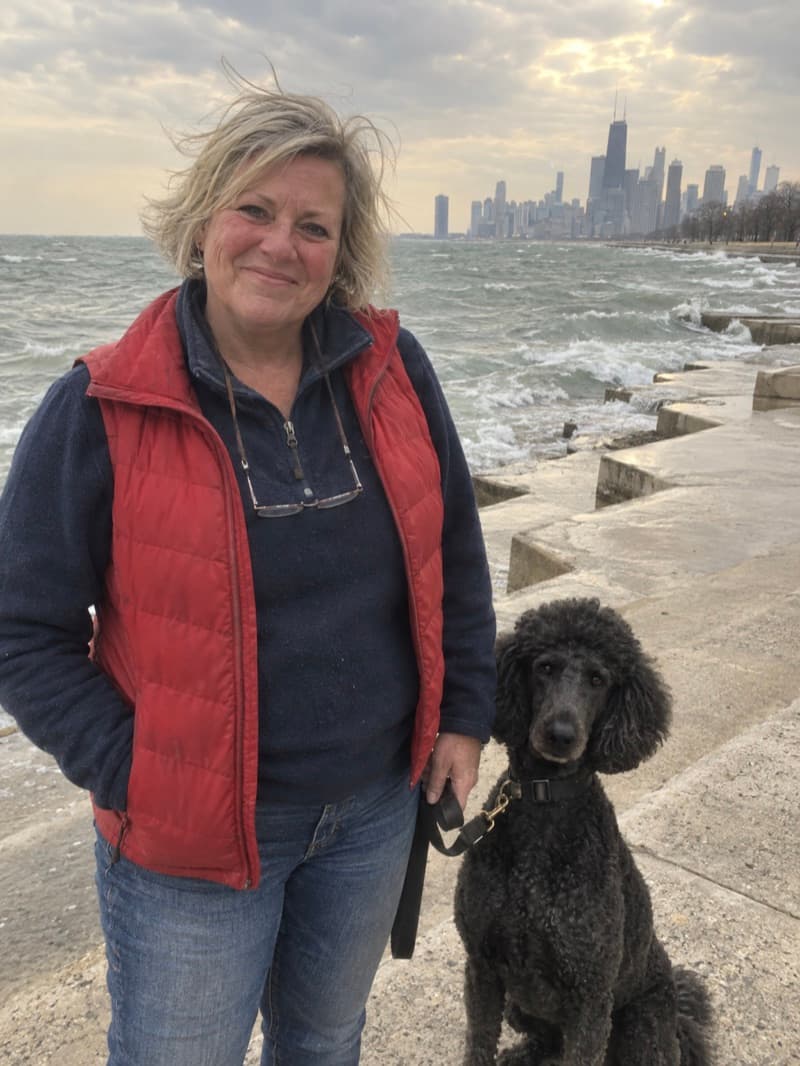
Your coach reads your quiz answers and makes the decisions that take experience: where your dog can still learn, which problem to start with, and how big each step can be this week. You get a 30-day plan that builds week by week, starting with about 5 minutes of practice a day. When something doesn't go the way the plan said, you ask your coach, and the answer comes from someone who already knows your dog's story.
Hannah Kowalski · Dog behavior consultant, specializing in fearful, sensitive, and senior dogs
Works with dogs who startle easily: at fireworks, storms, new places, or a new home. Hannah shaped the calm routines and gentle pacing in DoggoPlan, and builds the plans for fearful and newly adopted dogs, so every exercise stays within their limits and never moves too fast.
Still comparing? Here's what owners say

The plan took her past into account instead of being a one-size course. She now dares to sit next to me on the bench and even lets the kids approach. Small steps, big difference.

The plan built it up minute by minute, exactly around what I'd filled in. Now he stays calm in his bed when I run errands.

The exercises are short and playful, which works far better with a pup than being strict. He now comes back nine times out of ten when I call.
Questions owners ask when they're comparing
Can an online plan replace a behaviorist?
What if I want someone with me on walks?
How is this different from an online course or an app?
What do the first days look like?
My dog has more than one problem. Do I need more than one plan?
Is it a subscription? And what if it doesn't work for us?
This is training guidance, not veterinary advice. If behavior changes suddenly, or your dog growls or snaps, always involve your vet or a qualified behavior professional.
If it doesn't work for you, you get your money back
You have 60 days. No small print, no form, nothing to prove. Just email us and we refund every cent.
$59 one-time, no subscription, 60-day money-back guarantee with no conditions.
Read more about what dog training help costs
Working on something else?
- Dog lunges or barks on walks
- Dog can't be left alone
- Dog is scared of almost everything
- Dog is scared of fireworks and thunder