Your dog isn't bad on the leash. He's overwhelmed.
He barks, lunges or spins at the end of the leash the moment another dog turns the corner, so you walk at 6am and cross the street before anyone gets close. That isn't stubbornness or bad handling. It's stress, and stress can be trained. Take the free 2-minute quiz and your coach makes a 30-day plan around your dog, your routes and your week.
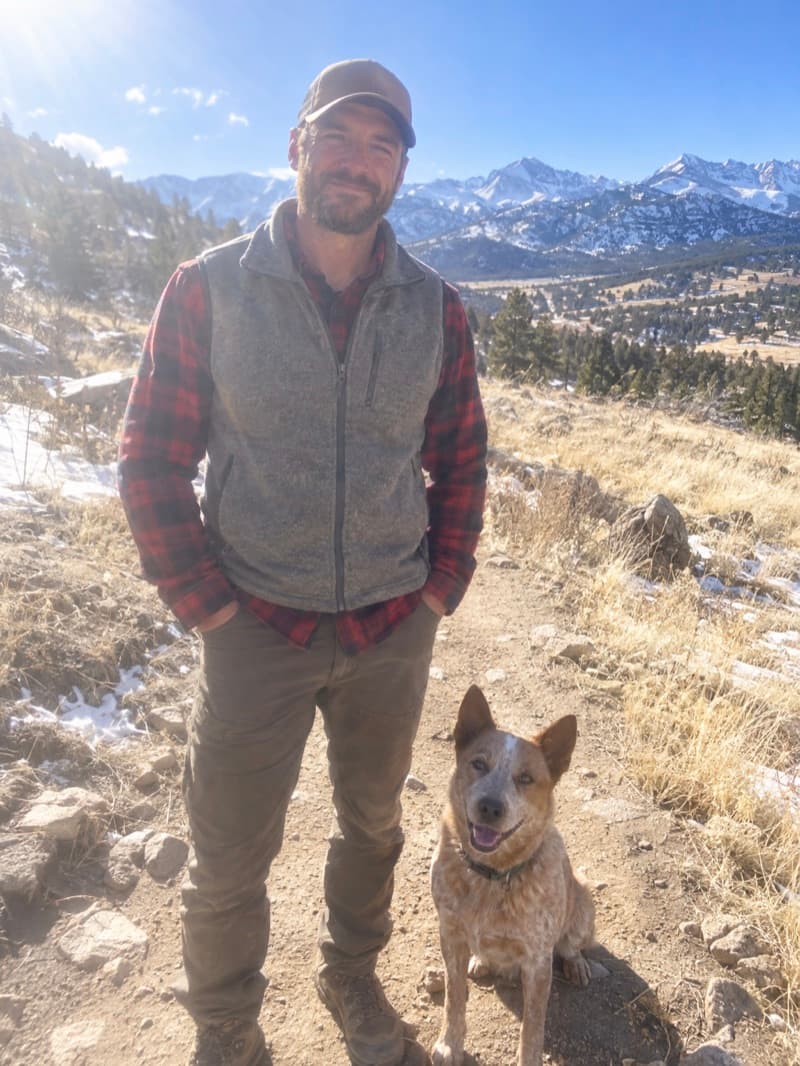
Your plan is made by Cody Miller. Dog trainer, specializing in leash reactivity and city walks.
 4.4 on Trustpilot. 2,966 dog owners started before you.
What leash reactivity really is
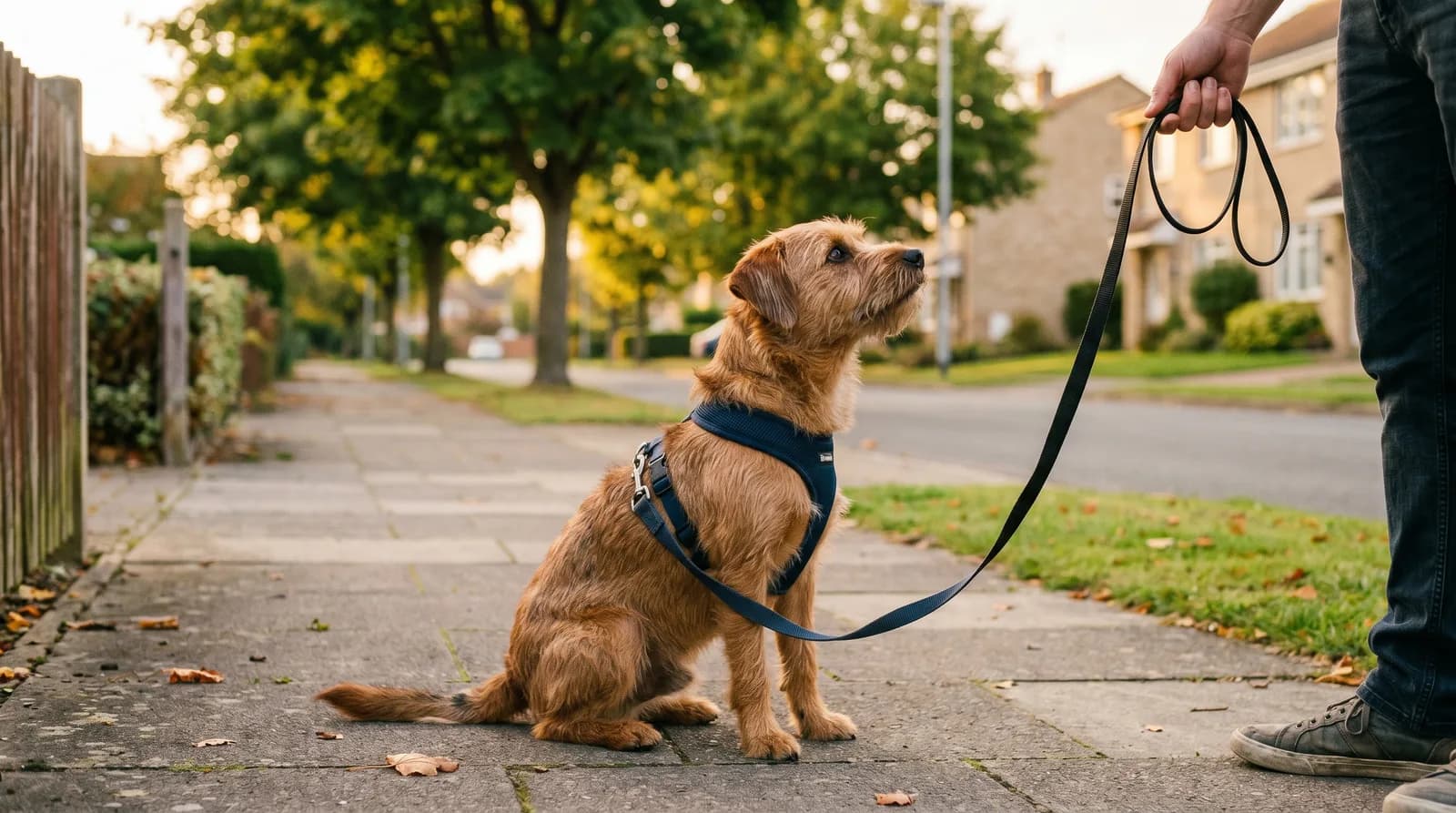
Leash reactivity is a big, loud reaction to something your dog sees on a walk: another dog, a jogger, a bike, a kid on a scooter. It looks like aggression, but most of the time it's a dog who feels too close and has no other way out. Off leash he could curve away, sniff the grass or turn his back. On a six-foot leash those quiet options are gone, so he picks the loud one, and it works, because the other dog always moves on. Some dogs are scared, others are frustrated because they used to greet every dog and now can't. Either way the answer is the same: practice at a distance where your dog can see the trigger and still think, teach him something else to do, and stop the blowups from happening while he learns. Reactive dog training is slow and boring on purpose, and that's why it works.
Does this sound like your walks?
You plan every walk like a route through enemy territory
Early mornings, late evenings, the long way around the block. You know which yard has the dog behind the fence and which corner is blind. A walk used to be a break. Now it's a job you brace for.
"It's okay, mine's friendly!"
Someone calls it across the park while their dog trots straight at yours and yours is screaming at the end of the leash. You apologize, drag him away and spend the rest of the walk feeling like everyone saw.
Bikes, joggers and skateboards set him off too
It isn't only dogs. Anything that moves fast or appears suddenly can tip him over, so even a quiet street never feels quite safe.
At home he's the sweetest dog you know
He sleeps on your feet and greets your friends with a wagging tail. That's what makes it so confusing: the dog on the leash feels like a different dog.
Why corrections make leash reactivity worse
The advice you hear most is still to correct him at the right moment: a leash pop, a firm "no", a spray or a prong collar. Sometimes he goes quiet, and that looks like progress. But what he learns is not that other dogs are safe. He learns that when another dog shows up, something unpleasant happens to him too. The worry that caused the lunging gets stronger, and many dogs stop giving the early warning signs and go straight to the outburst.
What changes the feeling is distance and repetition. Every dog has a distance at which he can notice a trigger, look at it and still take a treat. That's where you practice, not closer. Each time he sees a dog and something good follows, the sight of a dog starts to mean something different. Trainers call this counter-conditioning. It takes many small, easy repetitions far away, not a few brave ones up close. If he stops eating, you're too close, and the next step is backward, not forward.
The other half is giving him a job. A dog who only knows what not to do has nothing to fall back on in the exact moment he needs it. So the plan teaches him what to do instead: look at the other dog and then back at you, turn around with you on a cue, or sniff for food you scatter on the ground. And while he learns, you manage. Wider routes, quieter times, a car as a shield, turning early. Every blowup is a rehearsal that makes the next one easier, so avoiding them is part of the training, not a cheat.
What your first seven days look like
No group class to drive to and no hour-long sessions. A few short exercises a day, built into walks you already take. This is how the first week usually goes for a reactive dog. Your plan changes where your answers call for it.
Find your working distance
On a normal walk, notice how far away another dog can be while yours still sees it, takes a treat and looks away again. For many dogs that's across a parking lot, not across the sidewalk. That distance is where you train from now on.
Teach a U-turn cue
In the hallway, then the yard, then a quiet street: say "this way", turn around together and reward as he follows. No triggers in sight yet. You want it so easy that it still works when you're both tense.
Look at that
At your working distance, he spots a dog, you mark the moment he looks and a treat follows. Over a few sessions he starts looking at the dog and then back at you on his own. That glance back is what you're building.
Find it and pass in an arc
Scatter a few treats on the ground as a dog passes far off, so sniffing becomes his way to cope. Pass other dogs in a wide curve instead of head on. Move a little closer only after two calm passes in a row, and back off as soon as one isn't.
Someone to tell when a walk goes wrong
Your coach reads your answers about your dog, his triggers, your routes and your week, and makes the plan around them, step by step. When a walk goes sideways, you describe what happened on your street. Your coach tells you what to change and adjusts the next step, so you're not left guessing if you should push on or go back.
Cody Miller · Dog trainer, specializing in leash reactivity and city walks
Works with dogs who pull, lunge, or get overwhelmed on busy sidewalks. Cody helped shape the walking steps in DoggoPlan: how much distance to keep and what to do when it goes wrong anyway. He builds the plans for dogs who react on leash, so every walk feels calmer for both ends of the leash.
Owners who used to dread every walk

The plan named her exact triggers from the quiz and gave me short exercises for on the go. After three weeks she can let a dog pass on the other side. Not up close yet, but the panic is gone.

No vague fluff, but a concrete plan that explains why he reacts like that. We're not there yet, but for the first time I see progress instead of escalation.

The plan built it up minute by minute, exactly around what I'd filled in. Now he stays calm in his bed when I run errands.
What owners ask us about leash reactivity
Why is my dog fine off leash but reactive on leash?
Should I use a prong collar, shock collar or head halter?
What do I do when an off-leash dog runs up to us?
My dog has bitten, or I'm worried he might. Is this plan right for us?
Will my dog ever be calm around other dogs?
Is this a subscription?
This is training guidance, not veterinary advice. If behavior changes suddenly, or your dog growls or snaps, always involve your vet or a qualified behavior professional.
If it doesn't work for you, you get your money back
You have 60 days. No small print, no form, nothing to prove. Just email us and we refund every cent.
$59 one-time, no subscription, 60-day money-back guarantee with no conditions.
Read more about leash reactivity
Working on something else?
- Dog can't be left alone
- Dog is scared of almost everything
- Dog is scared of fireworks and thunder
- Trainer, behaviorist or an online plan?