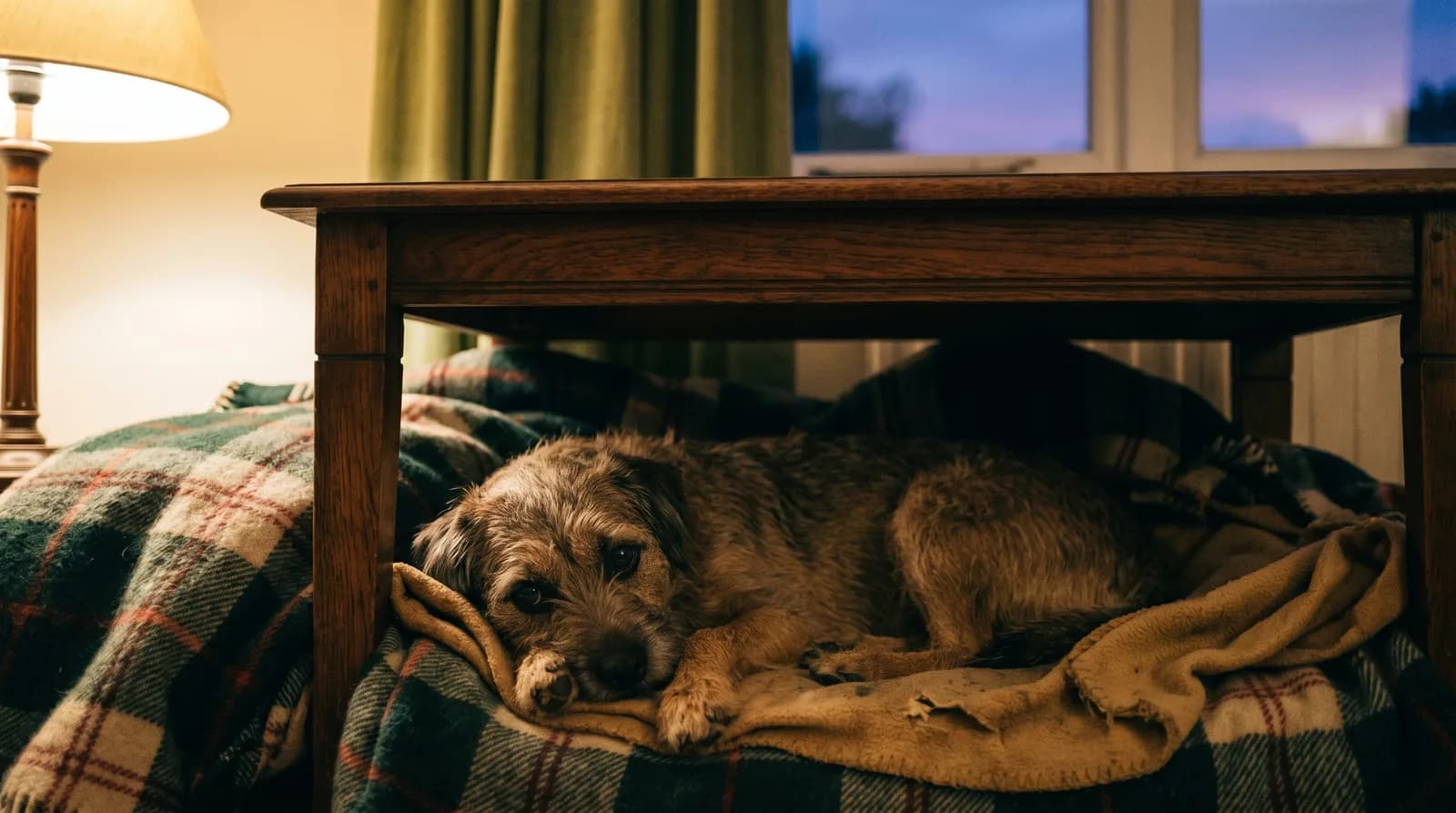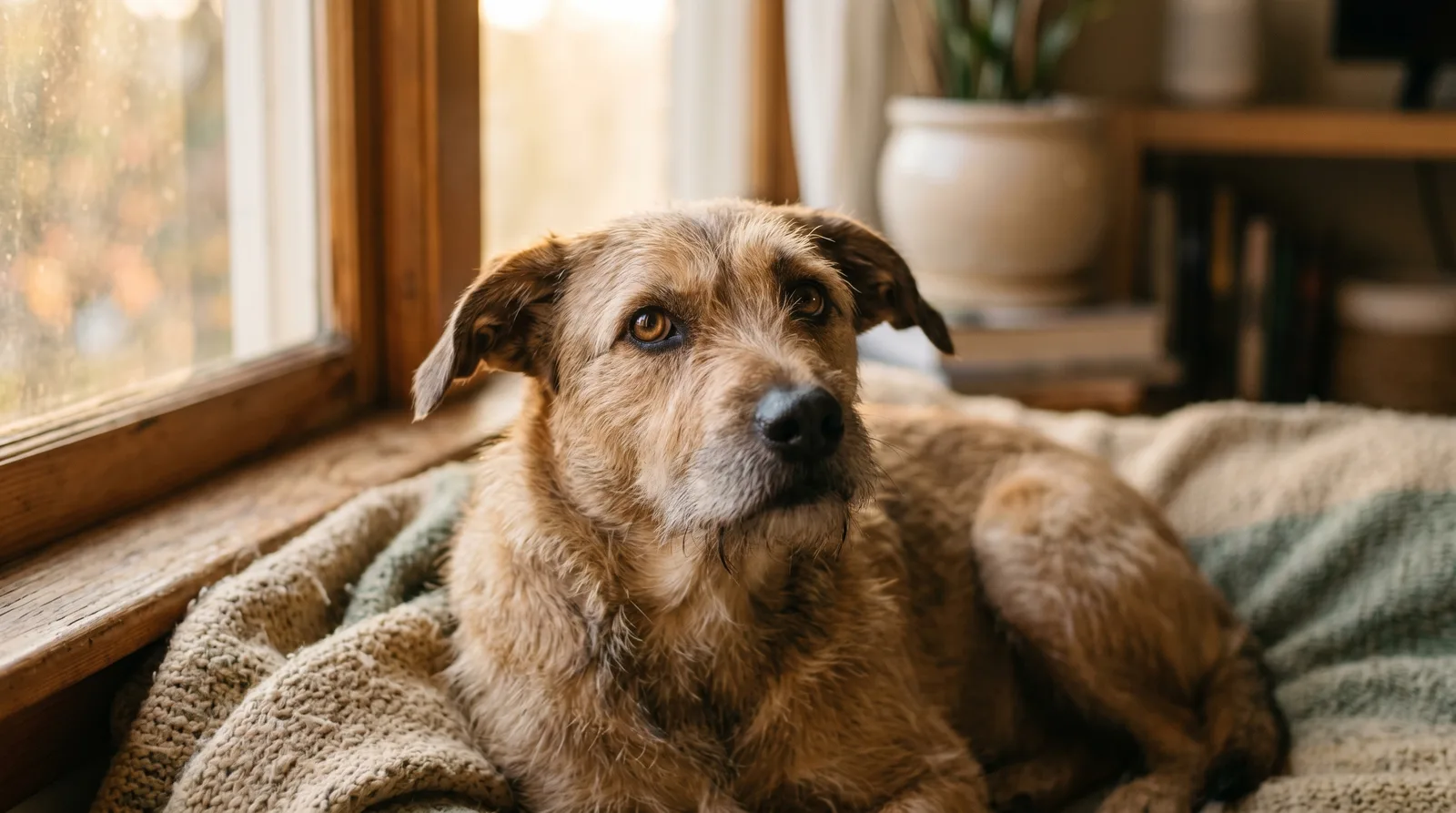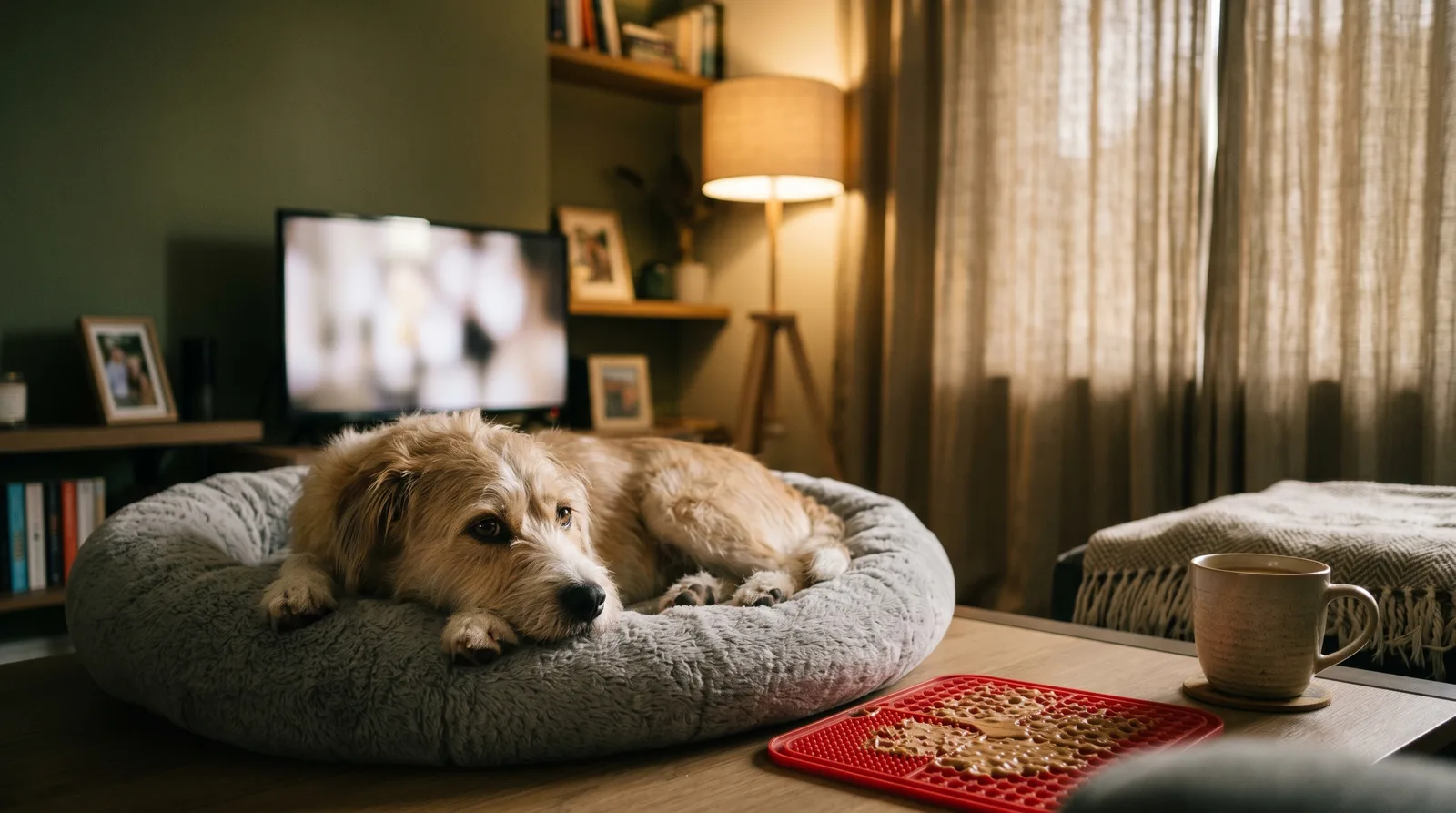
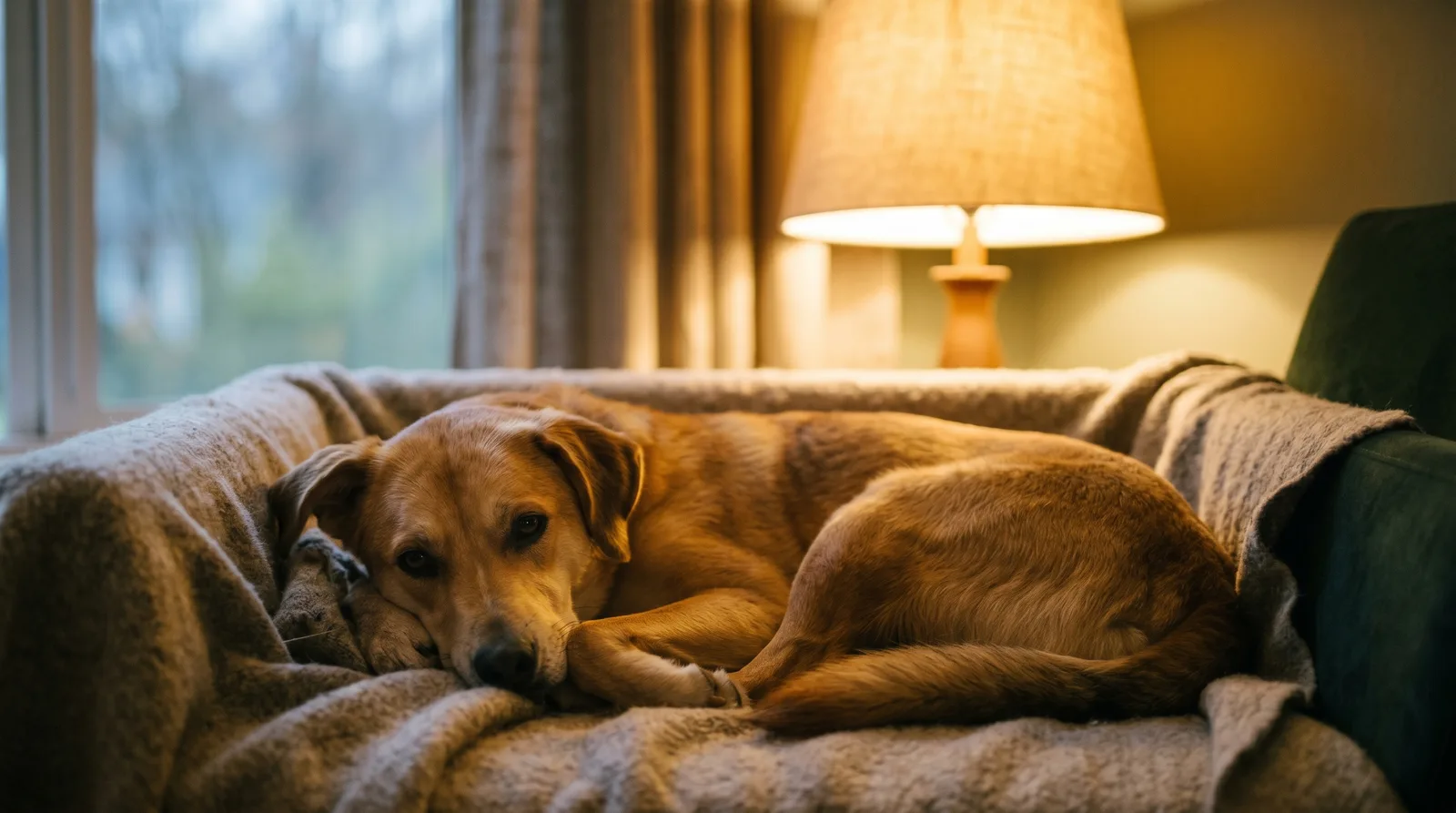
If your dog goes to pieces the moment fireworks start, or paces and pants the second the sky turns grey, you are not imagining it and you are not doing it wrong. What you are seeing is dog noise phobia: a real, overwhelming fear of loud sounds. He is not being dramatic or naughty. He is scared, his body is flooding with stress, and he is doing the only thing he can to cope. The good news, and there is a lot of good news here, is that noise fear is one of the most changeable things in the dog world. With a calm, force-free approach you can genuinely help him feel safer.
This guide explains what noise phobia actually is, walks through the three situations that trigger it most, and points you to the step-by-step plans that help.
What dog noise phobia actually is
At its heart, noise phobia is a fear response that has learned to fire too fast and too hard. A sudden bang is meant to make any animal flinch, that is normal. But in a noise-phobic dog, that startle has tipped into full alarm: the brain reads the sound as danger, the body floods with stress hormones, and the thinking part of his mind goes more or less offline.
That is why a panicking dog can't "just listen." When he is over threshold, he genuinely can't take food, follow a cue, or settle. He is not ignoring you, his system has hijacked him.
A few things tend to make it worse over time:
- It generalises. A dog who started out scared of fireworks can slowly start reacting to thunder, gunshots, slamming doors, even the rumble of a garbage truck.
- It is a learned alarm. Every big scare can deepen the pattern, so an unaddressed fear often grows year on year.
- It is incredibly common. If your dog struggles with noise, he is in huge company. This is one of the most reported fears in pet dogs.
None of that is cause for despair. Noise fear sits on the very changeable end of dog behaviour. Your dog isn't broken, he's frightened, and that's changeable.
The three flavours: fireworks, thunderstorms, and everyday bangs
Noise phobia wears a few different faces. They overlap, but the cues and the fixes differ enough to be worth separating.
Fireworks
Fireworks are the classic trigger, and arguably the hardest, because they are sudden, loud, unpredictable, and bundled with flashes and a smell. There is no warning and no pattern your dog can learn to expect, which is exactly what fear thrives on. They also cluster around set dates, July 4th, New Year's Eve, so a lot of the work is seasonal: prepare in the quiet months, manage hard on the night.
Thunderstorms
Thunder is its own beast. Beyond the bang, many dogs seem to pick up on the build-up: the drop in barometric pressure, the static charge in the air, darkening skies, the change in the way the house feels. That means a thunder-sensitive dog often starts to worry before you hear a thing, which can look like restlessness or shadowing you around the house. Some dogs find a snug body wrap comforting during storms, purely as optional comfort, just comfort, and never something to force on him.
Everyday household bangs
This is the quieter one that often gets missed: the dropped pan, the door that slams in a draft, the garbage truck, the smoke alarm, the kid next door bouncing a ball. For a noise-sensitive dog, ordinary life can feel like a minefield. If your dog flinches at household sounds, that is worth taking seriously, because the same calm methods help, and managing it early can stop the fear from spreading.
Why force-free works and punishment backfires
Here is the single most important idea in this whole guide: you can't punish a feeling away.
If you tell off a frightened dog, or use a shock or a leash pop to "snap him out of it," you might suppress the trembling for a moment. But you have not changed how he feels about the noise, you have just added "and my human gets scary too" to an already terrifying experience. Fear plus more fear does not equal calm.
Force-free work goes the other way. It lowers the underlying stress so the panic has less fuel, and a calmer dog behaves more calmly all on his own. Two ideas do the heavy lifting:
- Threshold. This is the level of noise or fear at which your dog notices the sound but can still eat, think, and recover. Everything productive happens under threshold. Push past it and you are not training, you are just frightening him.
- Desensitization and counterconditioning. In plain terms: expose him to the scary sound at a tiny, manageable level, far below the real thing, and pair it with something wonderful like a piece of food or a favourite game. Over many small reps, his brain slowly rewrites "that sound means danger" into "that sound means good stuff." This is the engine of real, lasting change, and it is the opposite of flooding him with the full-volume version and hoping he copes.
No shock collars. No dominance. No forcing him to "face his fear." Just patient, kind repetition below the level that tips him over.
Two things you can do today
You do not need to wait for the next quiet season to start helping. Two moves make almost any noise-phobic dog more comfortable straight away.
1. Build a safe den. Give your dog one cosy, enclosed spot he can retreat to, a covered crate, a nook under the stairs, a bathroom with no windows, wherever he already chooses to hide. Make it comfy, leave the door open so it never feels like a trap, and let it be his. Many dogs feel calmer simply having somewhere to go to ground. A stuffed lick mat or a long-lasting chew in there can help, on the calmer days, build it into a place he loves.
2. Muffle and manage the sound. On a noisy night, close the windows and curtains, and add steady background sound, a fan, the TV, calm music, to take the edge off the bangs. Block the flashes of light if you can. Bring walks and toilet breaks forward to before the noise starts. None of this is the whole answer, but it lowers the volume on his fear tonight while you work on the deeper training in the background.
Where to start in this guide
Pick the situation that fits you and dig in:
- Why are dogs scared of fireworks? unpacks what is actually going on in his head, which makes everything else make sense.
- Dog scared of fireworks is your practical, what-to-actually-do plan for helping him through it.
- How to calm your dog during July 4th fireworks is the hour-by-hour plan for the big night, and the July 4th survival guide gives you a simple checklist to work from.
- Sound desensitization before fireworks season is the off-season work that does the slow, lasting rewiring.
- Thunderstorm anxiety in dogs covers storms and their sneaky build-up cues.
- New Year's Eve fireworks handles the long, late, midnight-peak night.
- Dog scared of loud household noises helps with the everyday bangs: the vacuum, the smoke alarm, the dropped pan.
A quick seasonal nudge: the best time to start is always a quiet stretch with no fireworks on the calendar, because that is when you can teach the calm before he needs it. If a big night is nearly here, lean on the management steps above for now, then begin the real training once things settle.
If the fear is severe, your vet or a qualified force-free behaviour professional can help. This is training guidance, not veterinary or medical advice.