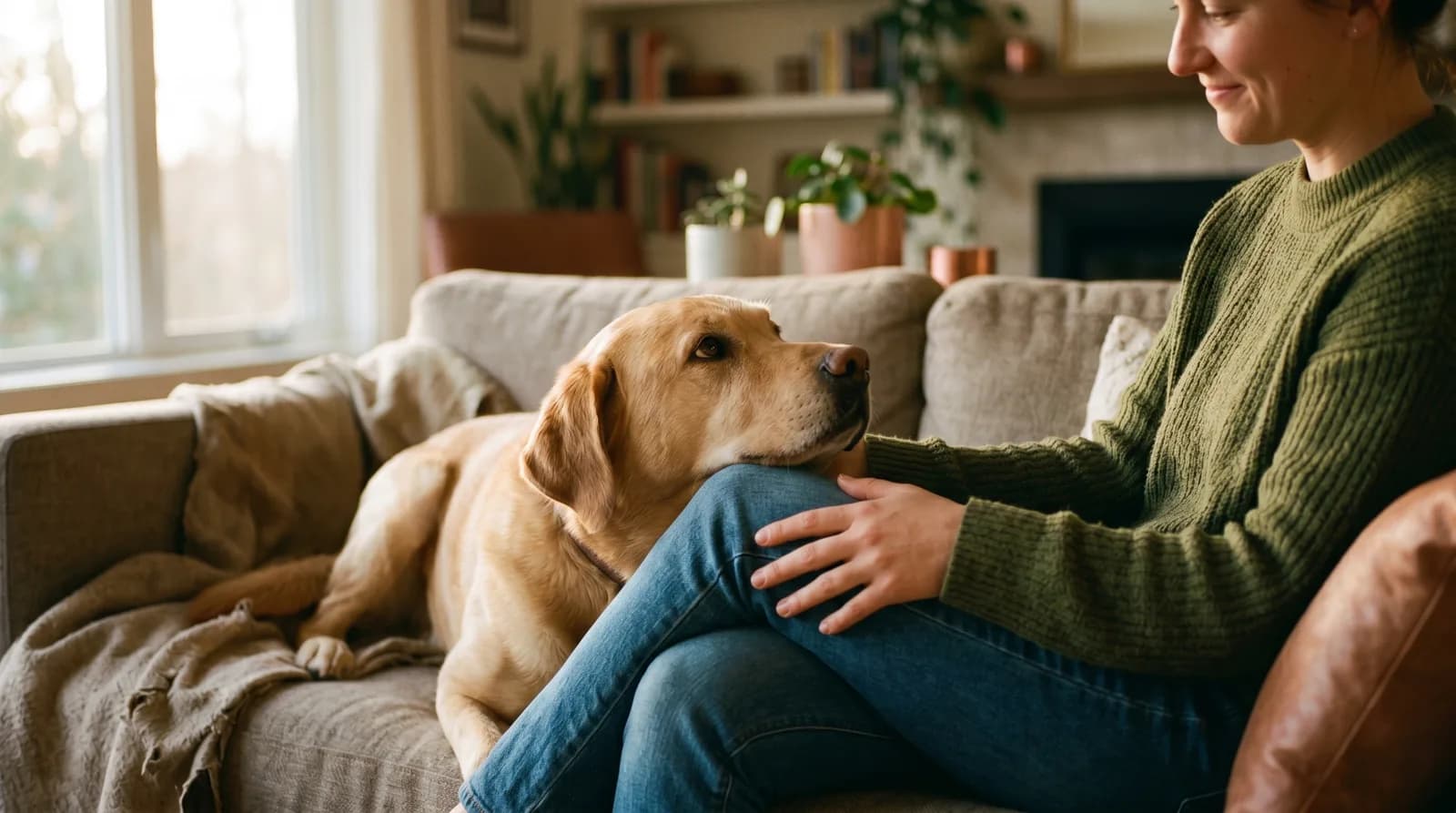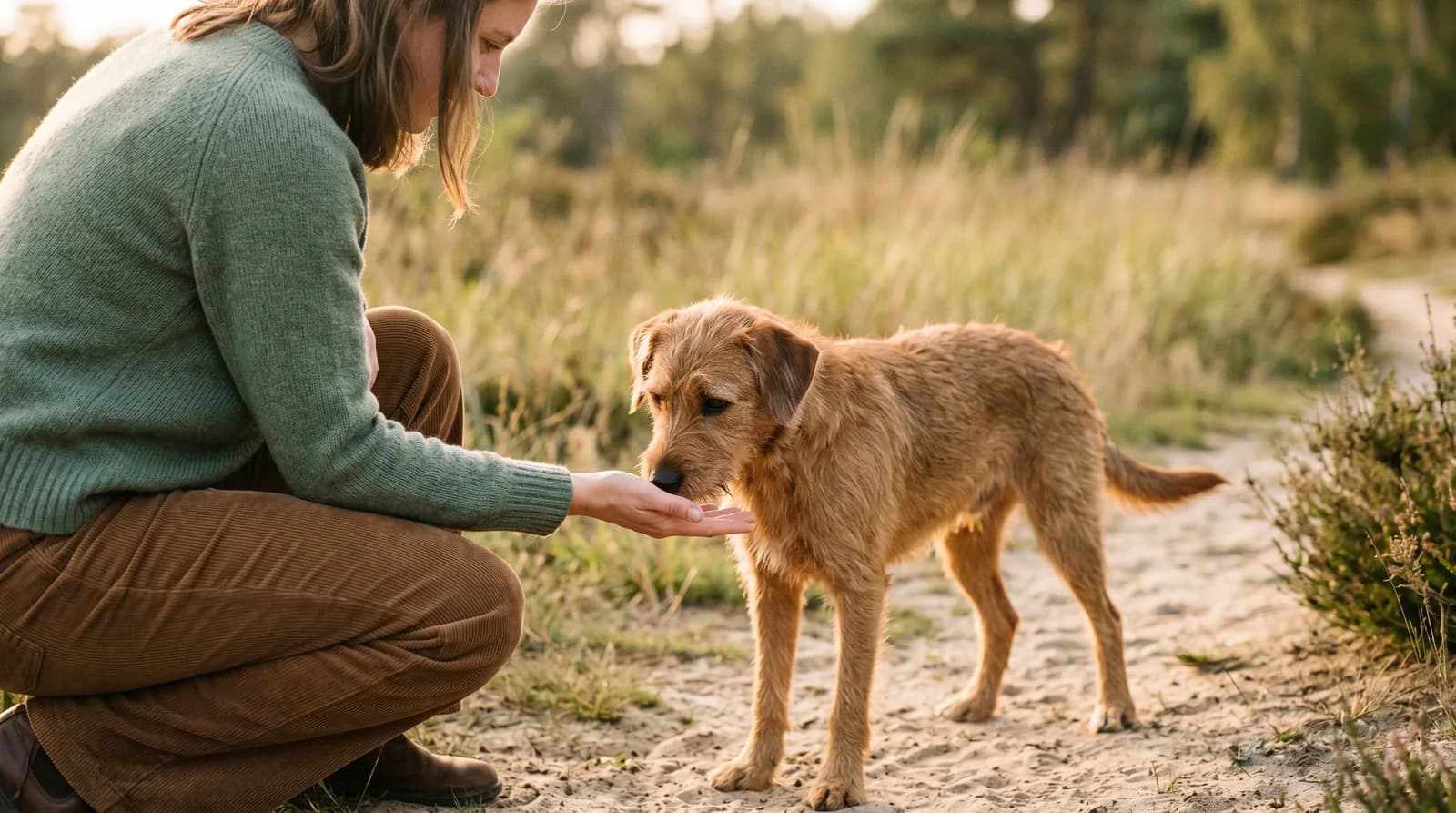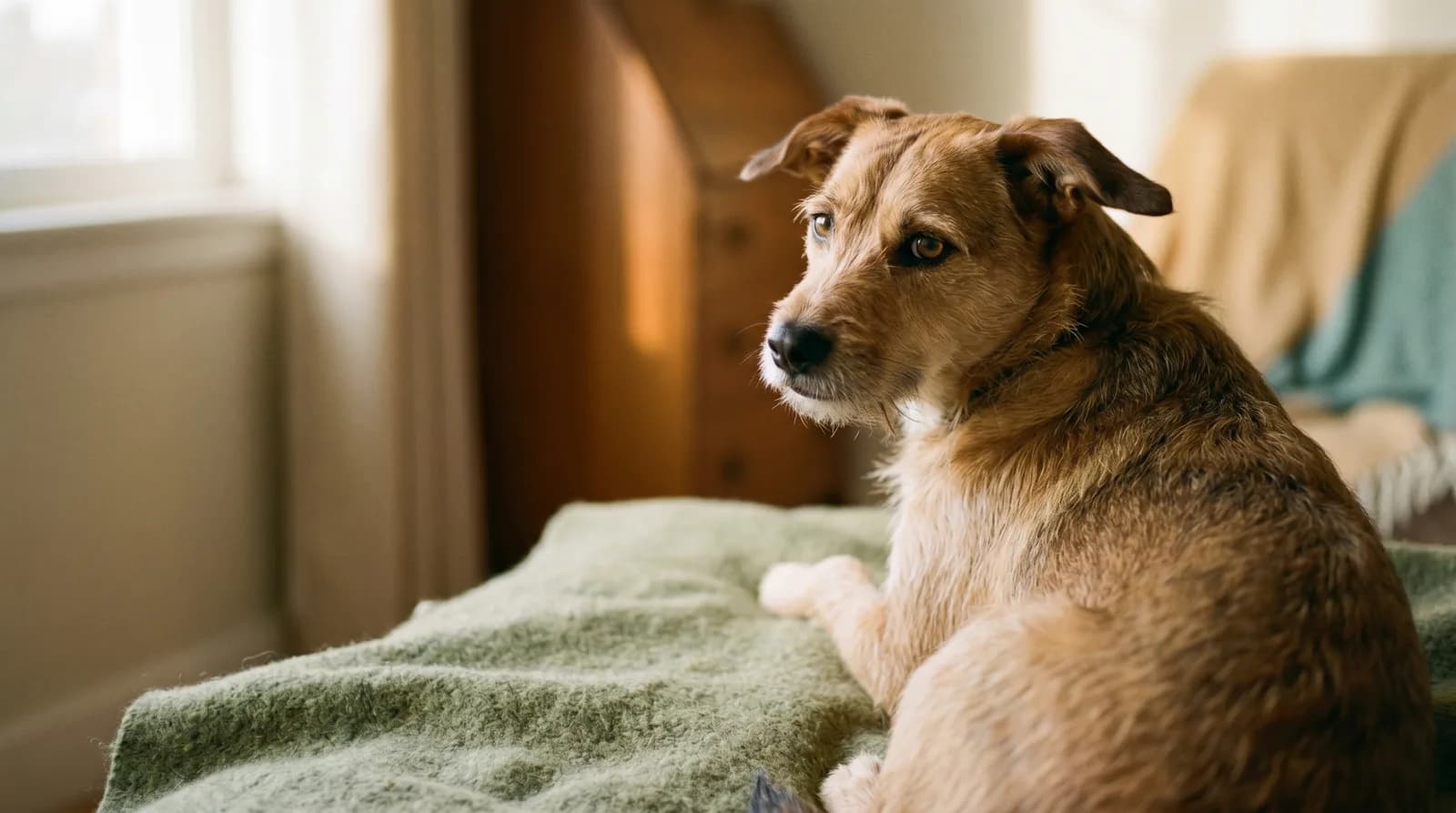
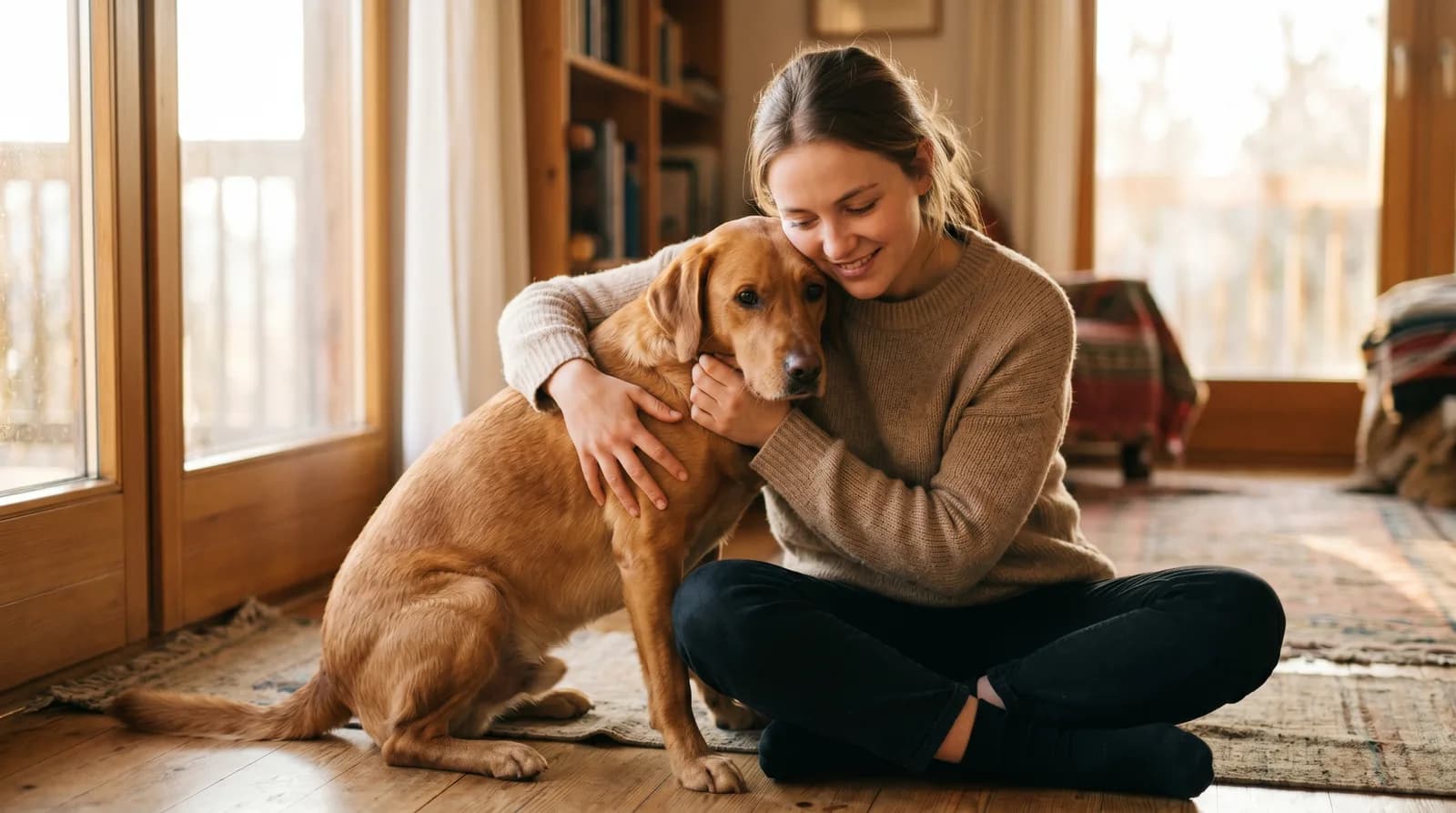
If you have ever lain awake replaying the day you brought him home, the walk that went wrong, the time you raised your voice, and asked yourself, is it my fault my dog is anxious, this post is for you. It is a question almost every owner of a worried dog asks at some point, usually in the quiet after a hard day. So let me answer it honestly and kindly, because you have carried it long enough.
Is it my fault my dog is anxious? The short, honest answer
Almost certainly not, at least not in the way you fear.
Anxiety in dogs rarely traces back to one person or one mistake. It is usually a mix of things, most of them outside your control and most of them set in motion long before the moment you are blaming yourself for. A dog who startles easily, shadows you from room to room, or barks and lunges on walks is not the product of one bad owner. He is a dog whose alarm fires too readily, and that has many roots.
It is worth saying plainly, because the guilt can get so loud it drowns out the actual dog in front of you: your dog isn't naughty, he's scared, and that's fixable. And the most useful question is not whose fault it is. It is what helps him now.
Where dog anxiety actually comes from
When you look at where fear in dogs really begins, the blame you have been carrying tends to loosen its grip. There are usually three threads, often tangled together.
Genetics and temperament
Some dogs are simply wired to feel more, and to recover more slowly, the way some people are naturally more cautious. A sensitive nervous system can be inherited, shaped before a puppy is even born by the mother's own stress. None of that is something you chose or caused. You met a dog who already came with his own dial turned up.
Early life and missed experiences
The weeks of puppyhood when a dog learns "the world is mostly safe" are short and they close early. A puppy who missed gentle, positive exposure to people, other dogs, traffic, and ordinary household chaos, the vacuum, the garbage truck, the doorbell, can grow into a dog who finds all of it alarming. If your dog came from a rescue, a less-than-ideal breeder, or a tough start, that window was very likely shaped long before he was yours.
One-off scares and the slow build
Sometimes a single frightening event leaves a mark: a dog who lunged at him at the park, a string of fireworks, a fall. Other times nothing dramatic happens at all and worry just quietly accumulates until it tips over. Neither of these is a moral failing on your part. They are the ordinary weather of a dog's life, and they land hardest on a dog already primed to feel afraid.
If you want to understand what that fear looks like day to day, the signs of anxiety in dogs guide walks you through it, so you can read him rather than judge yourself.
But what if I did get something wrong?
Maybe you are reading this thinking, fine, but I genuinely did handle something badly. Maybe you used a method a trainer recommended that you now regret. Maybe you pushed him to "face his fears" before you knew better, or told him off for barking when he was actually terrified.
Here is the gentle truth. Even where past handling played a part, blame helps no one, least of all your dog. You did what you knew at the time, with the information you had, almost always trying to do right by him. That is not the behaviour of a bad owner. That is the behaviour of someone who cares enough to still be looking for answers.
And here is the part that matters most: it is enormously changeable from here. Fear is not set in stone. Dogs are not court records of every mistake their owners ever made. They live in the present, and the present is exactly where you get to help.
The question that actually helps: what helps now?
Once you stop asking "whose fault" and start asking "what helps now," everything gets lighter and more useful. You move from a verdict you cannot change to a path you can walk.
The path is calmer and simpler than the guilt would have you believe:
- Notice what he is reacting to, not just what he is doing, and give him distance from it before he tips over.
- Make his world predictable: a quiet, safe spot that is always his, and steady rhythms for walks, meals, and rest.
- Reward calm, work below the level that overwhelms him, and keep it short and kind.
- Comfort him when he is scared. You cannot make a dog more afraid by being a safe place for him.
That is the whole shape of how to calm an anxious dog, and none of it requires you to have been a perfect owner up to now. It only requires you to start where you both are today.
It also helps to sit with the reframe itself, because guilt and "naughtiness" tend to travel together. When you stop seeing a dog who is giving you a hard time and start seeing a dog who is having a hard time, the self-blame has nowhere left to stand. We unpack that shift in your dog isn't naughty, he's scared, and it is worth a read on a hard day.
A word for the owner who feels judged
If you dread walks because of the looks, or flinch when someone says "he just needs a firm hand," know this: the people watching do not live your life or know your dog. An anxious dog is not a report card on your love or your effort. Plenty of devoted, gentle owners share their homes with worried dogs, and plenty of those dogs go on to feel far braver.
And if you sometimes lose patience, if the clinginess or the barking gets the better of you on a bad day, that does not make you a bad owner either. Frustration is a human response to a genuinely hard thing, not proof you have failed him. Be as kind to yourself as you are learning to be with him. A steadier, calmer you is genuinely one of the best things you can give an anxious dog, and you cannot offer calm from a place of shame.
So let the question go. Not because the answer is "yes, your fault" and not because it is "no, never," but because it is the wrong question. Your dog does not need you to solve the past. He needs you, here, now, helping him feel a little safer than he did yesterday. That is something the two of you can absolutely do together.
If your dog's fear is severe or comes on suddenly, or if there is any growling, snapping, or bite risk, please loop in your vet or a qualified force-free behaviour professional who can help you do this safely. This is training guidance, not veterinary or medical advice.