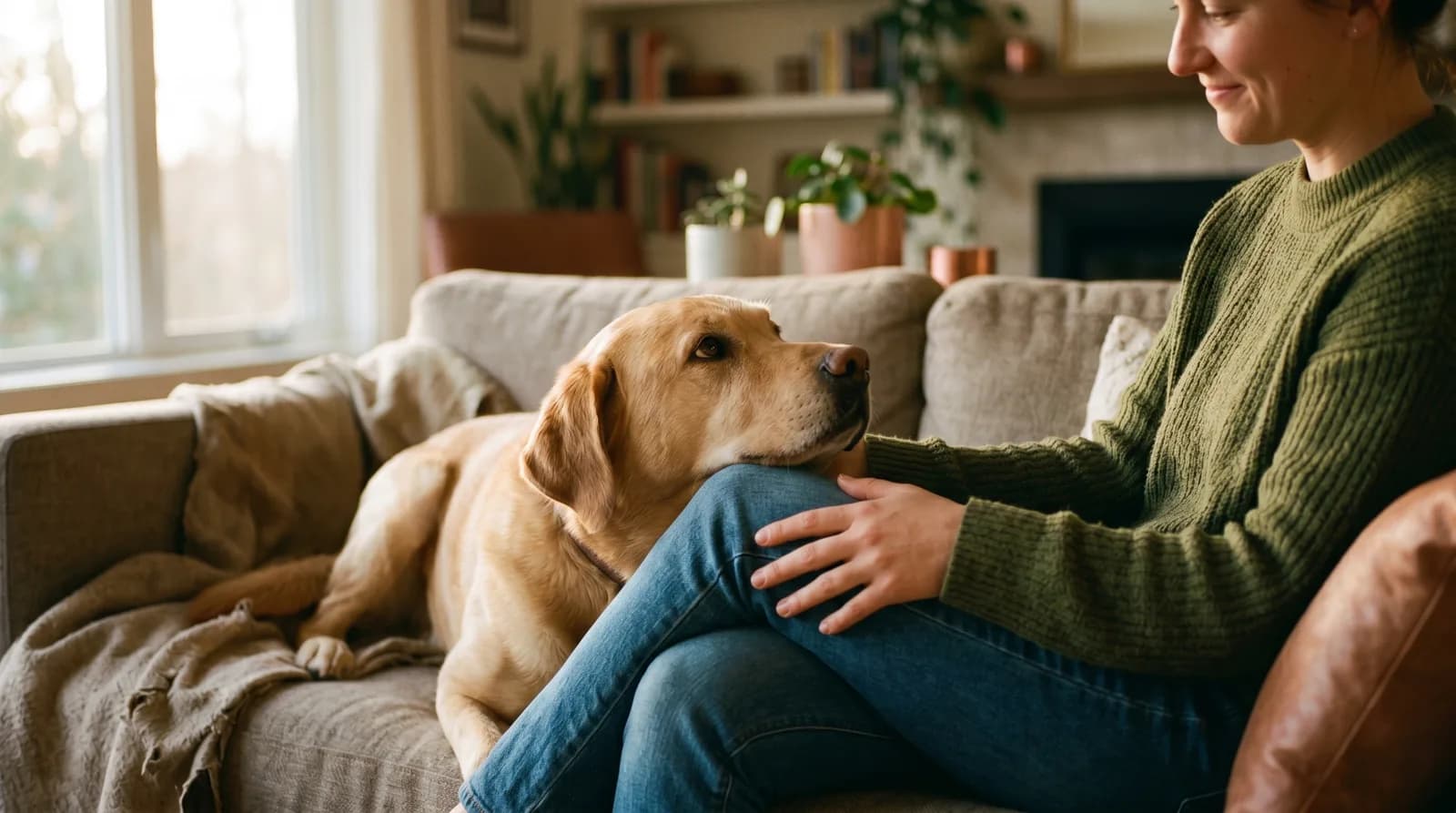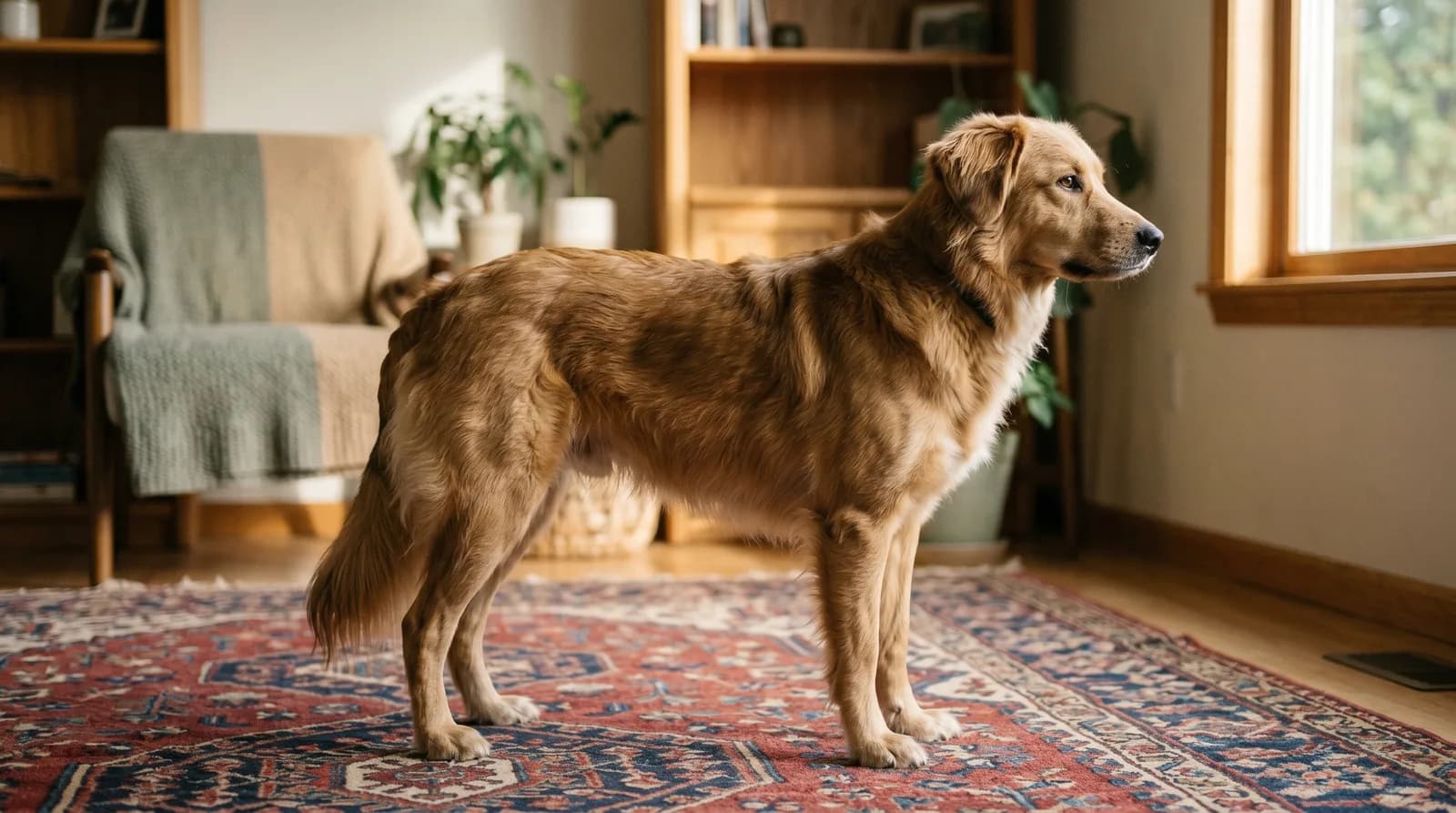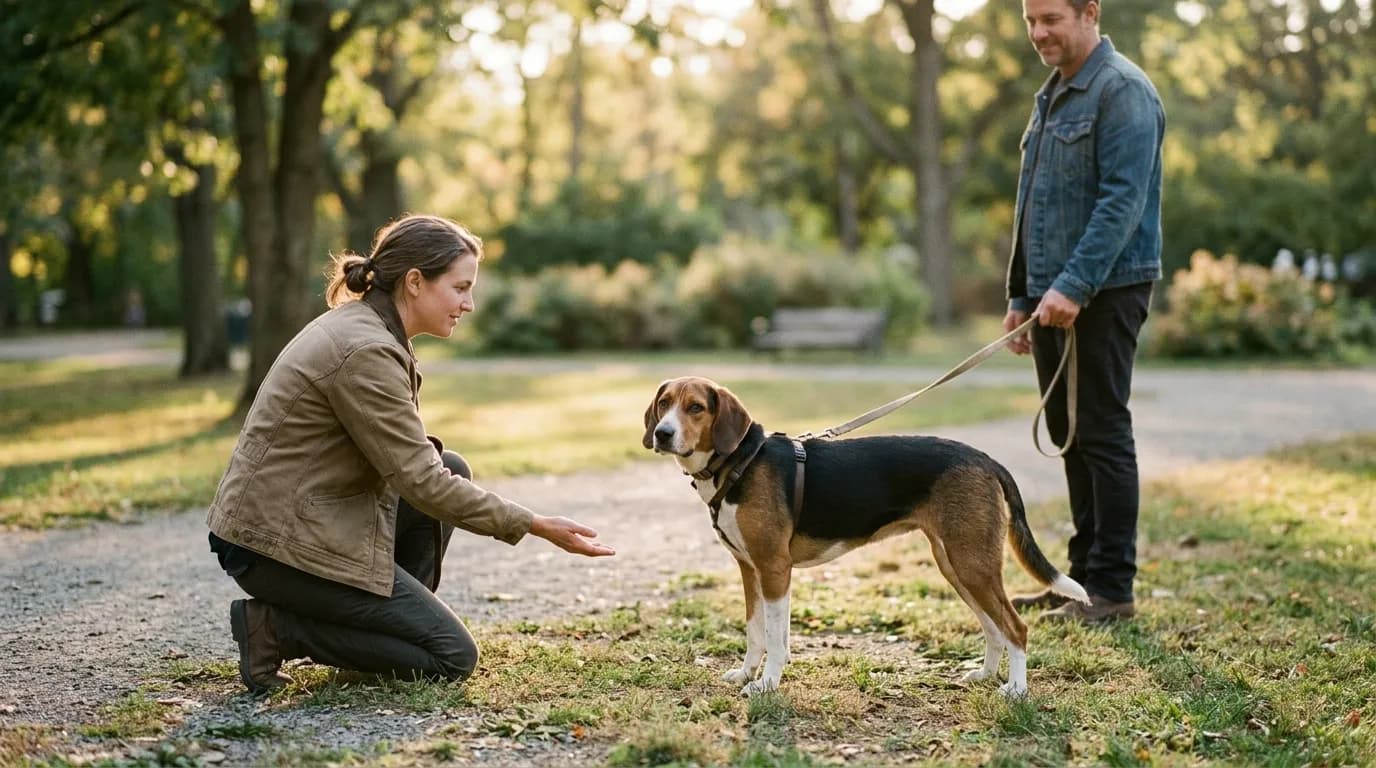
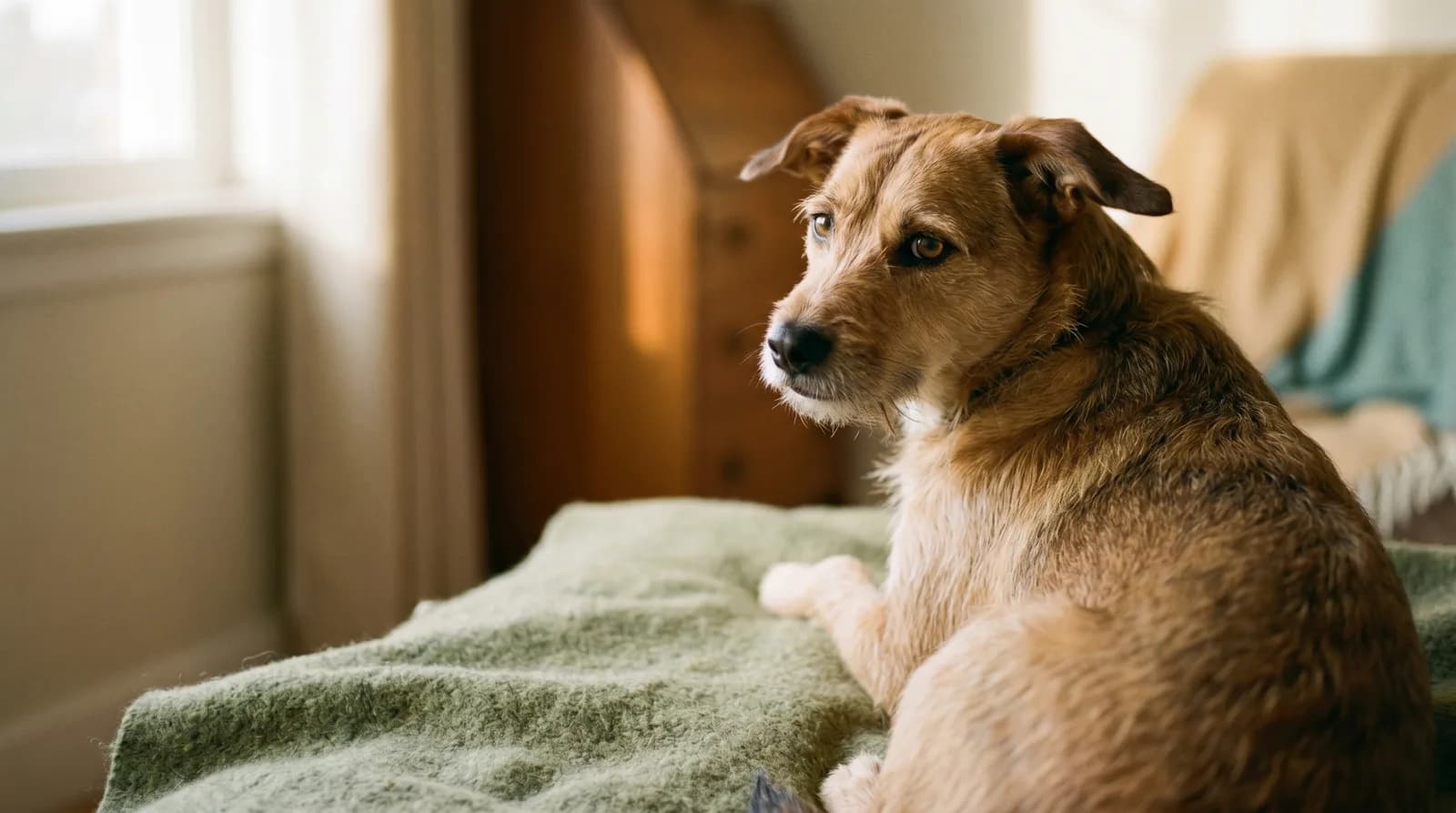
If your dog goes quiet and still in a busy room, paces before you leave, or trembles when the doorbell rings, he may be trying to tell you something. The signs of anxiety in dogs run from the quiet and easy to miss to the loud and obvious. The subtle ones include lip licking, yawning when he is not tired, and pacing. The obvious ones include trembling, hiding, and barking. Learning to read them is one of the kindest things you can do, because once you can see when your dog feels worried, you can step in early and help. He is not being naughty or difficult. He is scared or unsure, and that is something you can work on together.
This guide walks through the quiet signals first, then the louder ones, then how to read them in context so you do not over-read a single yawn.
The subtle, easy-to-miss signs of anxiety in dogs
Most dogs ask for help quietly long before they panic. These small signals are easy to miss because they look like ordinary doggy things, but in the wrong moment they are your dog saying "I am not comfortable right now."
Watch for:
- Lip licking when there is no food around, a quick flick of the tongue over the nose.
- Yawning when he is clearly not tired or sleepy.
- Panting when he is not hot and has not been exercising.
- Pacing or an inability to settle, getting up, lying down, getting up again.
- Whale eye, where you can see the whites of his eyes as he looks sideways without turning his head.
- Turning away, looking away, or freezing his body for a beat.
- A sudden burst of scratching, sniffing, or shaking off when nothing has happened to prompt it.
On their own, any of these can be totally normal. A tired dog yawns. A warm dog pants. The signal is in the timing: these show up when something in the environment is making him uneasy, and they often come in little clusters. Catching them early is gold, because a dog showing quiet signs is still under threshold and can still think, eat, and recover.
The louder signs your dog is stressed
When the quiet signals go unheard, or the trigger is just too much, the fear gets louder. These are the signs most owners notice, and by this point your dog is usually over threshold: his thinking brain has gone offline and he genuinely cannot "just listen."
Look for:
- Trembling or shaking when he is not cold.
- Hiding, retreating to a bathroom, behind the sofa, or under a bed.
- Clinginess, shadowing you from room to room and not wanting you out of sight.
- Destructiveness when left alone, chewing, scratching at doors, or upending the house.
- Excessive barking or whining, especially the high, repetitive kind that is hard to interrupt.
- Refusing food, turning down a snack he would normally love.
- Indoor accidents in a house-trained dog, drooling, or a loose tummy.
- Freezing, going stiff and still, which is easy to mistake for "being good" when he is actually shut down.
These are not bad habits to be told off for. They are signs of a dog who feels overwhelmed and is doing the only thing he can to cope. Punishing them only adds fear on top of fear. The kinder, more effective path is to lower the stress so the behaviour has less fuel.
Context is everything
Here is the part that keeps you from over-reading your dog: no single signal means anxiety on its own. One yawn after a nap is just a yawn. A scratch might just be an itch.
What matters is the cluster and the context. Anxiety tends to show up as several signals stacking together, in a specific situation, that fade once the trigger goes away. So instead of asking "is that one yawn a problem?", ask:
- How many signs am I seeing at once?
- What is happening around him right now?
- Does it settle when the trigger leaves, or build the longer he is exposed?
Reading the whole dog, body, face, tail, and the scene he is in, is a skill worth building. For a deeper walkthrough of how to interpret what his body is telling you, head to our guide on dog anxiety body language. It pairs naturally with this checklist: this page tells you what to look for, that one shows you how to read it all together.
What to do next
If you are recognising your dog on this page, take a breath, this is good news, not bad. Seeing the signs is the first real step, because now you can respond to how he feels instead of just reacting to what he does.
The next move is to lower the underlying stress and help him feel safer. Our pillar guide, how to calm an anxious dog, walks through the calm, force-free approach step by step: managing his environment, working below his threshold, and gently building his confidence over time.
And if you have been quietly wondering whether your dog is just stubborn or badly behaved, this is worth reading: your dog isn't naughty, he's scared. It is the single reframe that makes everything else click. Once you see the worry behind the behaviour, helping him gets a whole lot more hopeful.
Your dog isn't broken, and he isn't beyond help. He's telling you he feels unsure, and that is something the two of you can work on together.
If your dog's fear is severe or comes on suddenly, or if there is any growling or risk of a bite, loop in your vet or a qualified force-free behaviour professional before going further. This is training guidance, not veterinary or medical advice.