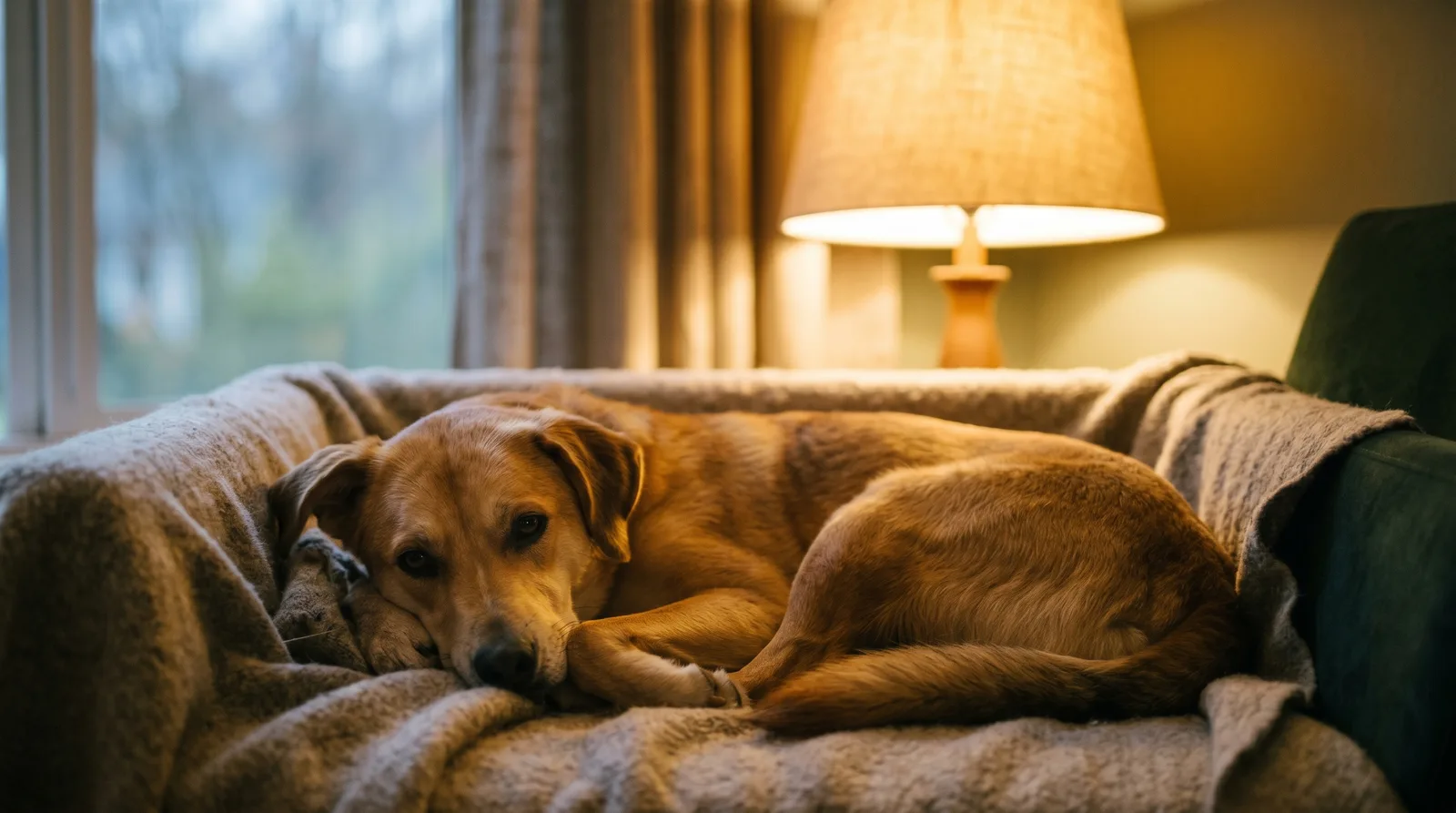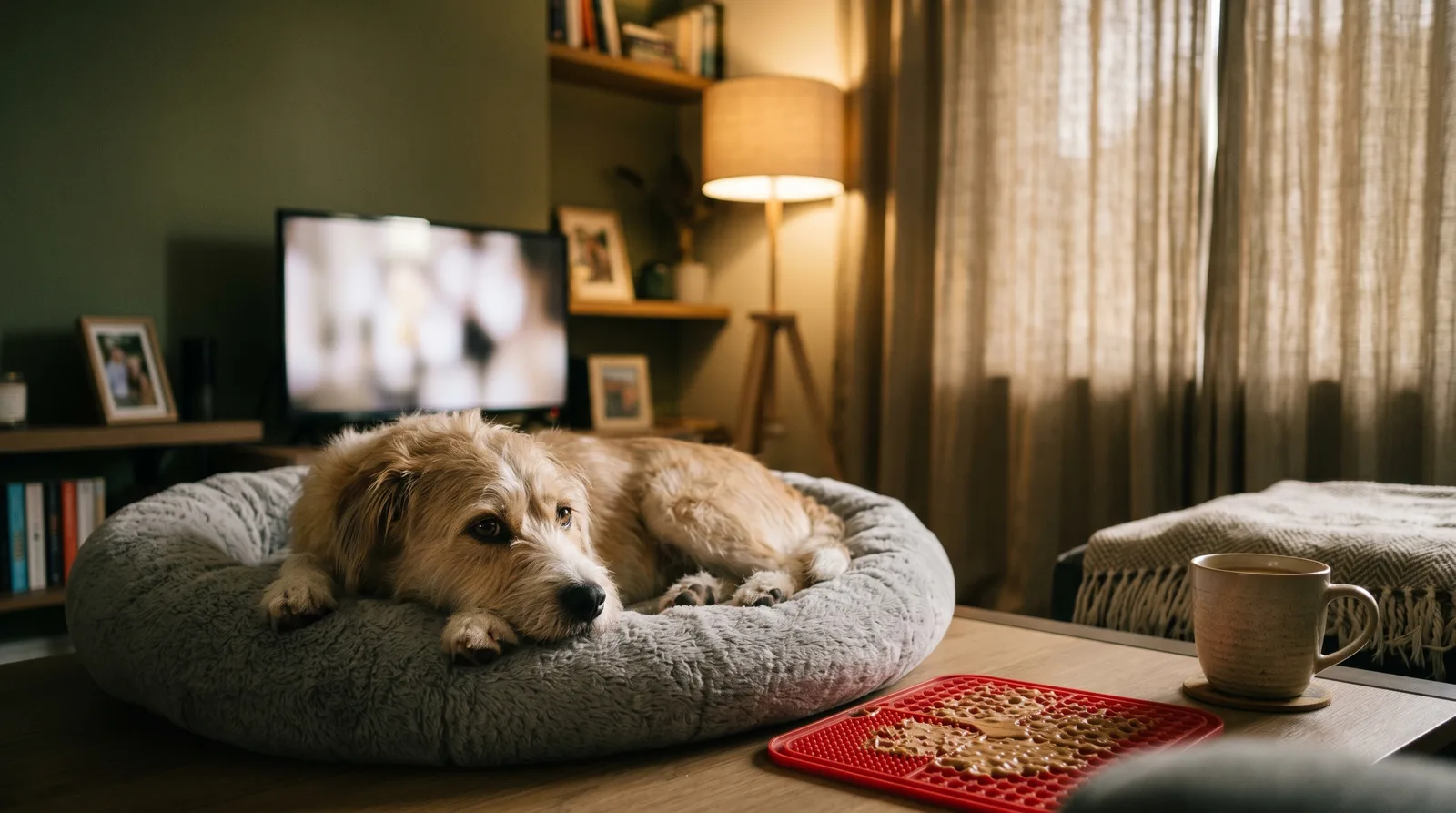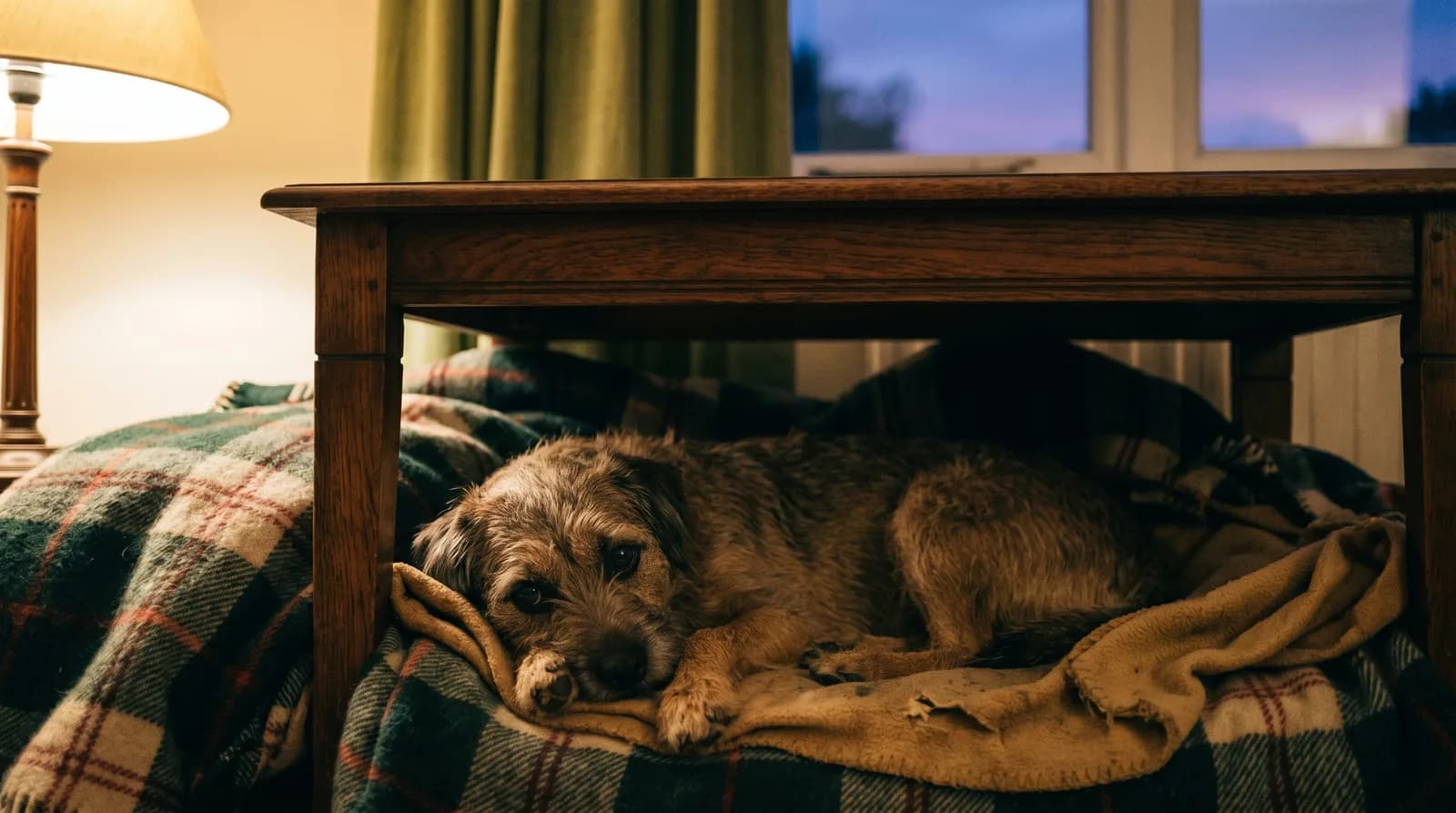
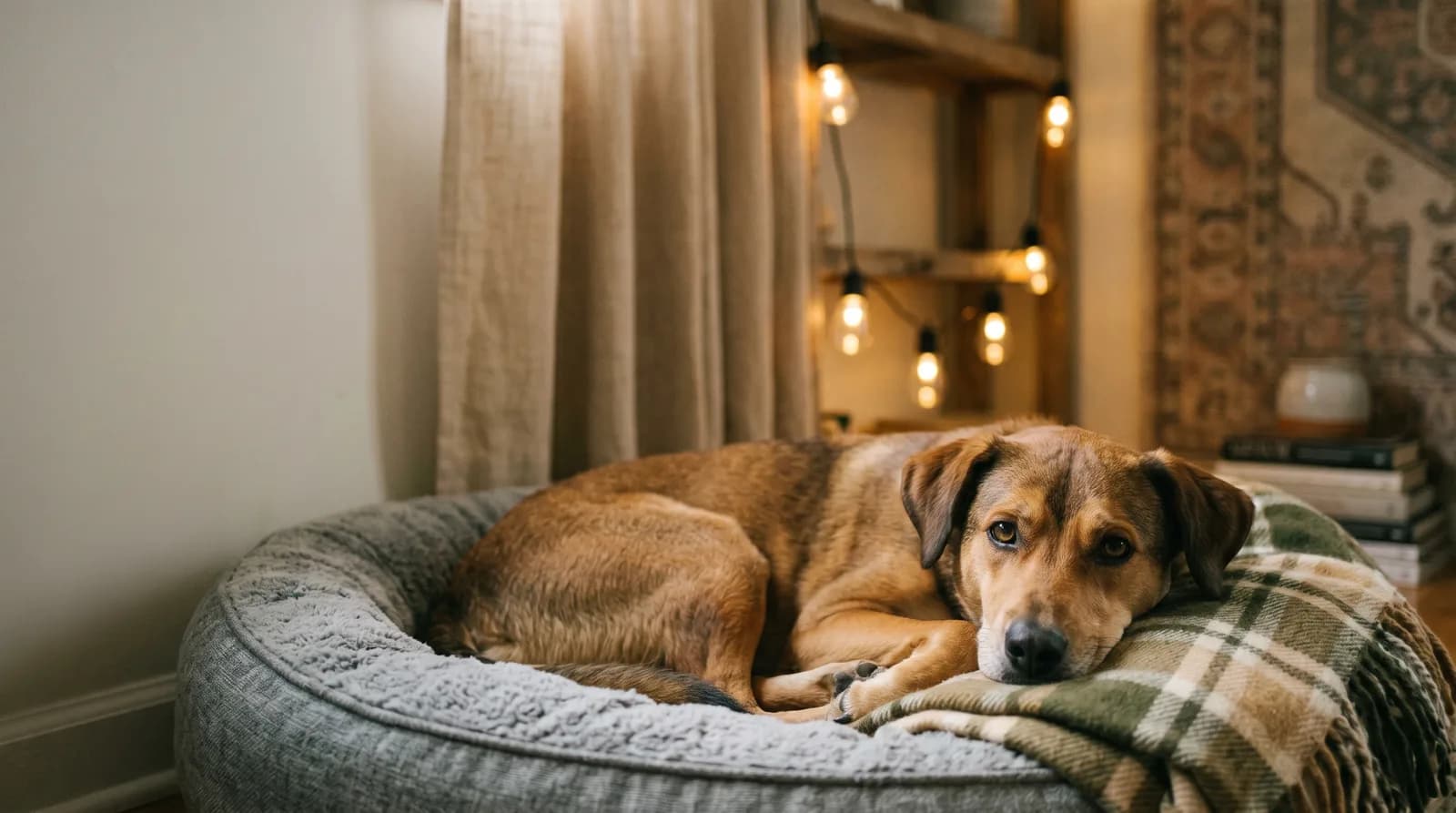
If you are already dreading the fireworks, this one is for you. A July 4th survival guide for anxious dogs is not really about the night itself, it is about everything you quietly put in place beforehand so the night goes as smoothly as it possibly can. Because here is the reframe that changes everything: your dog isn't being dramatic and he isn't being naughty, he's scared, and that's fixable. Below is a calm, force-free plan you can actually follow, with a week-of timeline and a simple day-of checklist so nothing important gets forgotten when the sky starts banging.
This is the night a lot of dogs go missing, so a good chunk of the plan is just making sure that can't happen to yours. The rest is about helping him feel as safe and settled as possible while the show goes on.
Why July 4th hits anxious dogs so hard
Fireworks tick every single box for a dog's alarm system. They are sudden, they are loud, they come at random with no warning, and they are bundled with bright flashes and the smell of smoke. Worst of all, there is nowhere to run to. To a noise-sensitive dog, it can feel like the world is exploding for no reason and there is no off switch.
That mix of unpredictable and inescapable is exactly what tips a scared dog over his threshold, the point where he is too frightened to eat, think, or settle. For the full picture of what is going on in his head, our pillar guide on dog noise phobia, fireworks, and thunderstorms walks through it all.
The big one to keep front of mind: July 4th is the single worst night of the year for lost dogs. A dog in full panic doesn't think, he just tries to get away from the noise, and an open door or an unlatched gate is all it takes. That is why so much of this plan is about exits.
Your July 4th survival guide for anxious dogs: a week-of timeline
You don't need to do anything dramatic, you just need to do the right small things in the right order. Here is the plan, step by step.
- A week out: tags, chip, and habits. Check that his ID tag is readable and his microchip details are up to date, since more dogs go missing around July 4th than any other time. Start the simple management habits now: let him settle in his quiet spot, keep walks calm, and get him used to a little background noise in the evenings.
- Day of: long morning walk, early dinner. Give him a good, sniffy walk in the morning while the streets are quiet, so he is pleasantly tired and has had a proper toilet break. Feed him earlier than usual, because a frightened dog often will not eat once the bangs start.
- Late afternoon: build the den, close up the house. Set up his safe den in the quietest, most enclosed room, with his bed and a worn t-shirt that smells like you. Walk around and shut every window and door, then latch the gates and the yard, so there is no way for a panicking dog to slip out.
- As it gets dark: white noise, blinds down, activity ready. Turn on white noise, a fan, or calm music before the first firework, and bring the blinds and curtains down to hide the flashes. Have a settling activity ready, like a stuffed lick mat or a long-lasting chew, in case he wants it.
- During the show: stay calm, keep every exit shut. Carry on as normal and comfort him if he wants you, since you cannot make fear worse by being kind. Keep doors closed and double-check exits, because the most dangerous moment is a scared dog bolting through a door someone left open.
- After: jot down what helped. Once it is quiet again, make a quick note of what worked and what did not, which room he chose and whether he ate. Those notes make next year easier, and they are the starting point for the slow off-season sound work.
That's the whole thing. None of it is hard, but doing it ahead of time, instead of scrambling when the first rocket goes off, is what makes the difference.
The safe den is the heart of it
If you only nail one comfort step, make it the den. Give your dog one cosy, enclosed spot he can disappear into: a covered crate, a closet, a bathroom with no windows, or wherever he already chooses to hide. Add his bed and something that smells like you, leave the door open so it never feels like a trap, and let it be entirely his.
Many dogs feel calmer simply having somewhere to go to ground. A stuffed lick mat or a long-lasting chew in there can help him settle, on the days he is calm enough to take it. If he won't touch food once the noise starts, that's normal, it just means he's over threshold and the chew isn't the move tonight.
For the full on-the-night routine, our step-by-step guide on how to calm a dog during fireworks on July 4th goes deeper, and dog scared of fireworks covers what to do the moment he tips over the edge.
What to do when the fear takes over
Some years the fireworks just win, and your dog is too frightened to eat, settle, or take anything you offer. That is your signal he is over threshold, and the plan simply changes. Stop trying to tempt or train him, and switch to one job only: keep him safe.
Don't force a chew, a snug body wrap, or eye contact on him, those are optional comforts, not things to push. Let him hide wherever he feels safest, sit nearby if he wants you there, and dim as much of the chaos as you can: lights low, blinds shut, sound up to mask the bangs. Above all, keep every door and gate latched, because this is exactly when a panicking dog tries to bolt. Your only role right now is to be his calm, steady anchor until the noise passes.
You being relaxed matters more than you'd think. Your dog reads you, and a person who is calm and carrying on as normal is quietly telling him the world is not ending. You cannot reinforce fear by being kind to a frightened dog, so if he wants to be close to you, let him.
Make next year easier
Getting through the night is management. Actually changing how your dog feels about fireworks is a different, gentler job, and it happens in the quiet weeks when nothing is banging. By slowly playing recorded firework sounds at a low volume, always paired with something he loves and always kept below his threshold, you help his nervous system learn the noise is less of a threat. Tiny steps, lots of repetition, no flooding.
That's why those after-the-night notes are worth jotting down: they tell you where to start. You haven't failed your dog because he's scared of fireworks, and he isn't broken. With his ID sorted, the house locked up, a comfy den, and a bit of patience, most dogs get through July 4th far better than their owners fear, and a little off-season work makes every year ahead kinder than the last. He's scared, not naughty, and that really is something the two of you can fix together.
If the fear is severe, your vet or a qualified force-free behaviour professional can help. This is training guidance, not veterinary or medical advice.