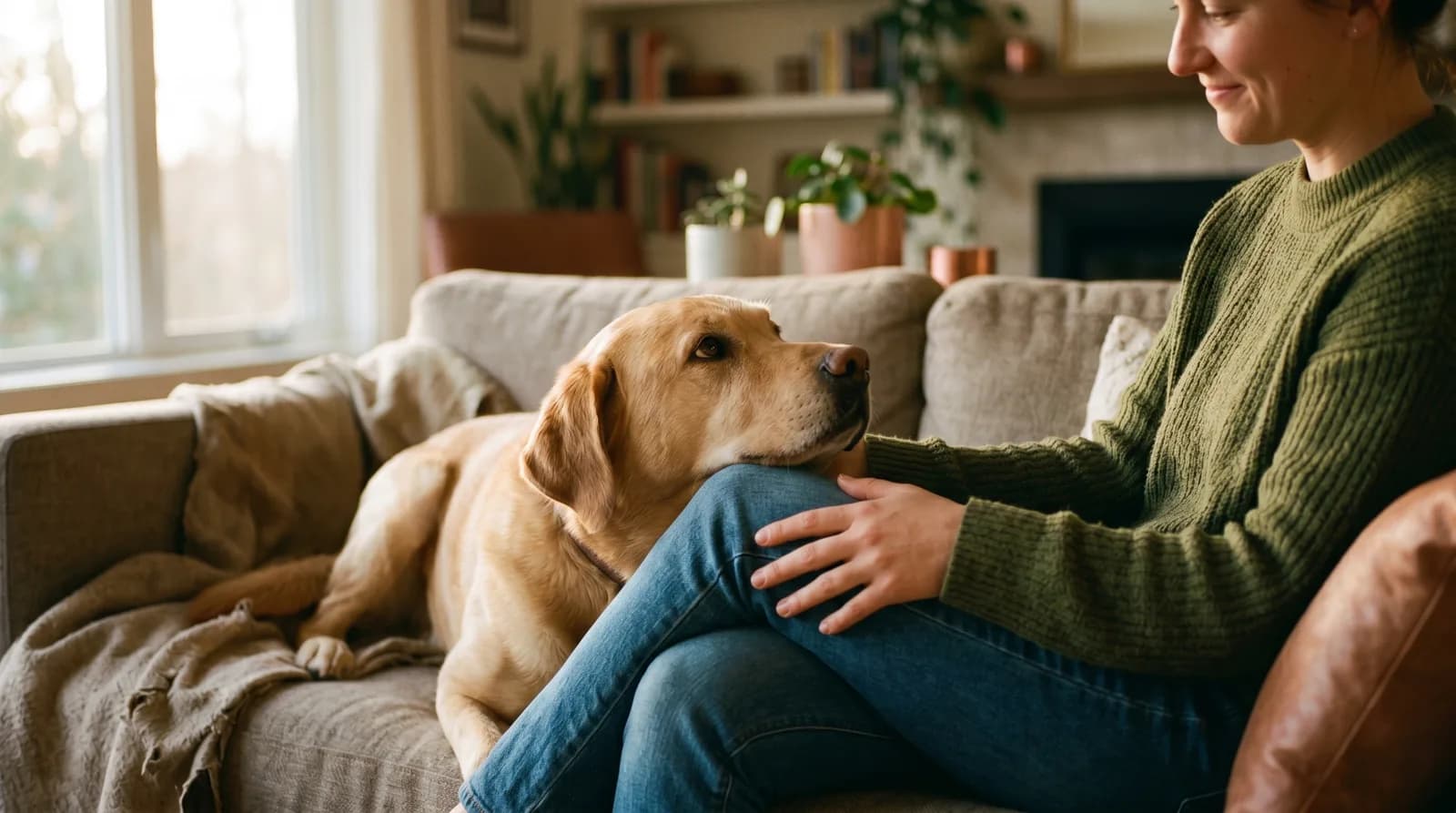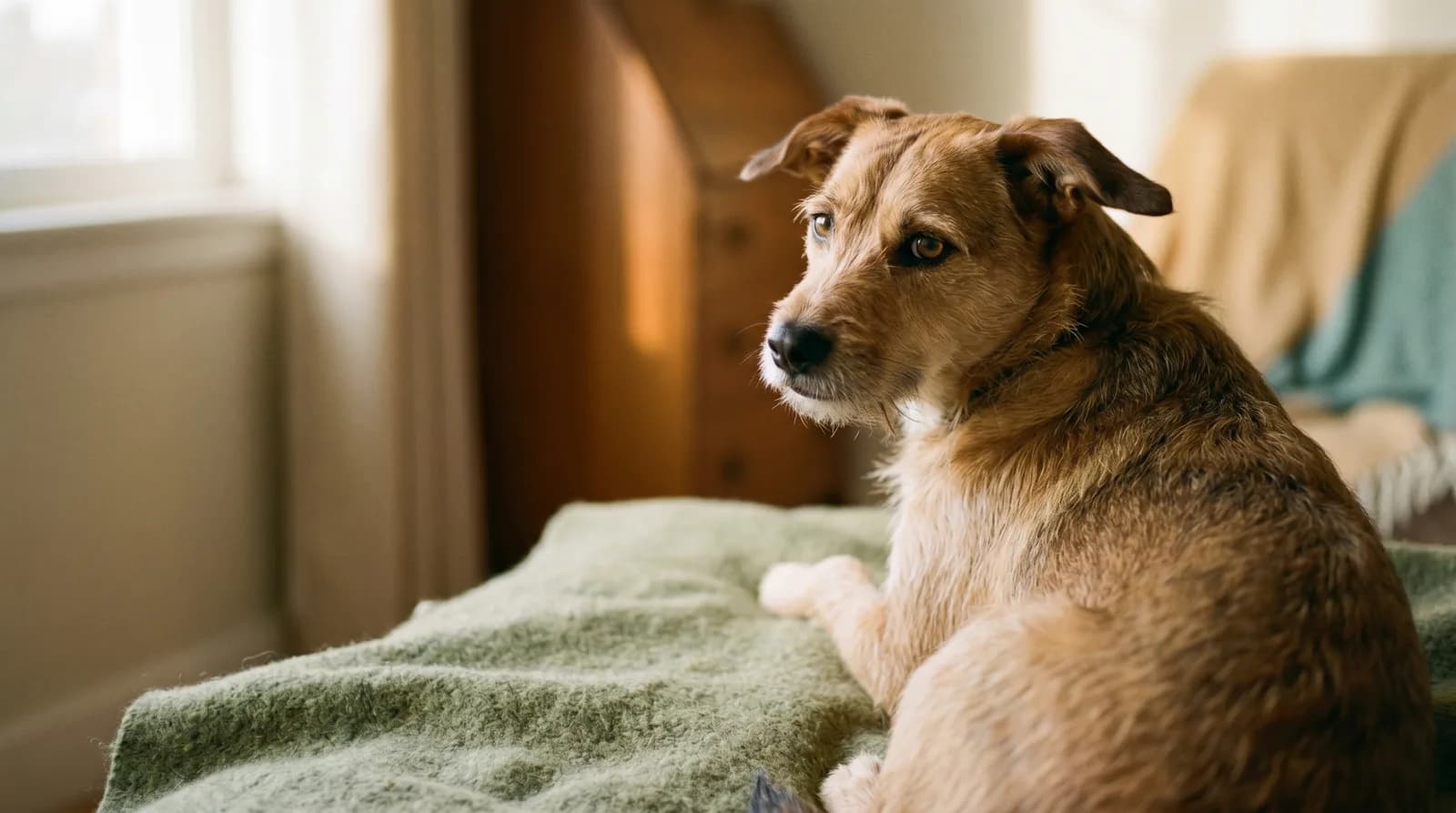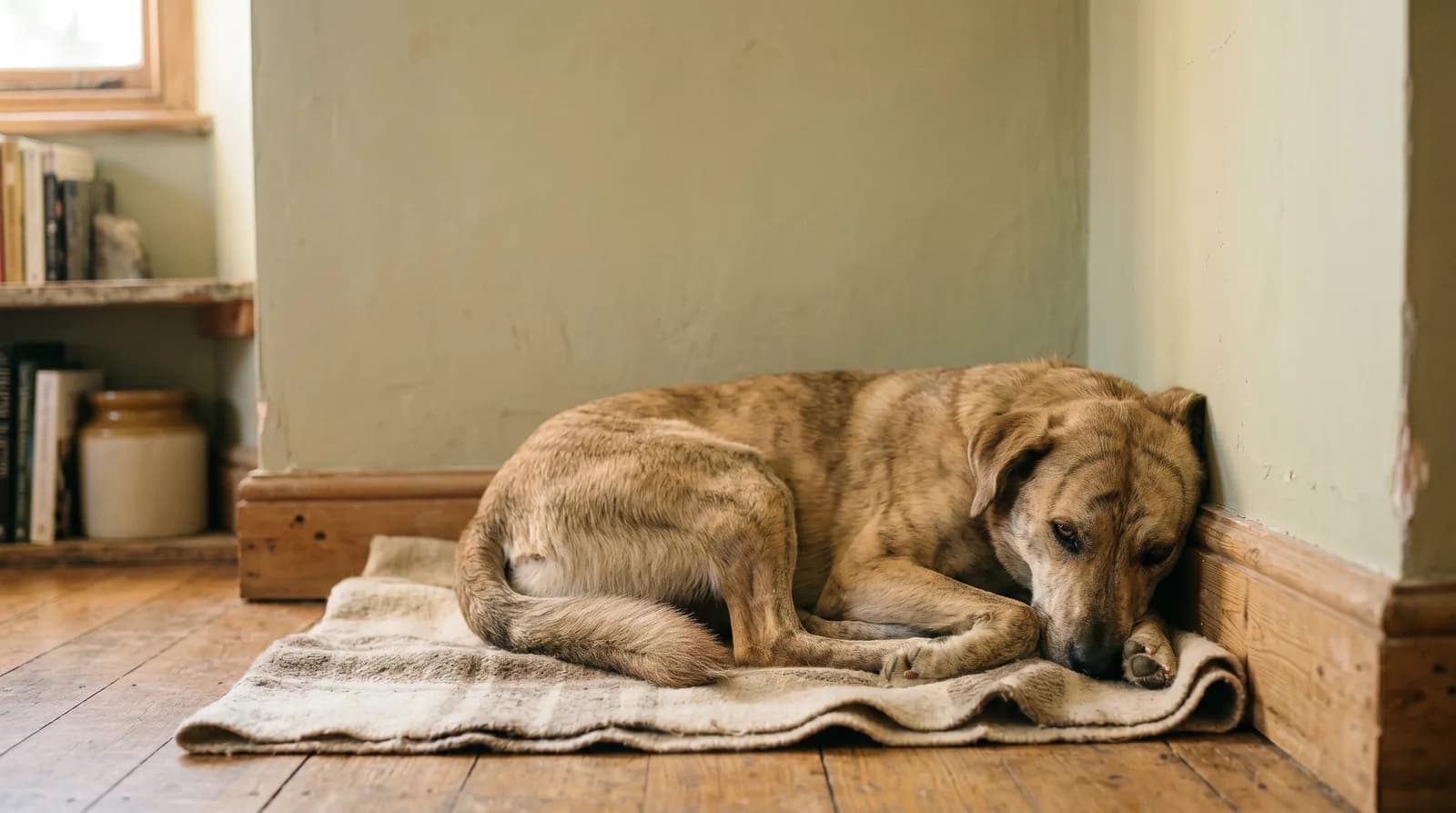
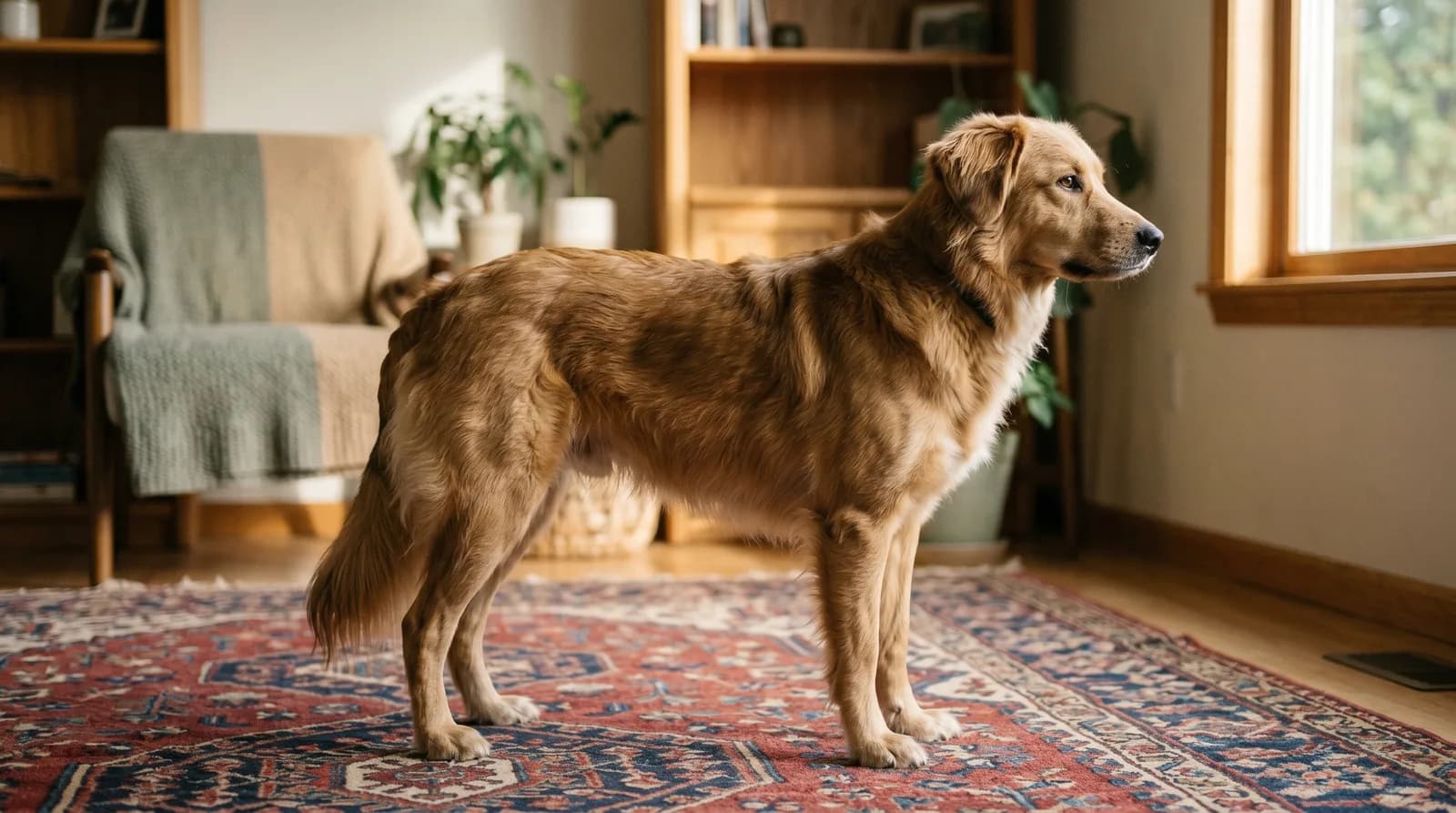
If you have ever felt like your dog goes from totally fine to barking, lunging, or shutting down with no warning, this guide is for you. Most of the time there was warning, it was just quiet. Reading dog anxiety body language means looking at the whole dog, head to tail, instead of fixating on one signal. A single lip lick or a low tail on its own rarely tells you much. But when several small signs stack up together, your dog is telling you, clearly and politely, that he feels uneasy. Learn to read that, and you can step in early, before he ever has to escalate. Your dog isn't being difficult, he's communicating, and that's something you can learn to hear.
Let's walk through what to actually look at, in the order it tends to show up.
Dog anxiety body language: read the whole dog, head to tail
Here is the single most important idea in this whole piece: no body part means anything on its own. A wagging tail is not automatically a happy tail. A yawn is not always tiredness. The skill in reading dog anxiety body language is watching the whole dog at once and noticing when several signals point the same way. Context matters too: a panting dog on a hot walk is just hot, but a panting dog on a cool evening at the vet is probably worried.
Eyes
Your dog's eyes say a lot once you know what to look for.
- Soft eyes are relaxed: a normal, almond shape, blinking naturally, a loose face around them. This is a comfortable dog.
- Hard eyes are tense and fixed: a hard, unblinking stare locked onto something, often with stillness in the rest of the body. He is worried or on guard.
- Whale eye is when you can see the whites, usually a crescent at the corner, because he is holding his head still while flicking his gaze toward whatever bothers him. It often means he feels a little trapped and wants more space.
Ears
Ear shape varies hugely between breeds, so learn your own dog's neutral, relaxed position first, then watch for changes.
- Pinned back, flattened tight against the head, usually signals fear or appeasement.
- Airplane ears, held out wide and low to the sides, often show conflict or unease: he is not sure what to do.
- Ears swivelled and rigidly forward can mean he is fixated on something that concerns him.
Mouth
The mouth is one of the most honest parts of the dog, and one of the easiest to miss.
- Lip licks, a quick flick of the tongue when there is no food around, are a classic low-level stress signal.
- Yawns when he is not tired, especially repeated ones, often mean he is trying to settle himself.
- Panting that does not match the temperature or his activity level can be a stress sign.
- A tight, closed mouth, where a relaxed open pant suddenly snaps shut, is a quiet but real flag that he just clocked something worrying.
Tail
The tail is where people get fooled most often, because we are taught that a wag equals happiness. It does not. A wag means arousal, and arousal can be good or bad.
- Low or tucked under the body signals fear or appeasement.
- A stiff, high tail with a fast, tight wag is not a friendly tail. It often means he is alert and aroused, sometimes on the edge of a reaction.
- A loose, sweeping wag with a wiggly back end is the genuinely relaxed, happy one.
Read the speed, height, and stiffness together, not just whether it is moving.
Body and posture
Finally, stand back and read his whole outline.
- A lowered body, crouching or making himself small, says he feels unsure or threatened.
- Leaning away from something, or shifting his weight back onto his hind legs, is him trying to add distance without leaving.
- Freezing, going suddenly still and stiff, is a big one. A frozen dog is often right at his limit, and freezing can come just before a snap. Read stillness as a serious signal, not as him being calm.
Calming signals: what he's trying to tell you
Beyond the moment-to-moment signs of stress, dogs use a set of gentle, deliberate gestures to defuse tension, both their own and other dogs'. These are often called calming signals, and once you spot them you will see them everywhere.
- Turning away, with the head or the whole body, is a polite "I mean no harm, please ease off."
- Sniffing the ground out of nowhere, especially when something approaches, is often a way to look busy and buy himself a moment, not a sudden interest in the grass.
- A slow shake-off, the full-body wet-dog shake when he is bone dry, is a little reset: it tends to come right after a stressful moment passes, like shaking the tension loose.
- Slow blinks and a softening of the face are him trying to lower the temperature of a tense situation.
When your dog offers these, the kindest thing you can do is take the hint: give him room, slow down, and let him reset. Respecting a calming signal teaches him that his quiet communication works, so he never has to get louder.
The escalation ladder: respect the quiet signals
Dogs almost always warn in order, quietest first. Picture a ladder. The bottom rungs are the subtle things: a lip lick, a yawn, a head turn, whale eye. If those go unheard, he climbs: freezing, stiffening, moving away. Only when all the polite signals have failed does a dog reach the top rungs, a growl, a snap, a bite.
The lesson here is huge. When you listen to the quiet signals, your dog never needs to shout. Every time you add distance at the first lip lick, you prove to him that calm communication works, and the lower rungs keep doing their job.
The opposite is the real danger. If a dog is told off or punished for growling, he does not stop feeling afraid, he just learns that growling gets him in trouble. So he skips that warning next time and goes straight to the bite. That is how dogs get labelled as biting "out of nowhere." A growl is information, not defiance. It is your dog being honest about how he feels, and it should never be punished. Thank him for the warning, give him space, and figure out what scared him.
Putting it together
Reading dog anxiety body language is a skill, and like any skill it gets faster with practice. Start by watching your dog when he is relaxed, on the sofa, in the garden, asleep in the sun, so you know his calm baseline. Then changes from that baseline jump out at you. Film him in everyday moments and watch it back in slow motion, you will catch signals you missed live.
What you do with what you see matters just as much as spotting it. The general goal is always the same: when the signals say he is uneasy, lower the pressure and add distance from whatever is worrying him. For a deeper look at the specific behaviours that point to a worried dog, our guide to the signs of anxiety in dogs breaks them down one by one. And once you can read him, the next step is helping him feel calmer overall, which is exactly what our pillar guide on how to calm an anxious dog walks you through. If you want to go deeper on the gentle gestures dogs use to defuse tension, a dedicated piece on calming signals in dogs covers them in more detail.
Body language is your dog talking to you in the only language he has. The more fluently you read it, the less he ever has to escalate, and the safer and calmer life gets for both of you.
If your dog's fear seems severe or comes on suddenly, or there is any growling, snapping, or bite risk, please loop in your vet or a qualified force-free behaviour professional. This is training guidance, not veterinary or medical advice.