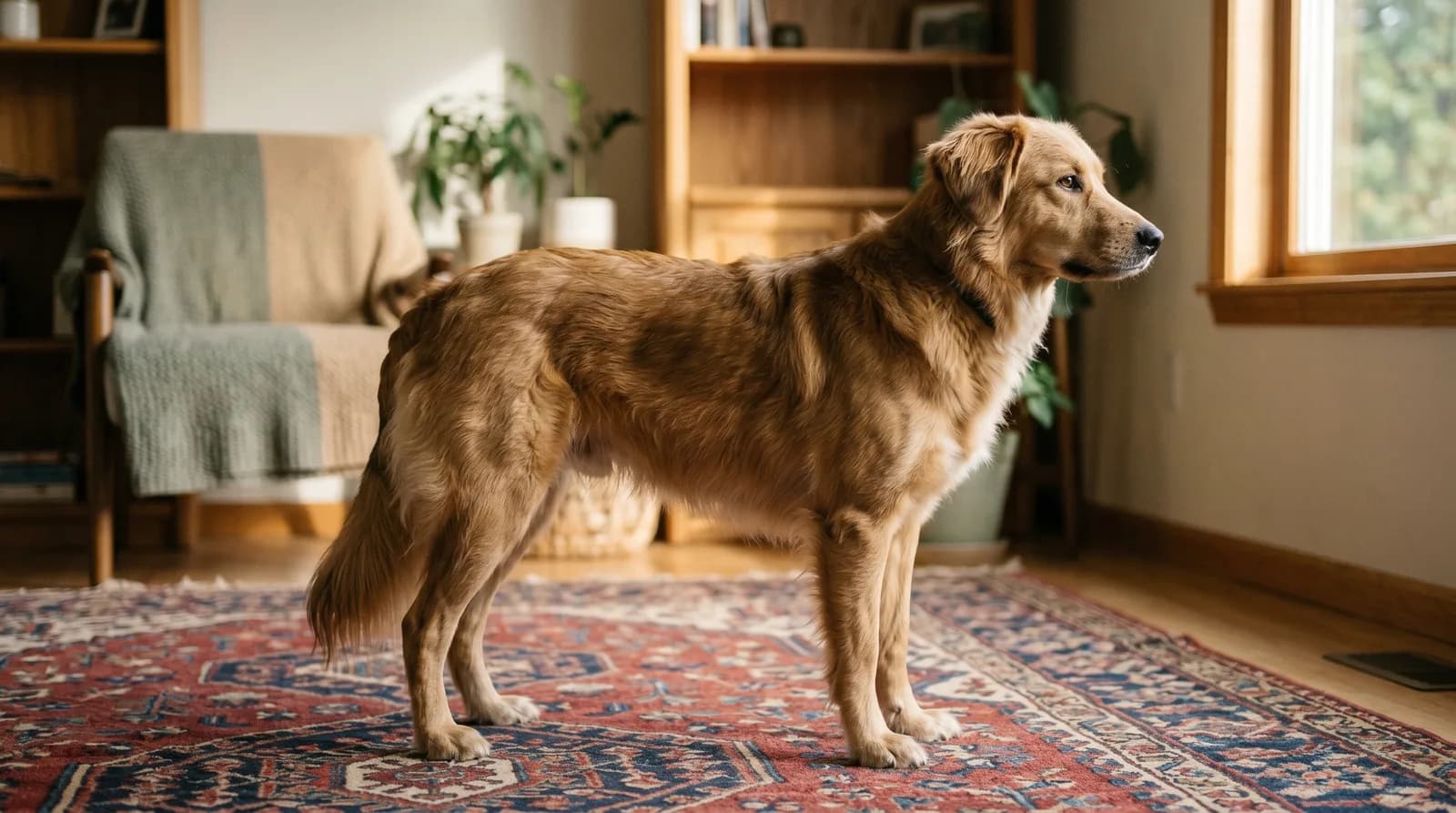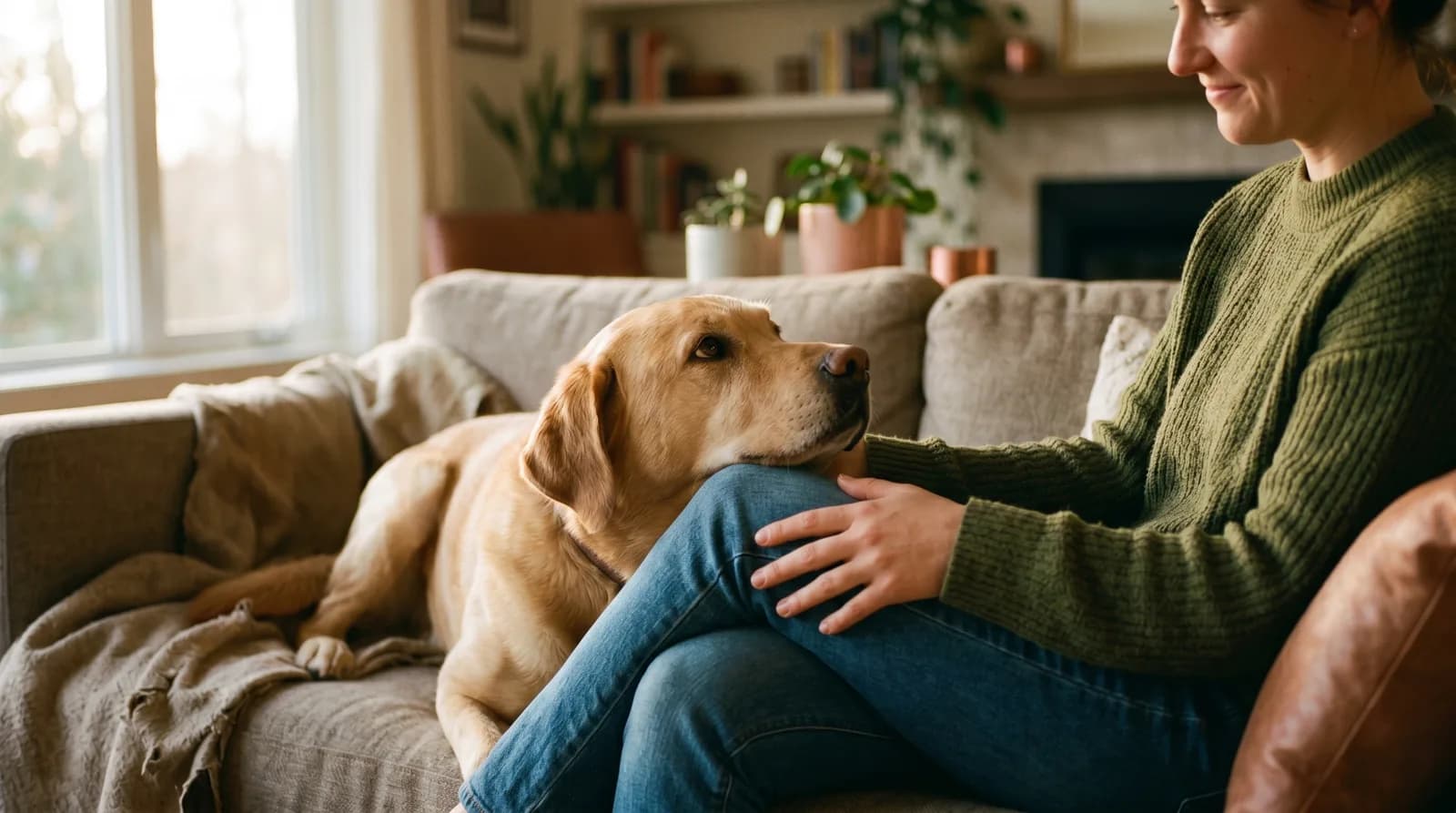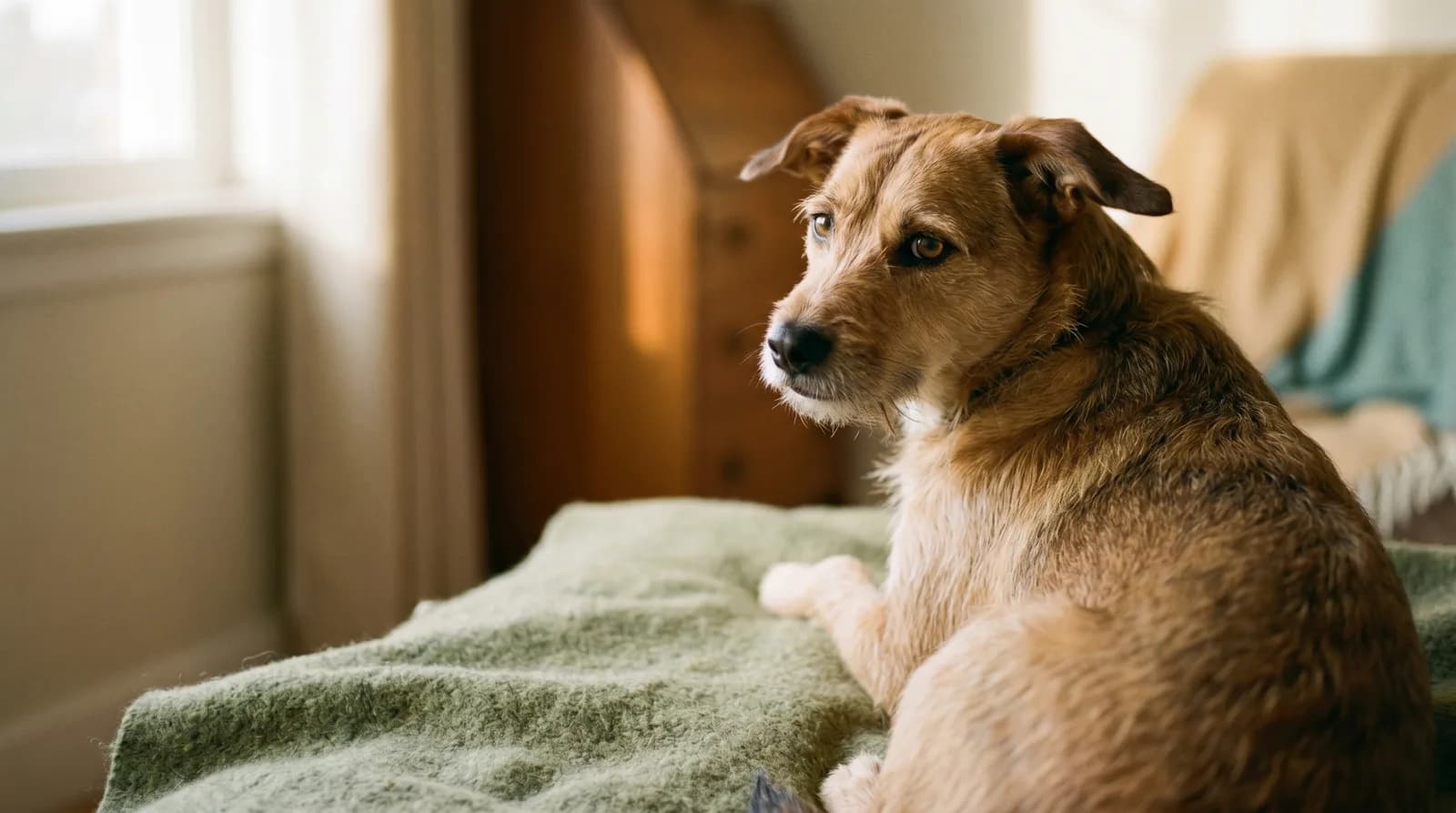
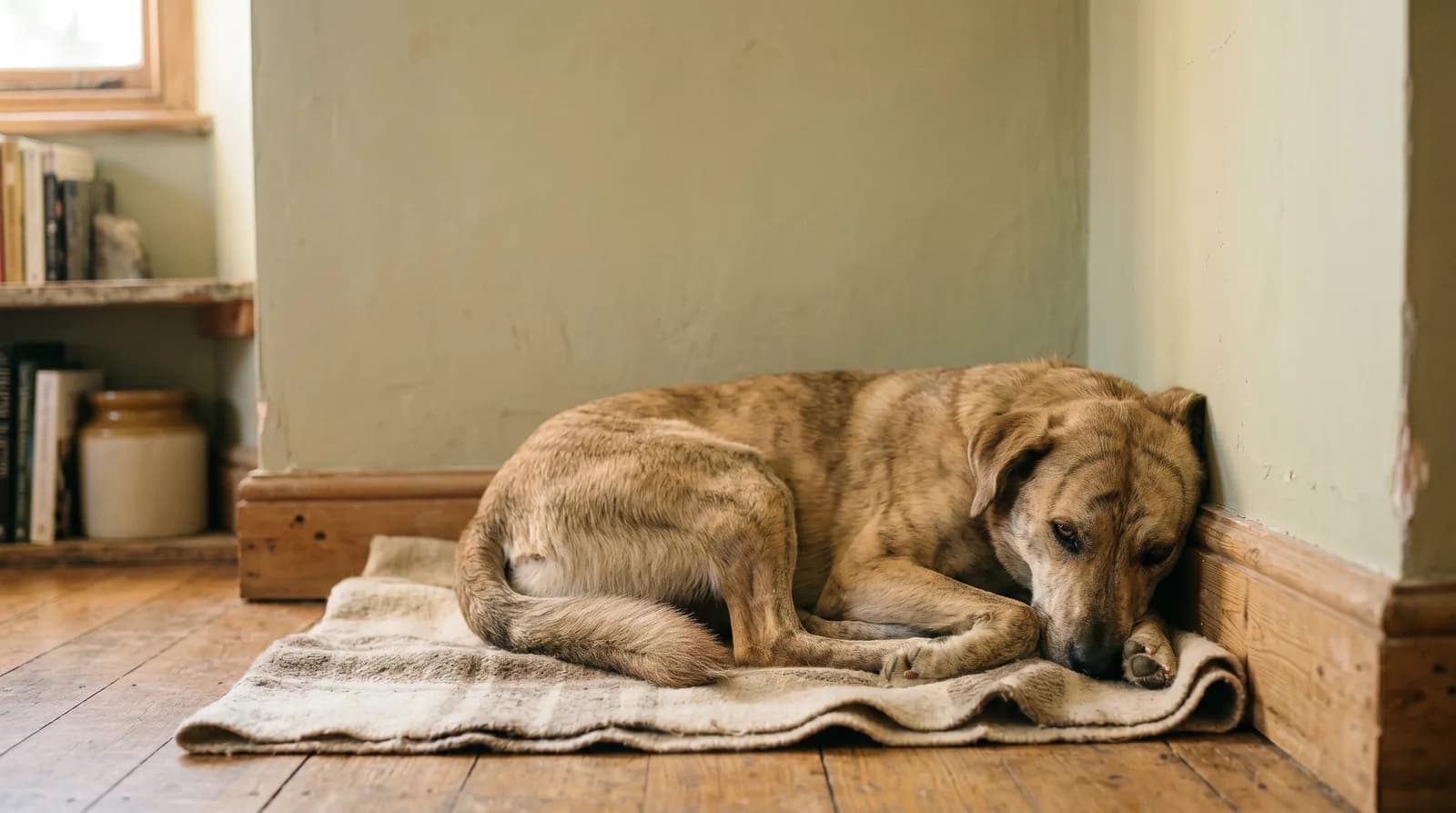
You have probably had this moment. You take your nervous dog somewhere new, brace for the barking or the pulling, and instead he goes quiet. Very quiet. He sits, he stares, he doesn't react to anything. Part of you thinks, finally, he's being good. But something about it feels off, and you can't quite name it. Here is the uncomfortable truth that almost nobody tells you: when a frightened dog shuts down, that stillness is not calm. It is often a dog who is so overwhelmed he has stopped coping, and he needs your help, not your praise.
This is one of the most missed things in living with an anxious or reactive dog, and once you can see it, you cannot unsee it.
The quiet that fools everyone
We are wired to read quiet as good. A still dog isn't embarrassing us in the park. He isn't lunging at the labrador across the street. So when your dog finally goes silent in a situation that usually sets him off, it is so tempting to exhale and call it progress.
But there are two completely different kinds of quiet, and they mean opposite things.
One is a dog who feels safe enough to switch off. The other is a dog who feels so unsafe that he has switched off in a different way, the way a person goes blank and small when something is too much. From across the room they can look identical. Up close, they could not be more different.
The reason this matters is simple. A genuinely relaxed dog is learning that the world is okay. A dog who has shut down is still stuck in the scary moment, just silently. Praise the first one and you build confidence. Miss the second one and you teach him that nobody is coming to help.
What a truly relaxed dog looks like
A calm dog is soft all over. His body has no hard edges to it.
- His muscles look loose, not braced. He might flop onto a hip, sprawl, or lie on his side.
- His eyes are soft, with slow blinks. You may even see a relaxed squint.
- His mouth is easy, maybe slightly open, no tight lips or hard panting.
- His ears sit in their natural resting place, not pinned back or rigidly forward.
- He chooses to engage. He'll glance over, take a snack happily, sniff something, follow you, wander off and come back.
That last one is the giveaway. A relaxed dog has options and uses them. He is making little choices, taking food, investigating, settling, because the thinking part of his brain is online. He is a participant, not a statue.
If you want to get fluent in this, our guide to dog anxiety body language breaks down the small signals in detail, so you can read the difference at a glance.
What a dog who shuts down looks like
Now the other kind of still. A dog who is frozen with fear holds himself in a way that, once you know it, looks nothing like rest.
- He is stiff, not loose. The stillness has tension in it, like he is holding his breath.
- He may be hunched or low, made small, tail clamped or tucked under.
- His eyes are wide or fixed, sometimes showing the whites, or glazed and far away.
- His ears are pinned back or locked in one position.
- He won't take food he normally loves, won't sniff, won't look at you, won't make the small choices a settled dog makes.
That refusal of food is one of the clearest tells you have. A dog who turns his nose up at a favourite snack he would usually mug you for is almost always over threshold, that point where fear floods the system and the thinking brain goes offline. He is not being polite or full. He has stopped being able to.
People sometimes call this look "checked out," and that is exactly right. He is physically present and emotionally gone. The walls have come up because going still and silent is one of the oldest ways a frightened animal copes when running or speaking up doesn't feel possible. It can even harden into a kind of practised giving up, where a dog who has learned that nothing he does changes anything simply stops trying. From the outside it reads as a beautifully behaved dog. Inside, he has just stopped asking for help.
Why "he's being so good" is the dangerous read
Here is where the kindest owners go wrong, and it is worth saying plainly. A shut-down dog often gets praised for it.
He's quiet at the vet, so we say good boy and stay longer. He freezes at the busy market, so we think he's coping and push on a little further. He goes flat when the children visit, so we assume he's fine with them. Every time, we read the silence as consent and ask for more. And every time, the dog learns the same bleak lesson: being overwhelmed gets him nowhere, so why bother signalling at all.
This is also where it can quietly become a safety issue. A dog who has stopped showing the early warnings, the lip licks, the turning away, the freezing, can look perfectly tolerant right up until he isn't, and then a bite seems to come "out of nowhere." It rarely does. The warnings were there. They just got smaller and quieter until they vanished, often because somewhere along the line they were ignored or told off.
Your dog isn't being good when he shuts down. He isn't being naughty either. He's scared, and that is fixable, but only once you read the stillness for what it really is.
What to do when you see it
The move is the same one that underpins almost all force-free work: get him back under threshold so his body can unclench.
- Add distance, fast. Calmly move away from whatever is too much, more space than feels necessary. You are not retreating, you are giving him room to think again.
- Stop asking for things. No cues, no "say hello," no pushing through. He can't learn while flooded, so there is nothing to gain by staying.
- Offer food once he can take it. When he starts to sniff, blink, shake off, or accept a snack, that is his brain coming back online. Now, and only now, is there real calm to gently reward.
- Let him choose. Movement, sniffing, coming to you for reassurance, these are all good signs. Comforting a scared dog does not make him worse. If he wants you close, be close.
The bigger picture is to stop landing him in shut-down territory in the first place by working below the level that overwhelms him. That whole gentle approach, the threshold idea, building confidence through easy wins, is laid out step by step in how to calm an anxious dog. If you are still learning to spot the earlier, smaller signs before they tip into a freeze, start with the signs of anxiety in dogs.
The shift to make
Once you stop trusting quiet on its own and start reading the whole dog, everything changes. You stop praising a frozen dog for "being good" and start noticing he needs you. You catch the freeze before it becomes a habit. You give space instead of asking for more.
A dog who shuts down is not a calm dog and he is not a bad dog. He is telling you, in the quietest voice he has, that this is too much. The kindest thing you can do is listen.
If your dog's fear is severe or comes on suddenly, or if there is any growling, snapping, or bite risk, please loop in your vet or a qualified force-free behaviour professional who can help you do this safely. This is training guidance, not veterinary or medical advice.