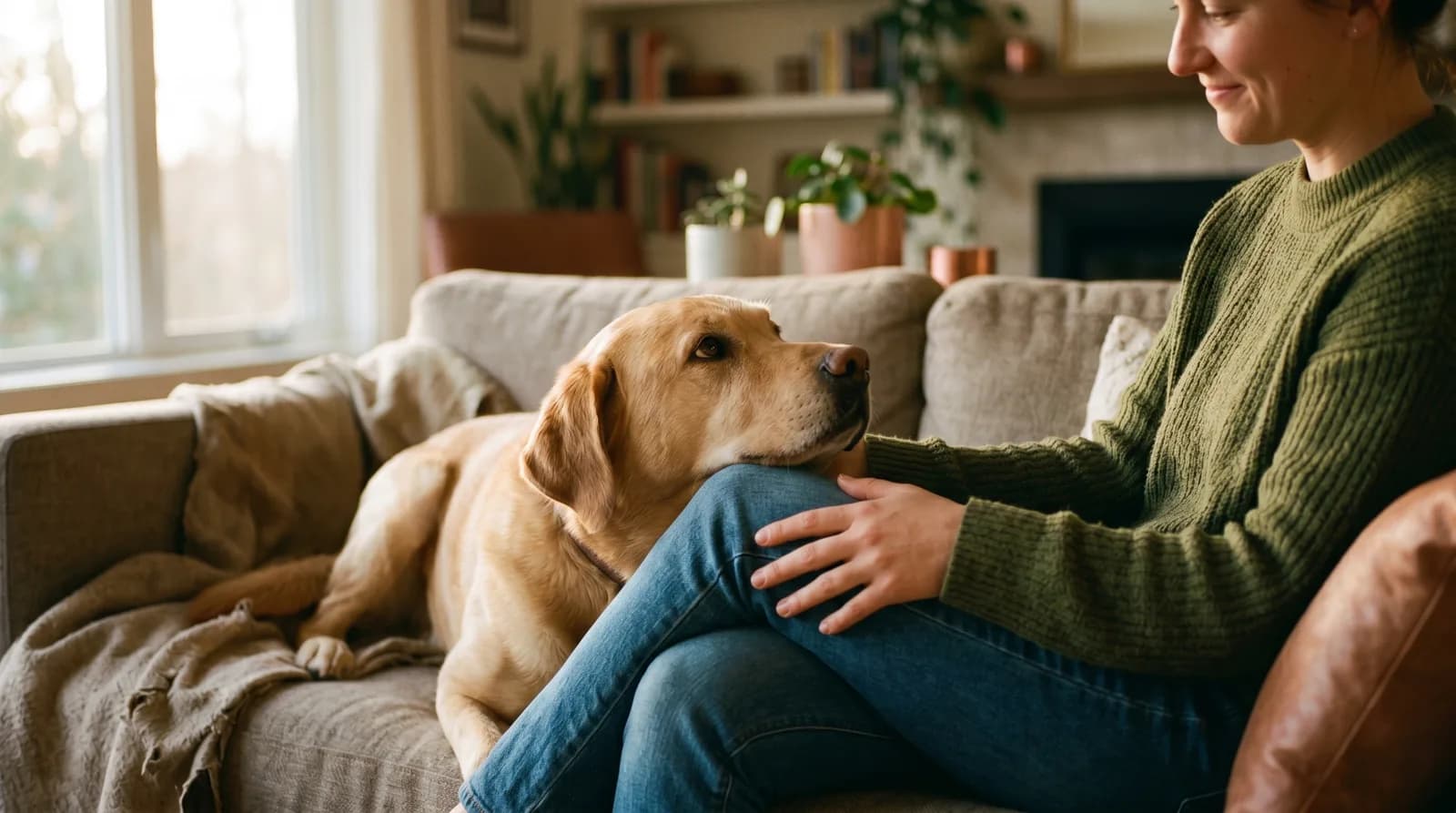
If the words "the holidays are coming" make your stomach drop a little, you are not alone, and you are not a bad owner. For the rest of the world it is twinkling lights and family. For you, the holidays with an anxious dog can feel like a long obstacle course of doorbells, strangers, packed rooms, late nights, and a calendar that ends with fireworks. The good news is that none of this means a miserable December. With a "protect his peace" mindset and a little planning, you can carry him through the season feeling far safer than last year. Your dog isn't being difficult about the chaos, he's scared of it, and that is something you can manage.
Why the holidays with an anxious dog are so hard
Most of the year, your dog knows roughly what each day holds. The holidays quietly remove all of that. The doorbell goes off ten times a day. The living room fills with loud, unfamiliar people. His walk gets pushed to a strange hour because you are cooking. Suitcases appear, the furniture moves, there are smells and sounds and movement everywhere, and then the year ends with bangs in the sky.
For a worried dog, that is not festive. It is a stack of his least favourite things all landing at once, and his alarm system has no quiet moment to reset. If he paces, barks, hides under the table, or snaps at a guest who reached for him, he is not ruining your party. He is overwhelmed and telling you so. Once you see it that way, the whole season gets easier to plan, because the goal stops being "make him behave" and becomes "help him feel safe."
Keep his routine boringly predictable
When everything else gets loud and strange, the most calming gift you can give an anxious dog is a day that still looks like his normal day. Predictability is quietly one of the most powerful tools you have, and the holidays are exactly when it slips.
So protect the bones of his routine. Feed him at his usual times, even when the humans are eating at odd hours. Keep his walks roughly when they always happen, and if you can, walk him at quiet times when the streets are calm rather than at peak chaos. Guard his sleep, a dog who is up late in a noisy house with no recovery time will be more on edge the next day. None of this has to be perfect. Just keep the rhythm steady enough that some part of his day still feels familiar. For the wider picture on what steady, force-free calm looks like, our guide on how to calm an anxious dog walks through the whole approach.
Give him a safe room away from the party
This is the single best thing you can set up before anyone arrives: a quiet room or den where the party simply cannot reach him.
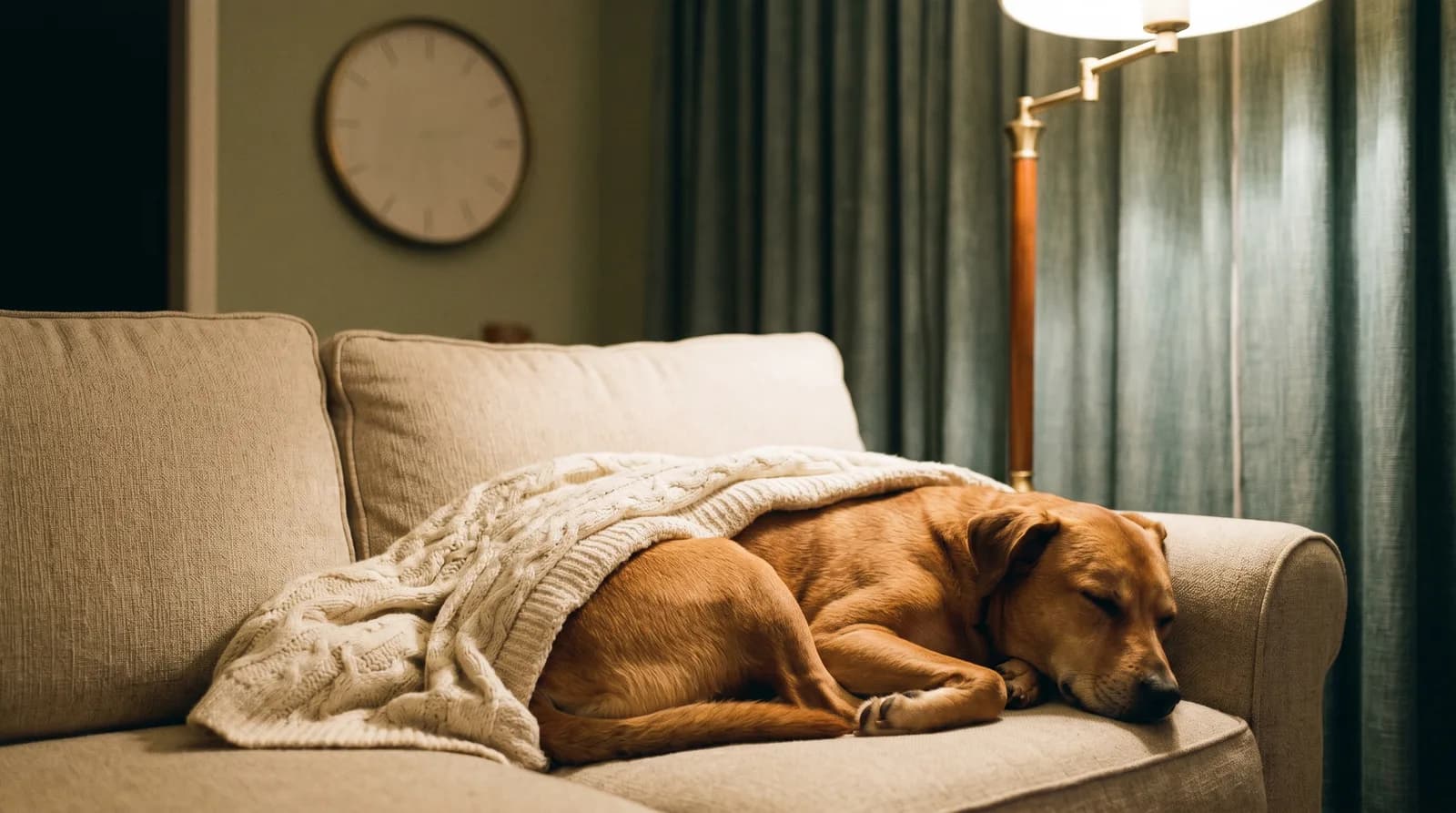
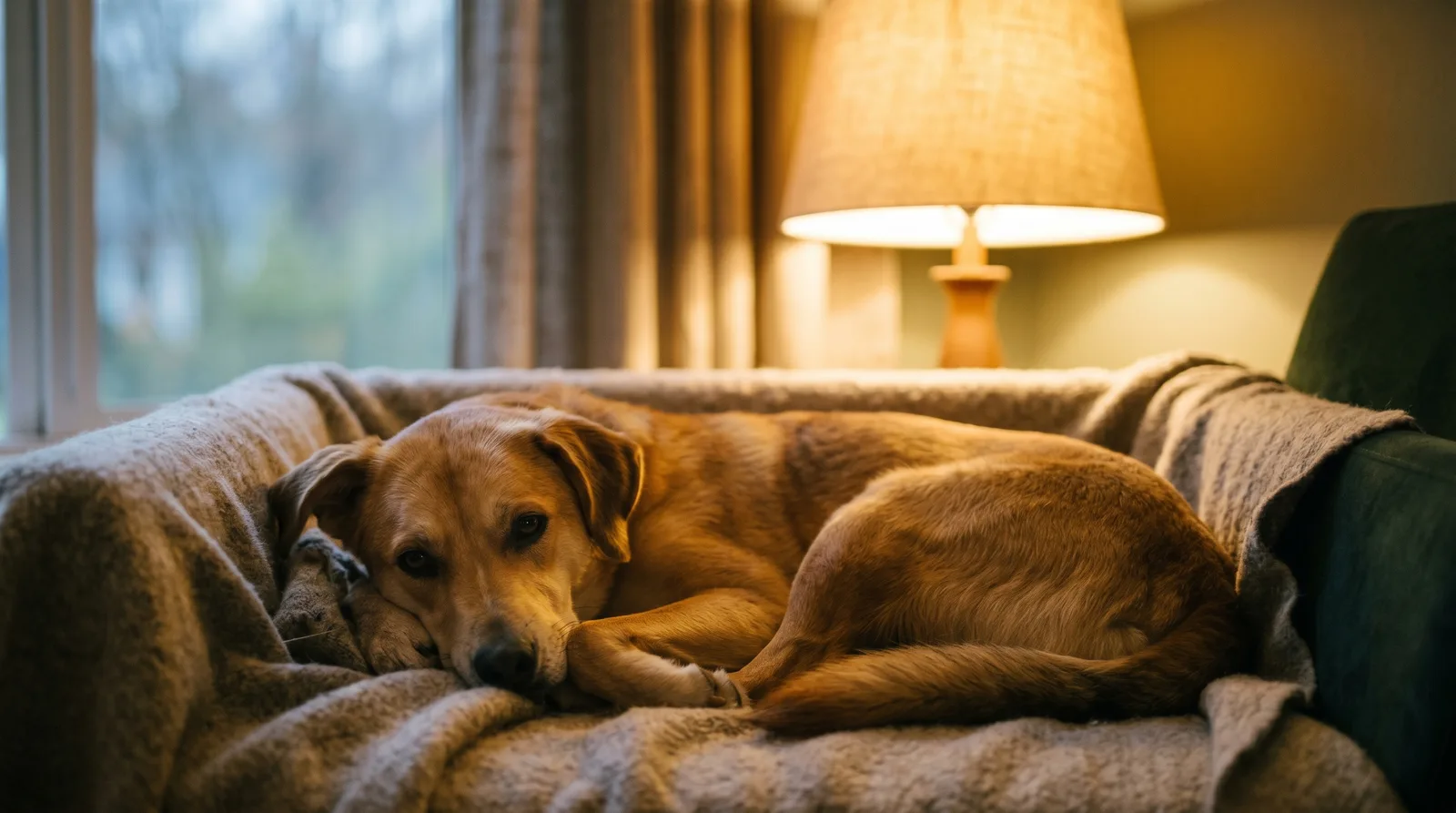
Pick a spot away from the front door and the main noise, a bedroom or a quiet corner works well. Put his bed, a favourite blanket that smells of home, some water, and a long lasting chew or a stuffed food toy in there. Draw the curtains, leave a soft light, and add some steady background sound, gentle music or a fan, to blur the doorbell and the chatter. Let him learn the room is his before the busy day, not just on the night, so it already feels safe.
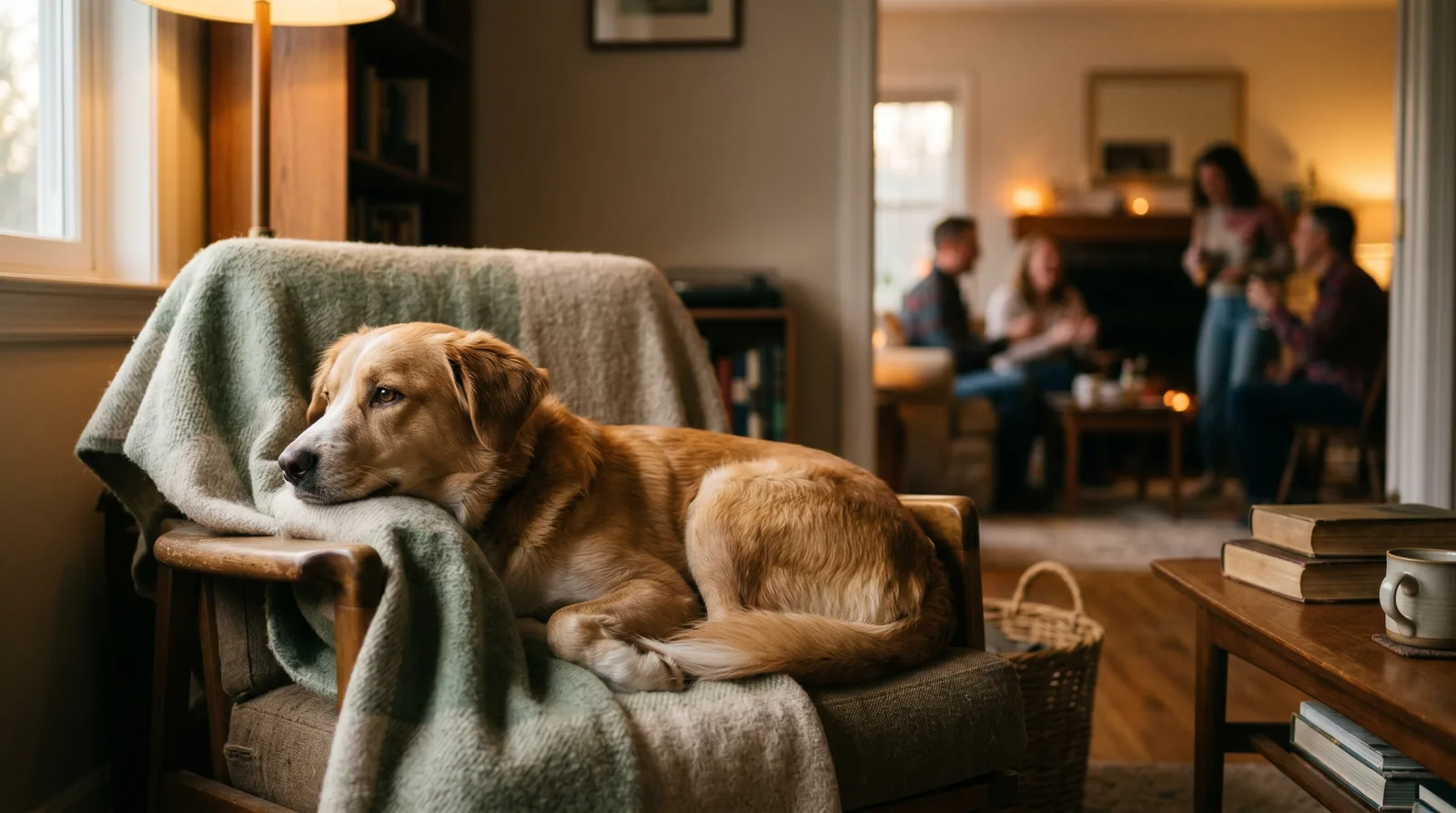
Then let him use it. If he takes himself off to his den when the guests arrive, that is a win, not rudeness. A dog who can remove himself from the thing that scares him is a dog who copes. Put a sign on the door if you need to, and make it a house rule that nobody, especially children, follows him in or wakes him there. His safe room only works if it is genuinely off limits.
Manage the guests, not the dog
Here is the part people forget: at the holidays, you mostly manage the humans, not the dog.
Most visitors mean well and do exactly the wrong thing. They crouch down, coo, reach out a hand, make eye contact, or try to win him over. To a scared dog, a stranger leaning into his space is a threat, however kindly it is meant. So set the rules before they walk in, and do not be shy about it.
A few simple guest rules that protect a worried dog:
- No forced greetings. Let him choose whether to approach. If he keeps his distance, that is his answer, and it is the right one.
- Ignore him. Ask guests not to stare, reach over him, or call him over. Calm, neutral, no fuss.
- No following him to his safe spot. When he retreats, he is done. Let him be.
- Watch the doorway and the kids. The front door and excited children are the two biggest flashpoints. Have a plan to pop him in his safe room before the bell rings.
You do not owe anyone a sociable dog over the holidays. Watching him from across the room, relaxed, is a far better outcome than a forced hello that tips him over. Learning to read the quiet "I have had enough" signals helps you step in early, and our piece on why your dog isn't naughty, he's scared is a good reminder of what is really going on behind the behaviour.
Plan ahead for the New Year's Eve bangs
The season tends to end with the hardest night of all. Fireworks are loud, sudden, and unpredictable, which is the exact recipe a noise-sensitive dog hates most, so this one is worth a real plan rather than crossing your fingers on the night.
The short version: walk him well before dark while it is still quiet, feed him early so a full belly is on his side, and have his safe room ready with curtains drawn and steady sound covering the bangs. Stay home with him if you possibly can, and comfort him as much as he wants, you cannot make a frightened dog more afraid by being kind to him. If he wants to hide, let him hide. Your calm presence is the anchor.
Because this night deserves its own checklist, we have written it out in full. Follow our New Year's Eve plan for an anxious dog for the night itself, and read dog noise phobia, fireworks, and thunderstorms for the longer term work of helping him feel calmer around sudden noise, so next year is gentler than this one.
Be kind to yourself too
You will not get every moment of the season right, and you do not have to. Some days the doorbell will catch you off guard and he will bark himself hoarse, and that is okay. He is not back to square one, and you have not failed him. You are carrying a scared dog through the loudest few weeks of the year, and simply choosing to protect his peace instead of pushing him through it is already the kind thing, and the thing that works.
Your dog isn't naughty, he's scared, and that is fixable, even in December. Give him predictability, a safe place to hide, guests who keep their distance, and a real plan for the bangs, and you may find the holidays this year feel a little more like the season they are supposed to be, for both of you.
If his fear is severe or comes on suddenly, or if there is any growling, snapping, or bite risk around guests, please loop in your vet or a qualified force-free behaviour professional who can help you do this safely. This is training guidance, not veterinary or medical advice.