If your dog dreads the turn of the year, you are not imagining how hard it is. New Year's Eve fireworks are arguably the toughest night of all for a noise-sensitive dog: they don't come and go in a quick burst, they build for hours and crash into a sustained roar at midnight, often in cold, dark weather, with random bangs scattered across the days either side. That's a long time to feel afraid. He isn't being dramatic or naughty, he's scared, and the reassuring part is that's something you can plan around. Here's how to get him through the long night as calmly as possible.
Why New Year's Eve fireworks are harder than other nights
Most firework guidance is built around a single evening that peaks and fades. New Year is different, and it helps to know why before you plan for it.
- It drags on. Instead of an hour or two of action, the bangs can start in the early evening and keep going past midnight. Your dog can't simply wait out a short scare, he has to cope for hours.
- There's a hard midnight spike. At the stroke of twelve, everyone lets off their rockets at once. It goes from scattered bangs to a wall of noise, which is exactly the unpredictable, inescapable mix that tips a noise-sensitive dog over the edge.
- It's cold and dark. Long winter nights mean more hours of darkness for flashes to show through the curtains, and a frosty, late potty break is no fun for an already-anxious dog.
- The bangs don't stop on the 1st. People set off leftover fireworks for days before and after, so random scares can ambush you when you've let your guard down.
None of this means the night is hopeless. It just means New Year rewards a bit of forward planning. For the bigger picture of what's happening in his head, our pillar guide on dog noise phobia, fireworks, and thunderstorms is the place to start.
Your New Year's Eve plan, step by step
The playbook is the same calm, force-free approach you'd use on any noisy night, the July 4th plan follows the very same logic, just stretched to fit a longer evening and a harder midnight peak. Work through these in order:
- Tire him out early, before dark. Take your big walk or play session in the morning or early afternoon, well before the first bangs. A pleasantly tired dog copes a little better, and once dusk falls the walks should stop.
- Feed dinner early and get the last potty break in. Bring his meal forward and do his final toilet trip while it's still quiet outside. You don't want to be coaxing a frightened dog out at 11pm with rockets going off.
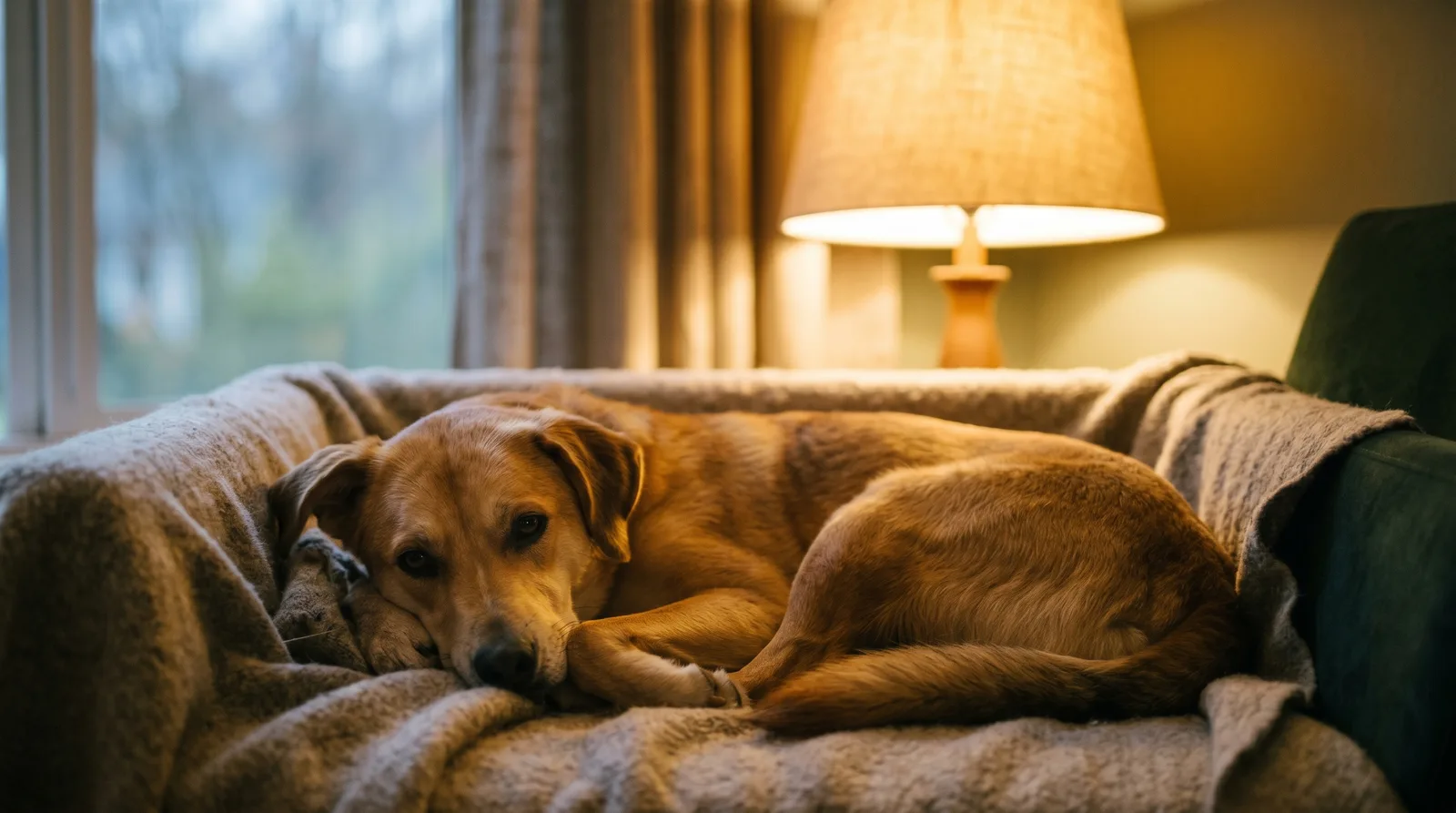
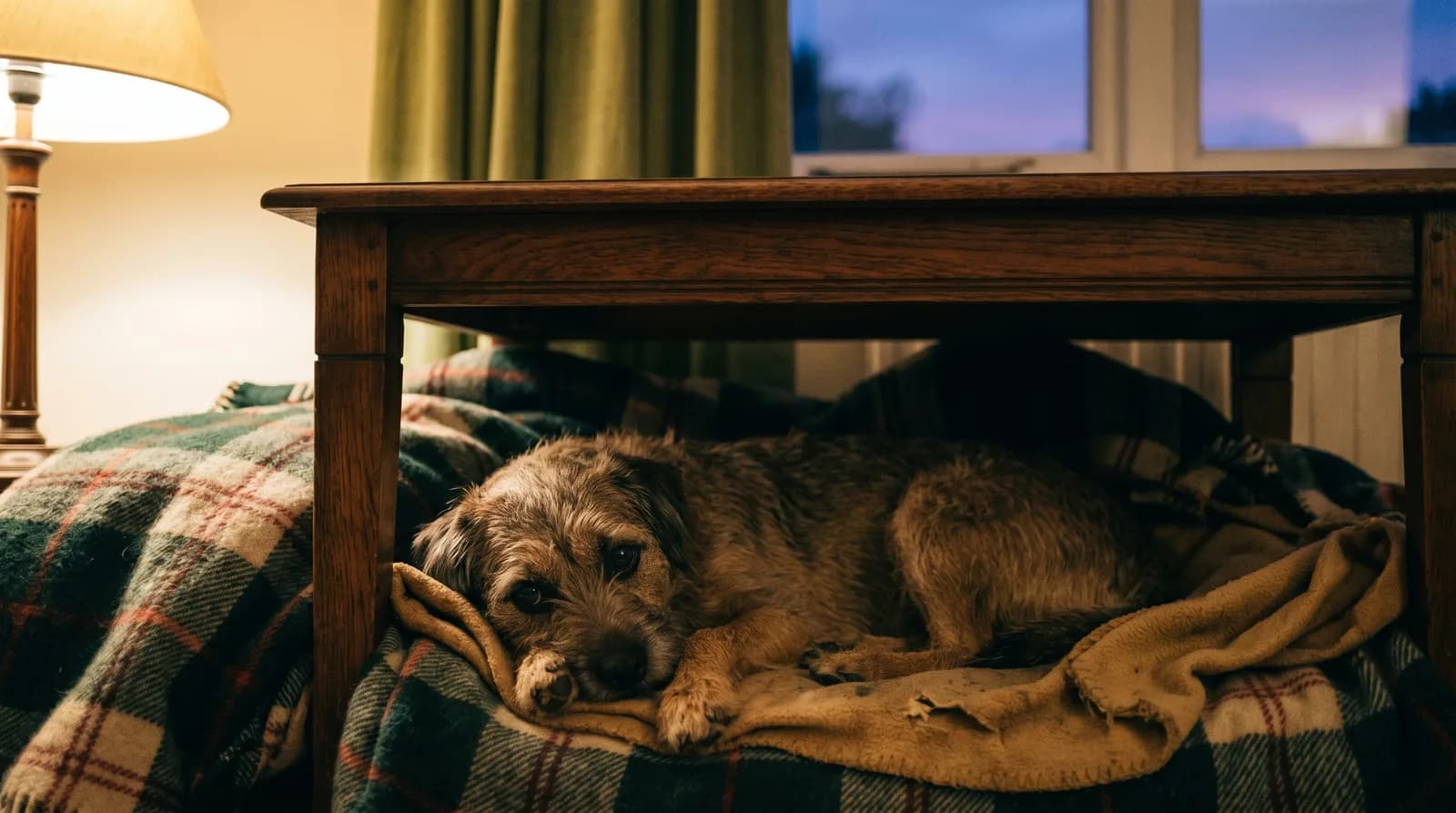
- Set up the safe den before the evening builds. Have his cosy, enclosed hiding spot ready: a covered crate, a quiet inner room, his bed, a t-shirt that smells like you. Leave it open so it never feels like a trap.
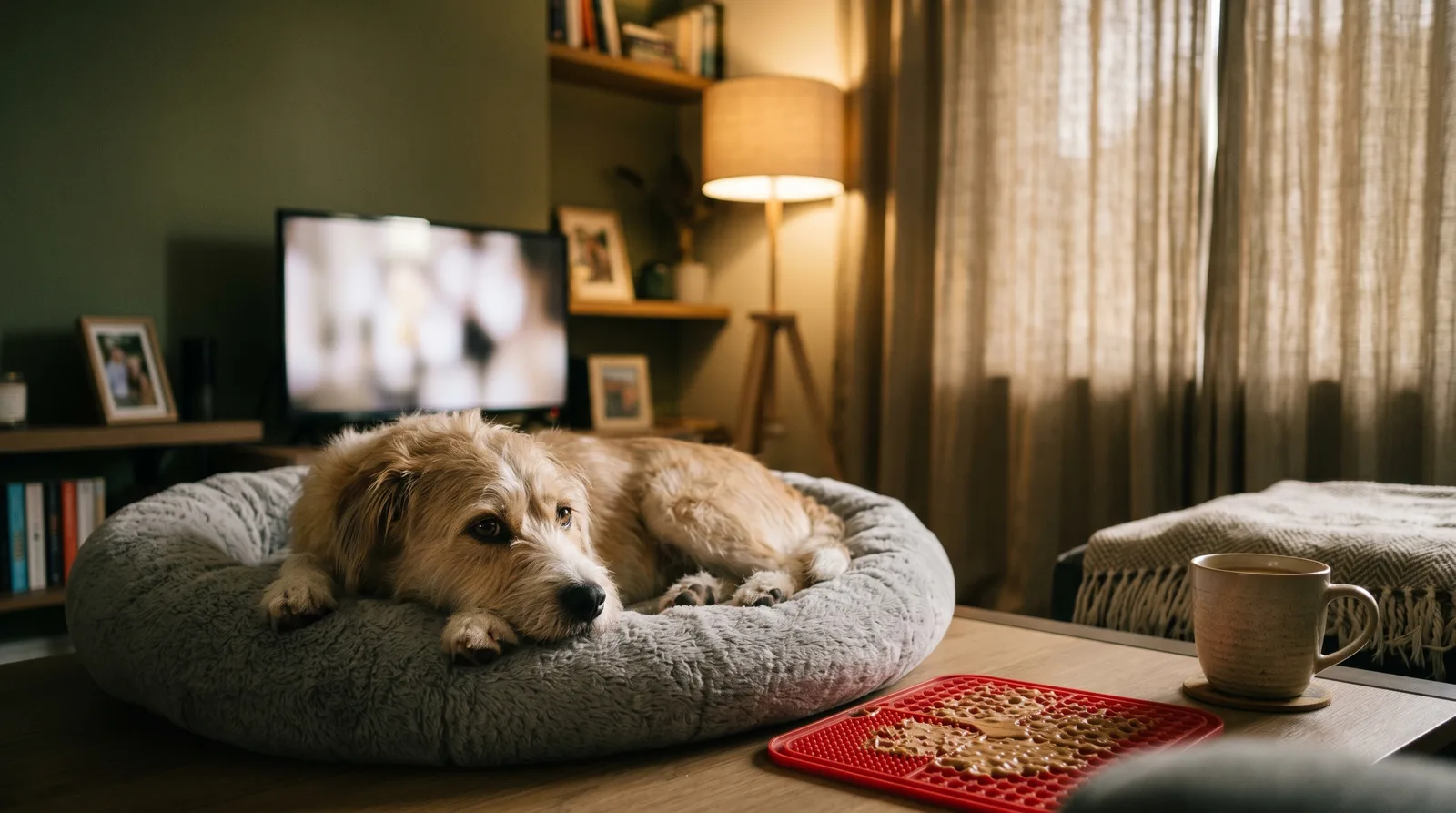
- Close up and start white noise early. Shut the windows and curtains to muffle the bangs and hide the flashes, and turn on steady background sound, a fan, the TV, or calm music, before the noise ramps up.
- Give him a settling activity. Offer a stuffed lick mat, a stuffed Kong, or a long-lasting chew. Calm licking and chewing help some dogs settle in. If he won't take it, he's over threshold, so don't push it.
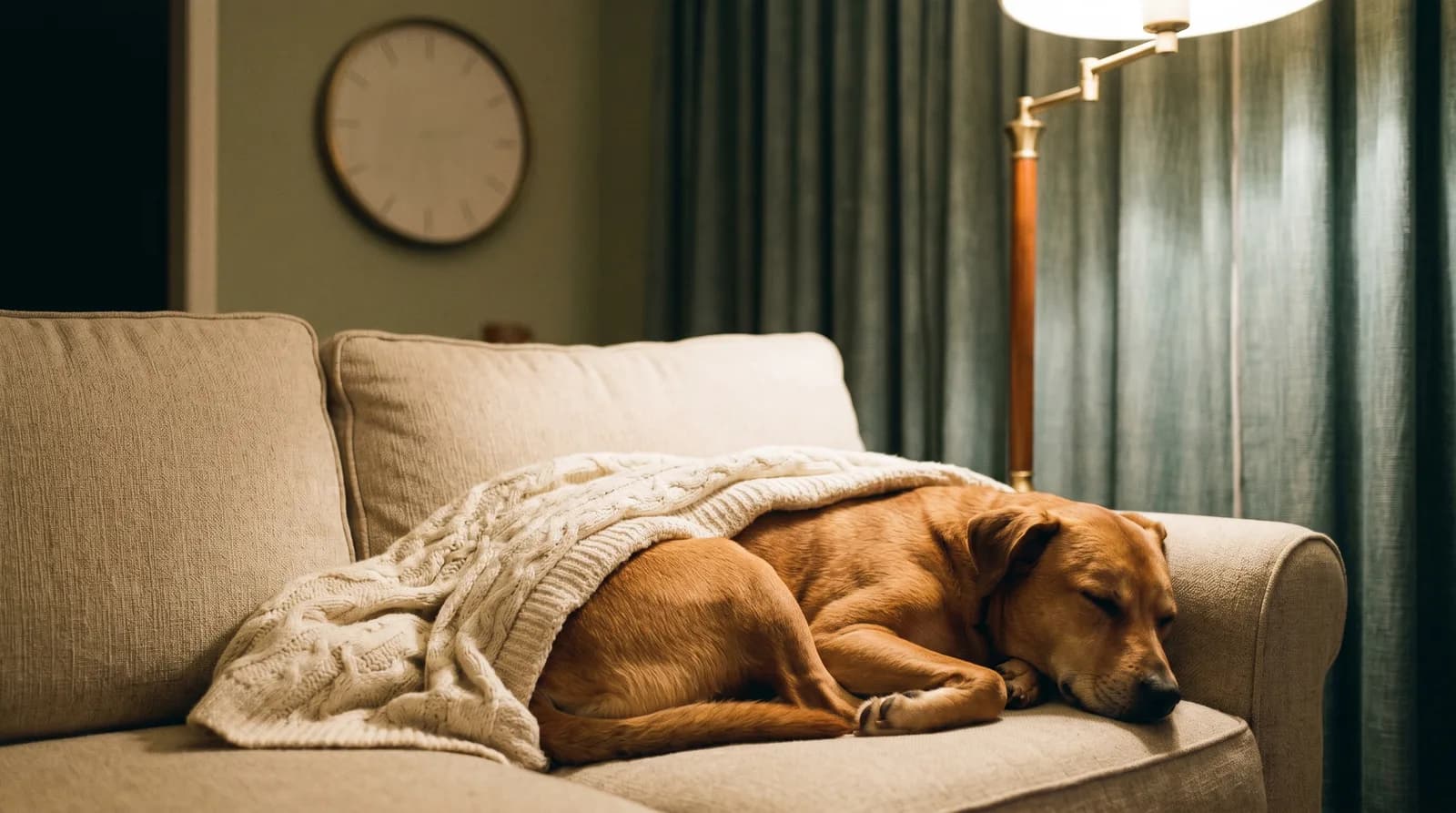
- Stay up with him through the midnight peak. Midnight is the worst stretch. Plan to be awake and near him, sit close, keep your energy calm and ordinary, and comfort him if he wants it.
- Lock doors and gates, and check ID for the bolt risk. A panicking dog may try to bolt, and lost-dog reports spike around New Year. Check latches, keep him indoors during the peak, and make sure his tag and microchip details are current.
When he's over threshold
On the hardest nights, your dog may be too frightened to eat, settle, or take anything you offer. That's your signal he's over threshold, and the plan simplifies: stop trying to tempt or train him, and just be his safe anchor. Let him hide wherever he feels safest, sit nearby if he wants you, keep the curtains shut and the background sound up, and ride it out together until the worst passes.
What to do about the days either side
Because New Year bangs spill across several days, keep your guard up beyond the 31st. For a few days before and after, hold walks during daylight when you can, keep the den inviting, and don't be caught out by a surprise rocket on an evening potty break, a leash and a quick in-and-out is wise even when things seem quiet.
The real fix happens in the quiet months
Management gets your dog through the night. To actually change how he feels about the bangs, the work happens in the calm stretches when nothing is on the calendar. Gently and gradually exposing him to recorded firework sounds at a low volume, always paired with something he loves and always below his threshold, slowly teaches his nervous system that the noise no longer means danger. Our guide to sound desensitization before fireworks season walks through that volume ladder week by week, and the general night-of plan in dog scared of fireworks is worth a read too.
Start that slow work in spring or summer, long before the next New Year, and you give yourself the time to do it properly. A dog who's had months of patient practice meets the midnight roar very differently from one facing it cold.
You haven't failed your dog because he dreads New Year, and he isn't broken. With an early, tiring day, a snug den, good muffling, and your calm company through midnight, most dogs get through the long night far better than their owners expect. He's scared, not naughty, and that's something the two of you can fix together. If the fear is severe, your vet or a qualified force-free behaviour professional can help.
This is training guidance, not veterinary or medical advice.