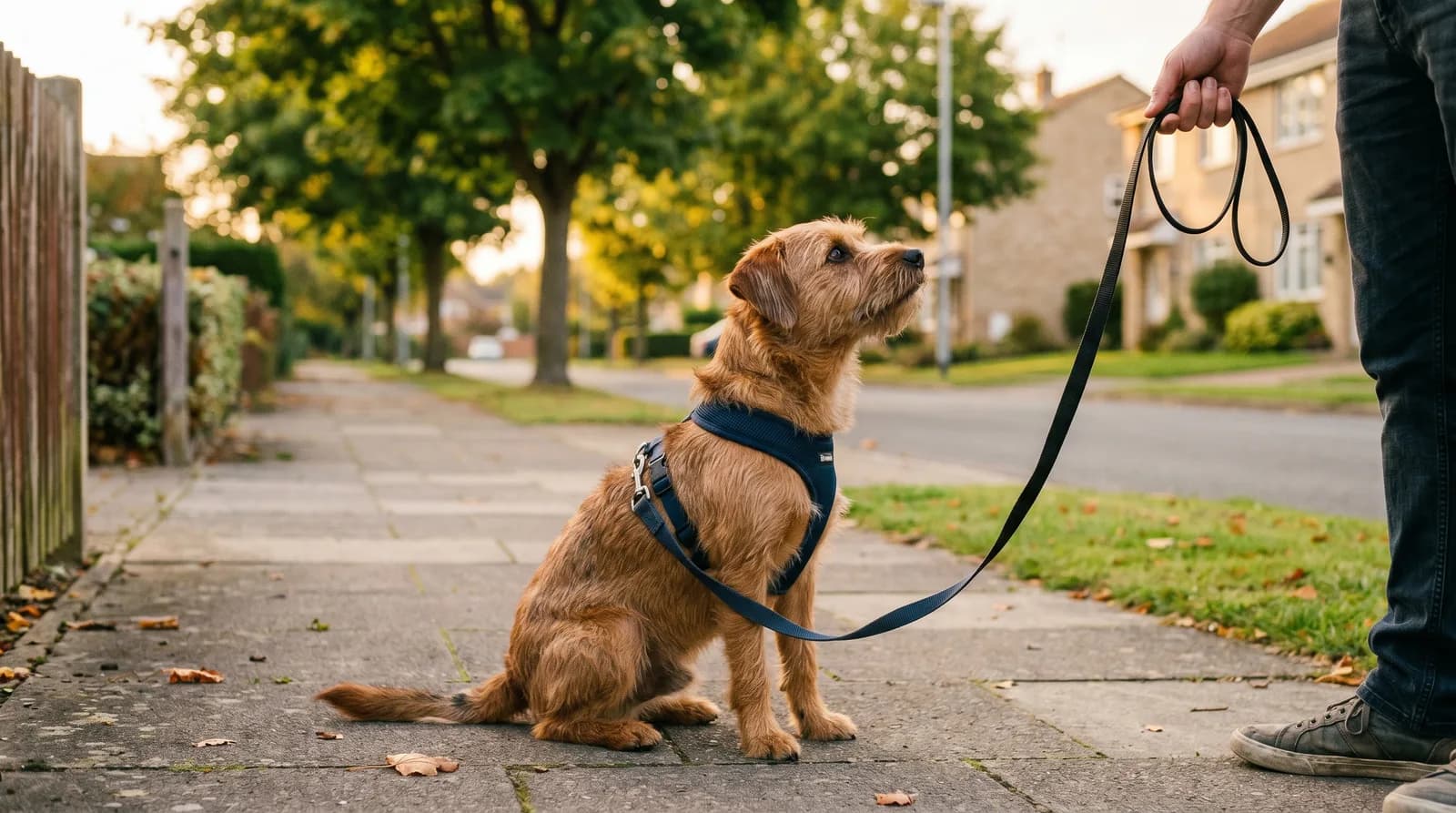
When your dog barks at other dogs on walks, he is almost always saying "that dog is too close for me," out of fear or frustration, not trying to be dominant or rude. You help him by adding distance before he barks, then teaching him, one calm sighting at a time, that seeing a dog means good things happen.
If you've started walking at 6am or at 11pm to dodge every other dog in the neighborhood, you are far from alone. From more than 9,000 dog owners who took our free online quiz in 2026, most of them in Europe, 58% named other dogs as a trigger, about 4 in 10 said they avoid certain places or times of day, and 36% said they feel tense before every walk. (These are self-selected owners who came to us for help, so they describe dogs with a problem, not dogs in general.)
Why your dog barks at other dogs on walks
On a leash, your dog can't do what dogs normally do with a dog they're unsure of: curve away or sniff the ground. So he does the next best thing and makes a big, loud display to make space. Often it works, because the other dog passes. That accidentally teaches him that barking is the thing that makes dogs go away.
Under the noise, it's usually one of two feelings:
- Fear: "That dog scares me, make it leave." You might see a tucked tail, or barking from behind your legs.
- Frustration: "I want to get to that dog and I can't." Often a dog who loved greeting every dog as a puppy, pulling forward with a higher-pitched bark.
Both get worse when the other dog comes head-on or pops out around a corner. If you're unsure whether you're looking at barking or something more serious, read how to tell a reactive dog from an aggressive one. Our reactive dog training guide covers the bigger picture.
What to do the moment you see another dog
You can't train in every encounter, so have a plan for the ones you didn't choose:
| What you see | What to do |
|---|---|
| A dog far away, your dog notices but stays soft | Say "yes" and feed him while he looks. Keep walking. |
| A dog coming toward you on the same sidewalk | Cross the street or step behind a parked car. |
| Your dog goes stiff and stops eating | Calmly turn and walk the other way. You're too close. |
| Your dog is already barking and lunging | Don't talk, don't correct. Lead him away until he can sniff or eat again. |
Turning around is not giving up. Every time your dog sees a dog and doesn't need to bark, you've had a good repetition. Every eruption rehearses the old habit, so pick routes with side streets and wide grass strips where you can always turn off.
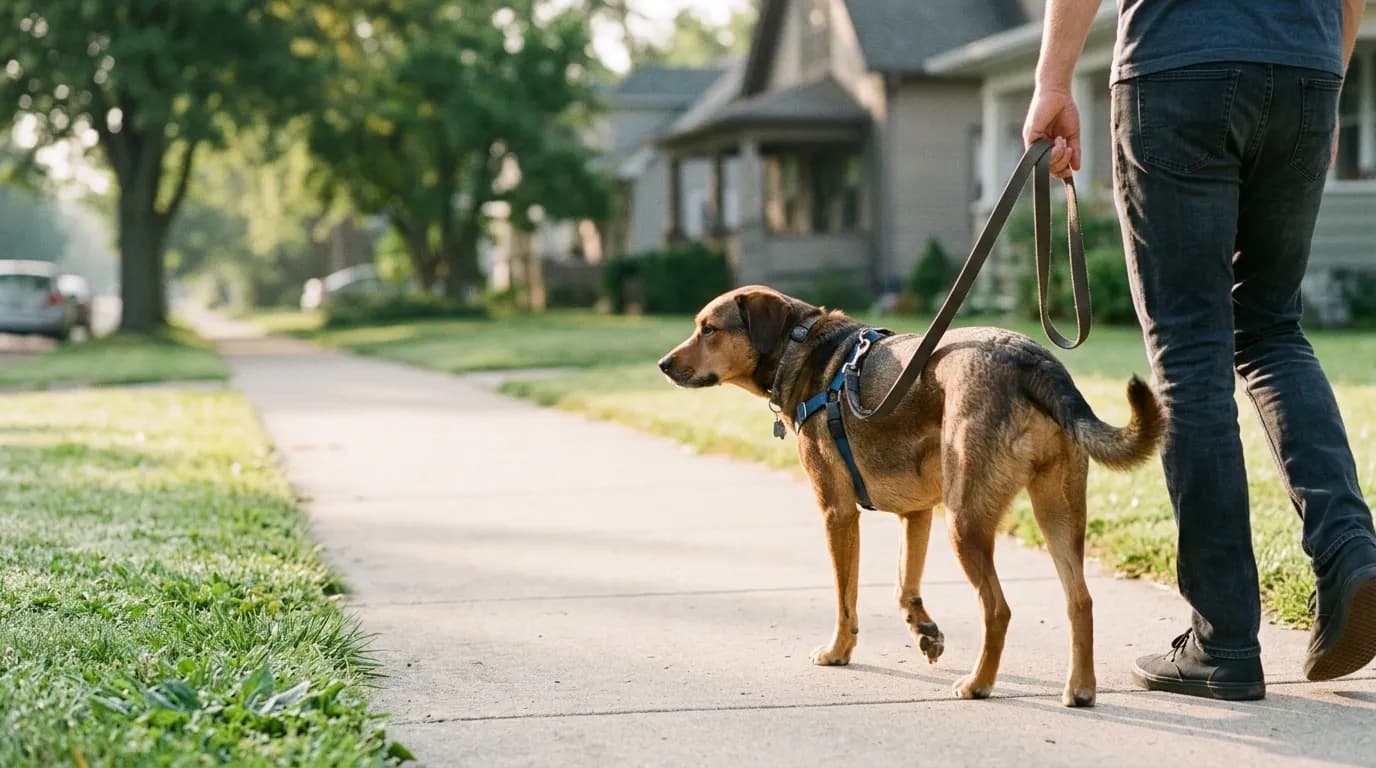
Keep the leash loose where you can. A tight leash pulls your dog forward and shows the other dog a tense posture. A well-fitted harness is kinder than anything around the neck if he does hit the end of the leash.
The step-by-step plan
This is classic desensitization and counter-conditioning: you show your dog other dogs at a distance he can handle (desensitization) and pair each sighting with something he loves (counter-conditioning). Researchers at the University of Guelph note in a 2019 paper in Animals that this approach "has been effective at reducing aggression towards dogs and unfamiliar people."
- Find your dog's distance. The distance at which he notices a dog but can still eat and look at you. For some dogs that's across a street, for others it's the far side of a sports field. Write it down.
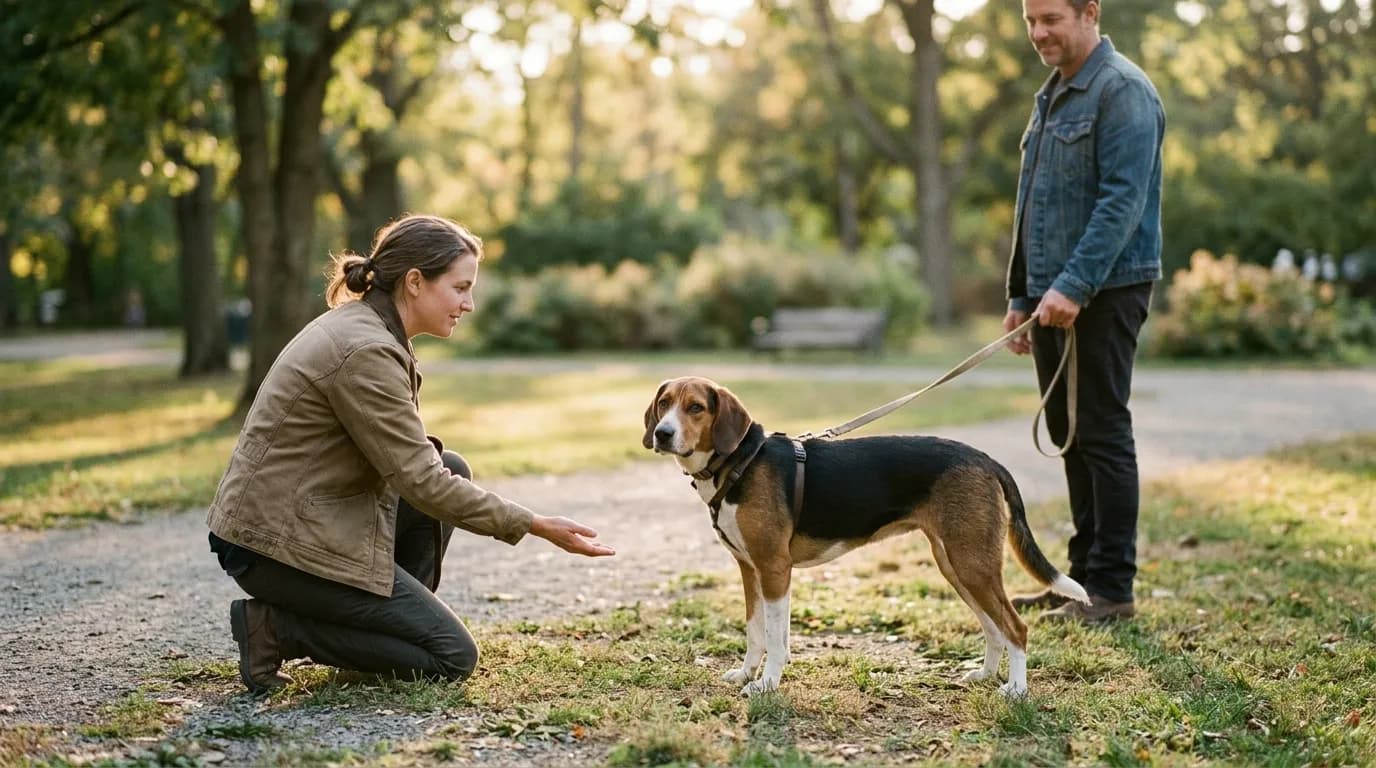
- Pick your spot. Somewhere other dogs pass at a predictable distance: the edge of a park, a parking lot near a trail. You control how close you get.
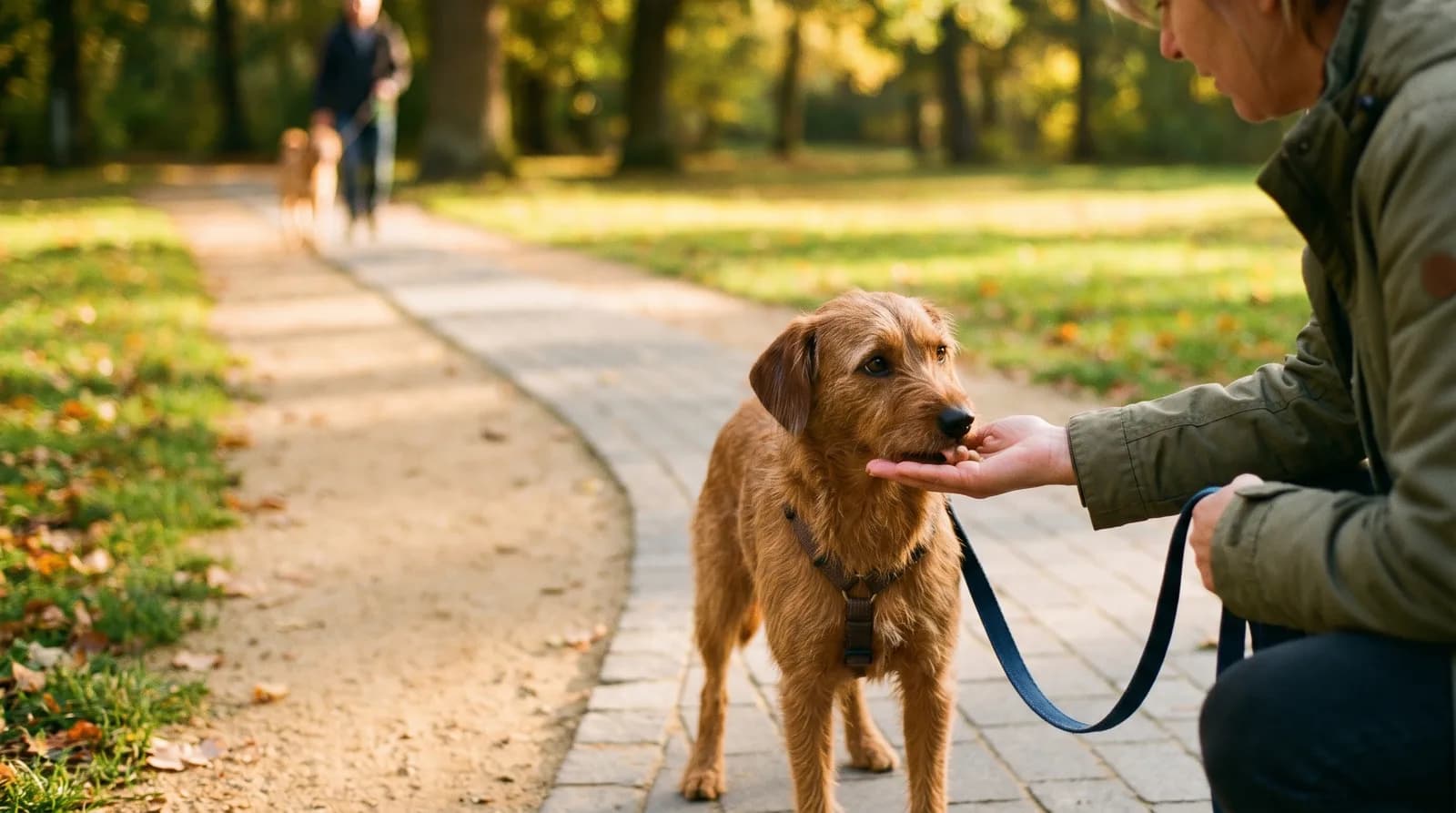
- Mark the look. The instant he spots a dog, say "yes" and feed. Small, soft treats he loves, like chicken or cheese, work best.
- Feed for calm, then move away. A few sightings, then leave while he's still doing well. Five to ten minutes is plenty.
- Shrink the distance slowly. Over days and weeks, close the gap a little, only as long as he stays relaxed enough to eat.
After a while, many dogs start turning to you on their own when they see a dog, as if to say "there's one, where's my chicken?"
When it goes sideways
If your dog erupts, you got too close or he'd already had a tough day. Calmly walk away and try again another day, a bit further out. No scolding and no leash pops. The American Veterinary Society of Animal Behavior puts it plainly: "There is no evidence that aversive methods are more effective than reward-based methods in any context."
Why the usual tips haven't worked
If you've already tried videos or a trainer, you're in good company. In our quiz, about 30% had already seen a trainer and about 30% had tried videos, and among those who had tried something, 45% said it didn't work, 32% said it helped a little and 15% said it worked but came back.
That usually isn't the owner's fault. Group classes put a reactive dog right next to other dogs, and a few calm sessions get undone by daily walks that keep pushing him too close, like passing the same barking dog behind a fence every morning. If you've been tempted to send him away for a few weeks instead, read our honest look at board and train for reactive dogs first.
When to get more help
Please see your vet first if the barking started suddenly, or if your dog seems stiff or sore, because pain can make dogs much shorter-tempered. And if your dog has bitten another dog or a person, or you're scared he might, work with a qualified behavior professional. Our page on dog behaviorist cost explains who does what and what it costs.
For most dogs who bark and lunge on walks without a bite history, consistent force-free practice on your own walks makes a real difference. If you'd like the steps laid out for your dog, you can take the free quiz and see how the plan works for leash reactivity.
This is training guidance, not veterinary or medical advice. If the reactivity is new or severe, or there is any bite risk, please talk to your vet or a qualified force-free behavior professional.