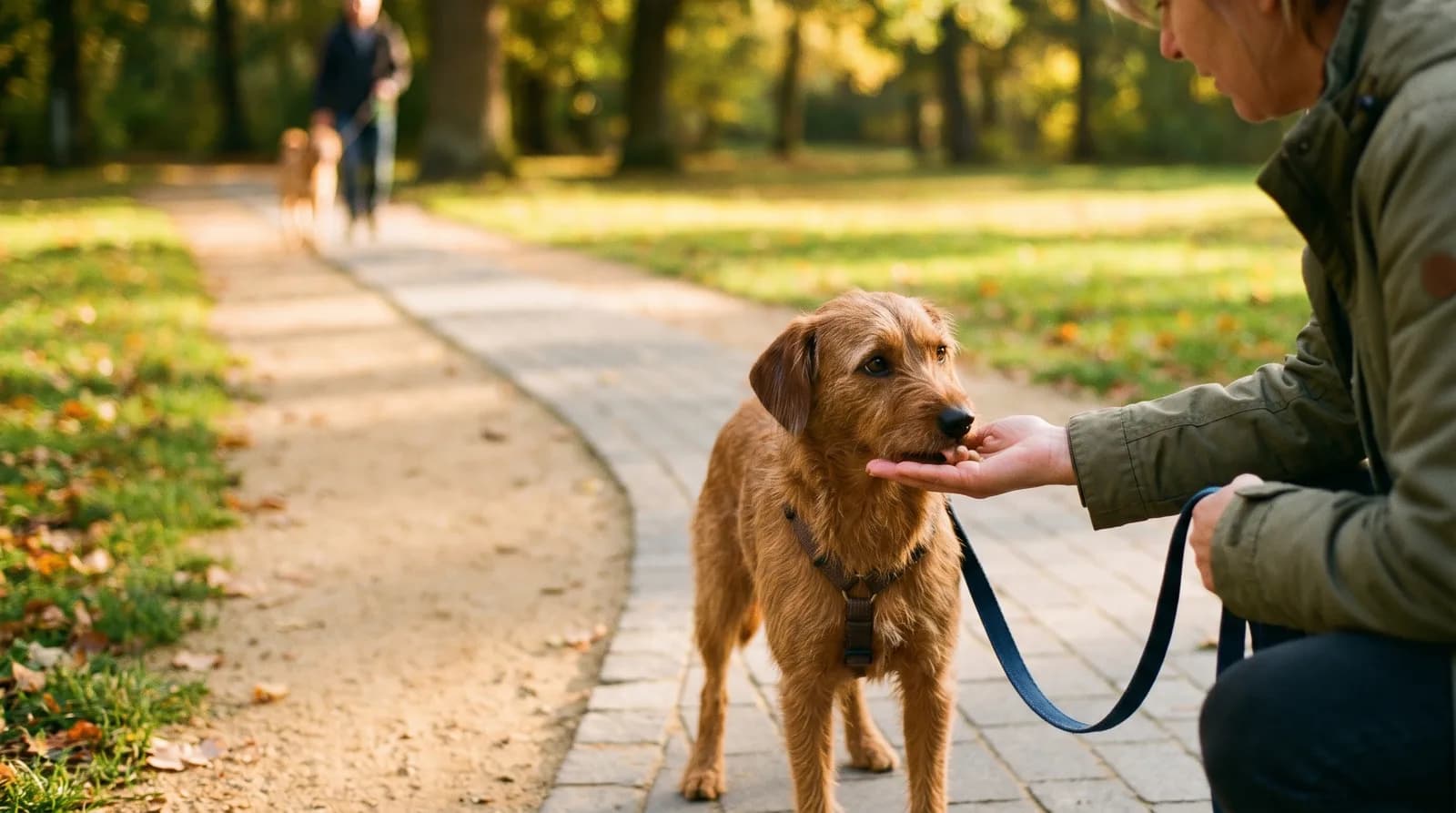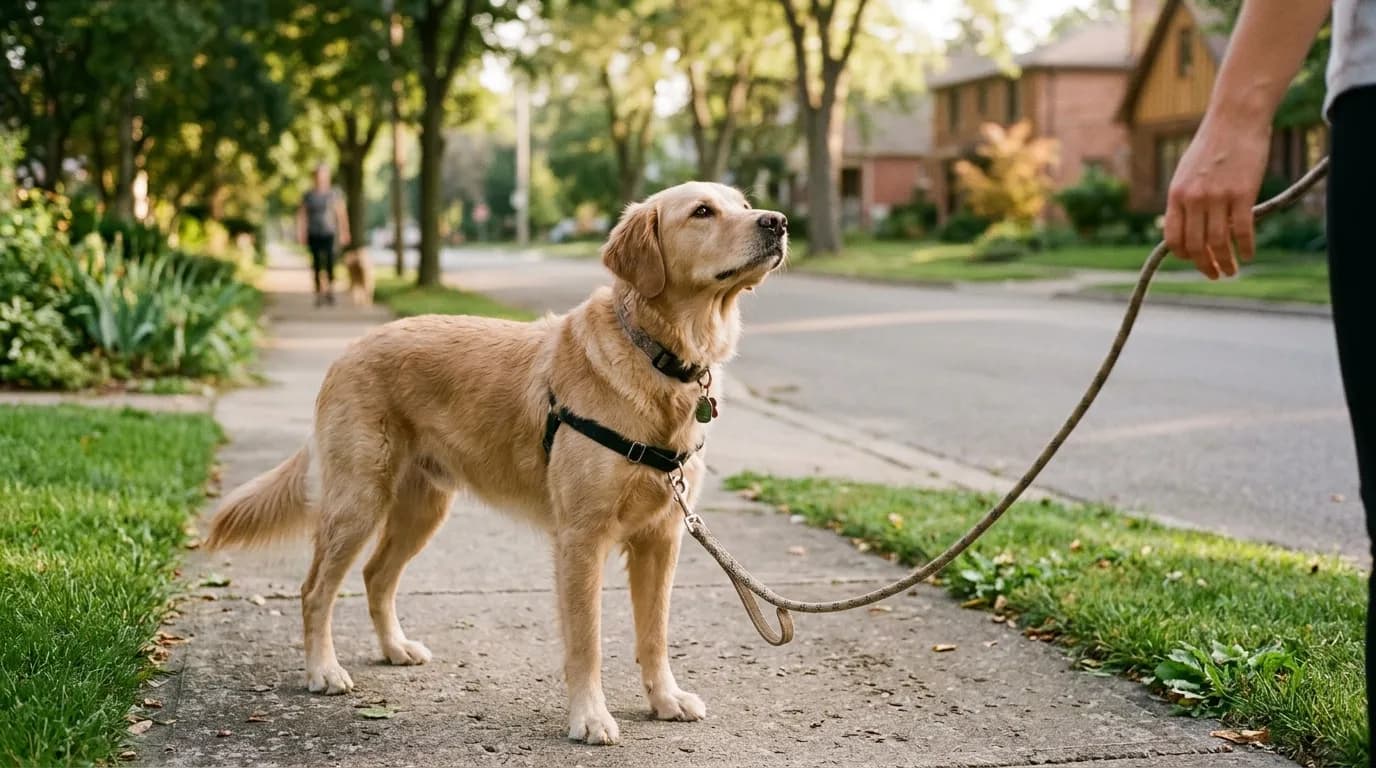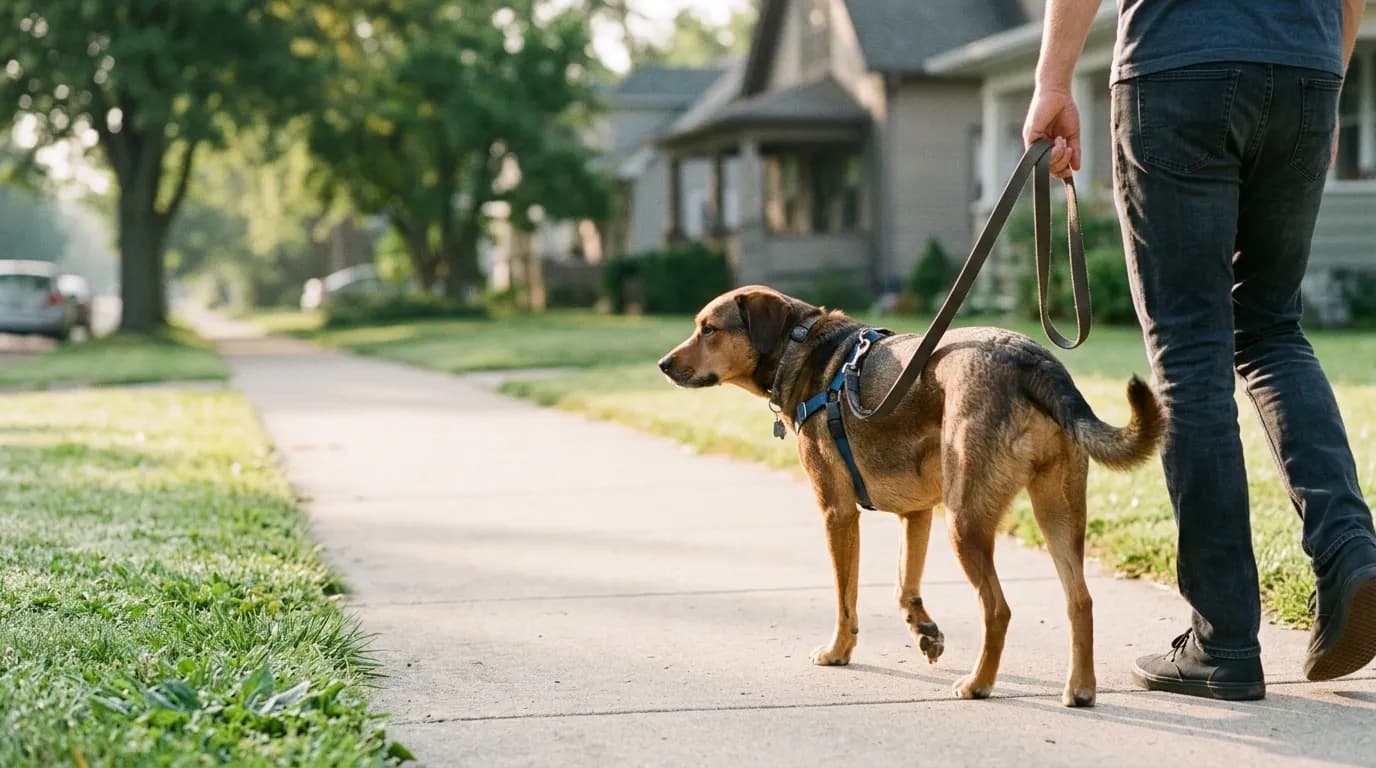
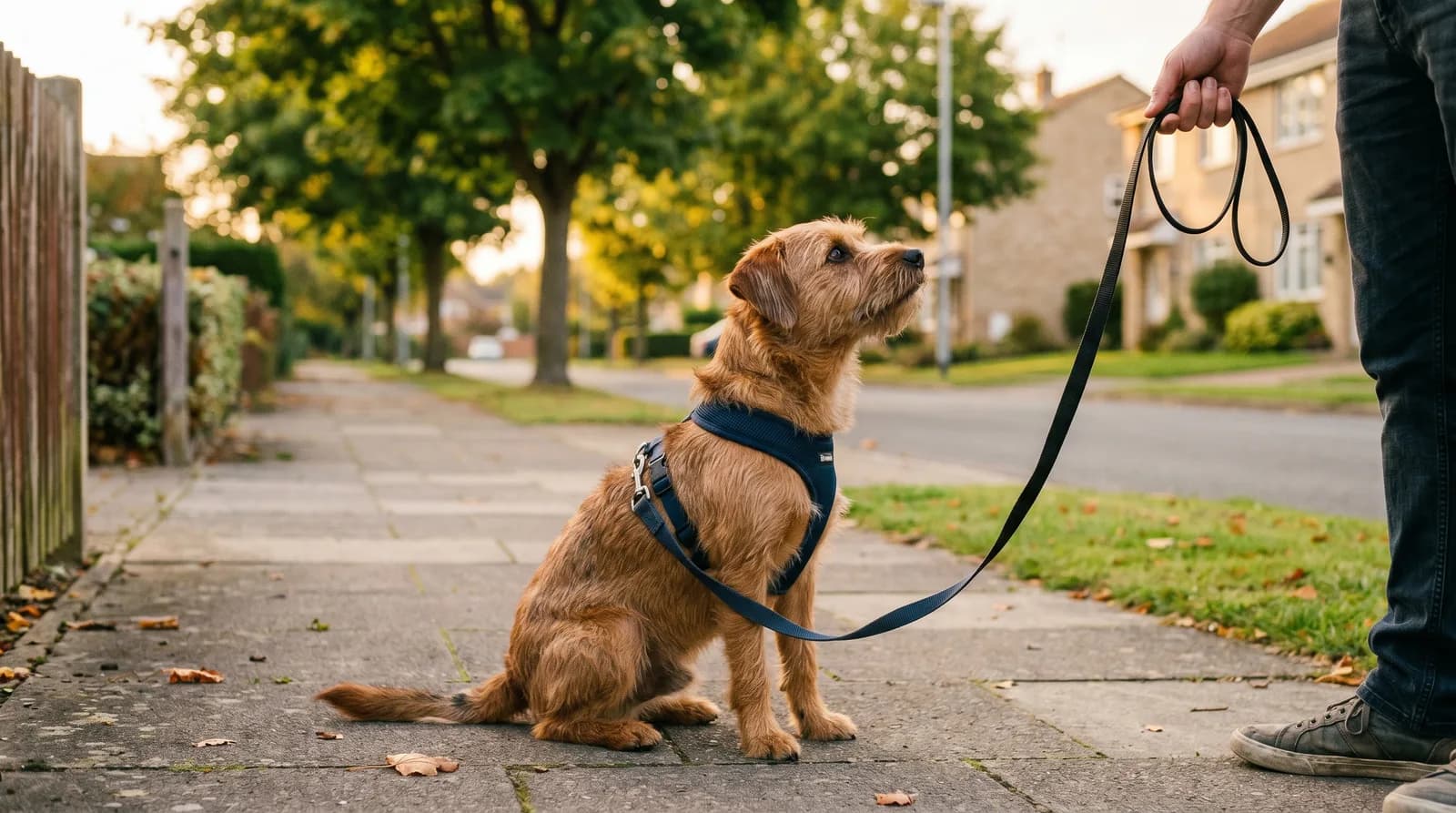
If walks have turned into something you dread, you are not failing your dog, and your dog is not bad. A reactive dog is a dog who feels too much, too fast, when something sets him off, and barking or lunging is how he copes. The good news: reactivity responds really well to calm, force-free training.
This guide explains what is actually happening and links you to the step-by-step plans that help.
What "reactive" actually means
Reactivity is an over-the-top response to a specific trigger, often other dogs, people, bikes, or noises. Under the surface it is almost always one of two feelings:
- Fear: "That thing scares me, make it go away."
- Frustration: "I want to get to that thing and I can't."
Both feel overwhelming to your dog, and both are made worse by getting too close, too quickly. If you're worried it's more than reactivity, here's how to tell a reactive dog from an aggressive one.
Why force-free is the way
You can suppress a bark with fear or pain, but you do not change how your dog feels, and the worry tends to leak out somewhere else. Force-free training works the opposite way: it lowers the underlying emotion, so the behaviour fades because your dog is genuinely calmer. No shock collars, no dominance tricks, no fear.
Find your dog's threshold first
The single most useful idea in reactive training is the threshold: the distance at which your dog notices a trigger but can still take a treat and think. Everything you do should happen under threshold, where learning is possible. Get too close and the thinking brain switches off.
Where to start
Pick the situation that hurts most and work that one first. A common starting point:
Short, calm, daily sessions beat one long stressful walk every time. If you are tempted to send your dog away for a few weeks instead, read our honest look at board and train for reactive dogs first.
One last thing: this is training guidance, not veterinary advice. If your dog's behaviour changed suddenly or you see signs of pain, check in with your vet first.