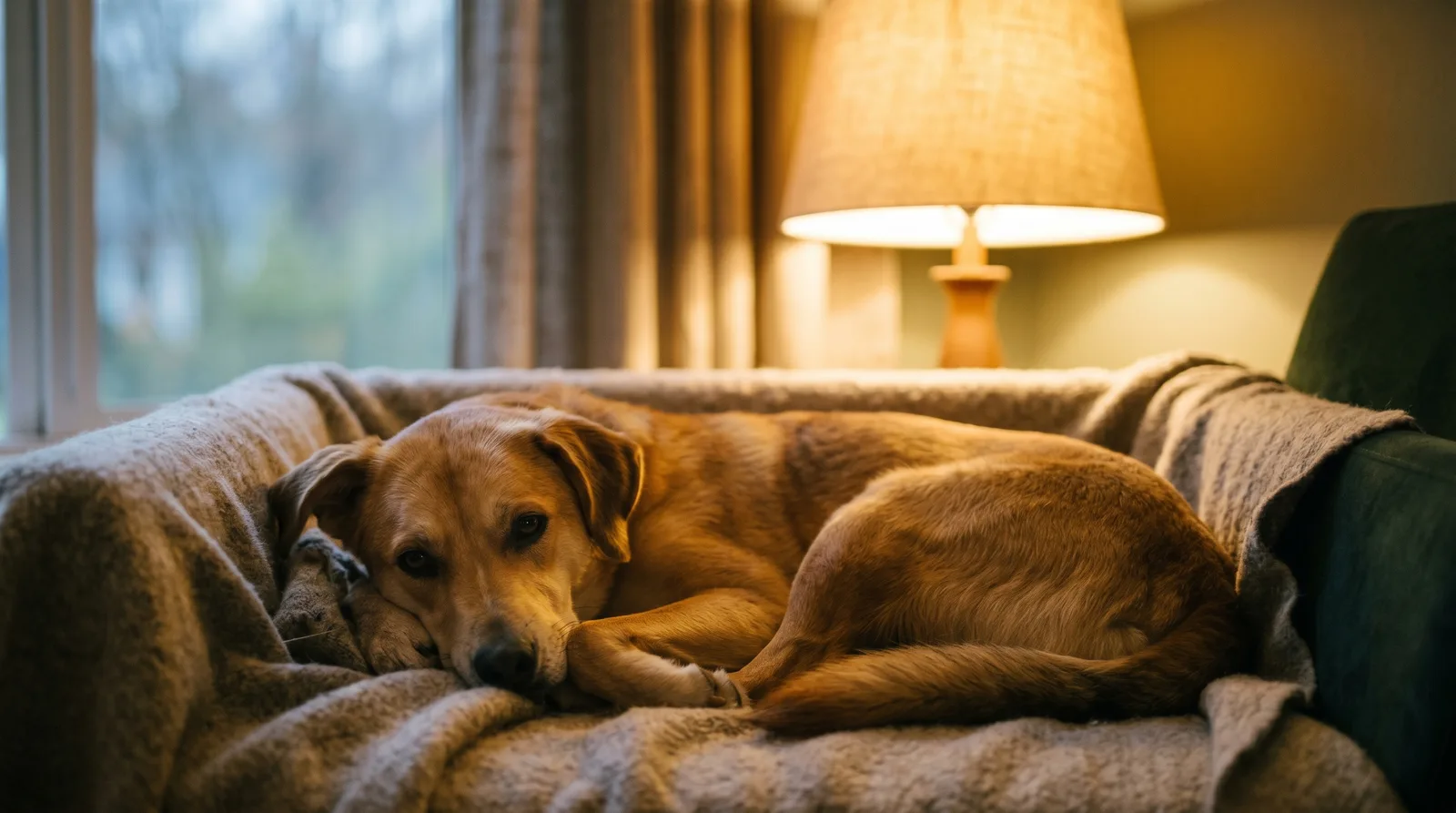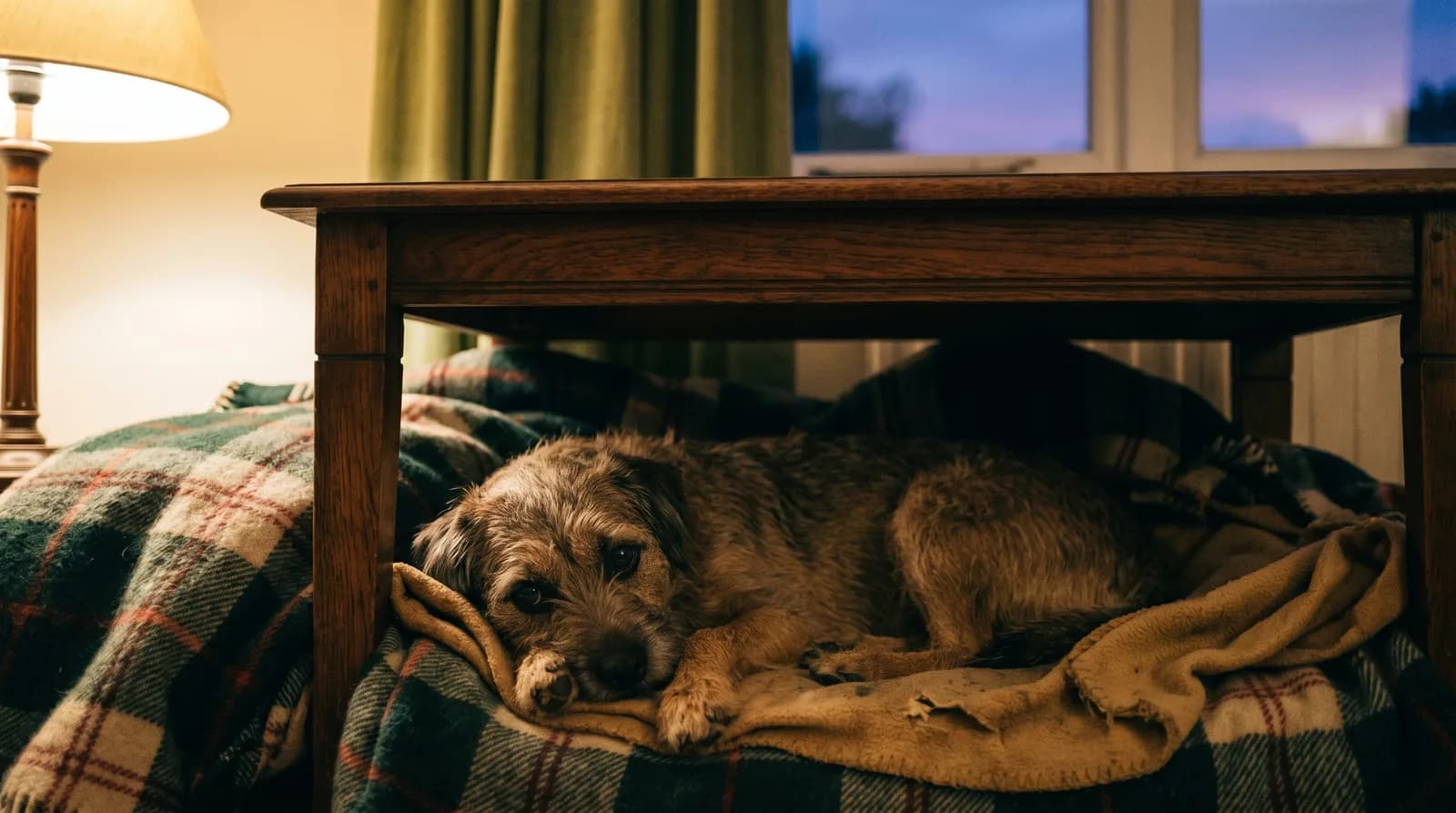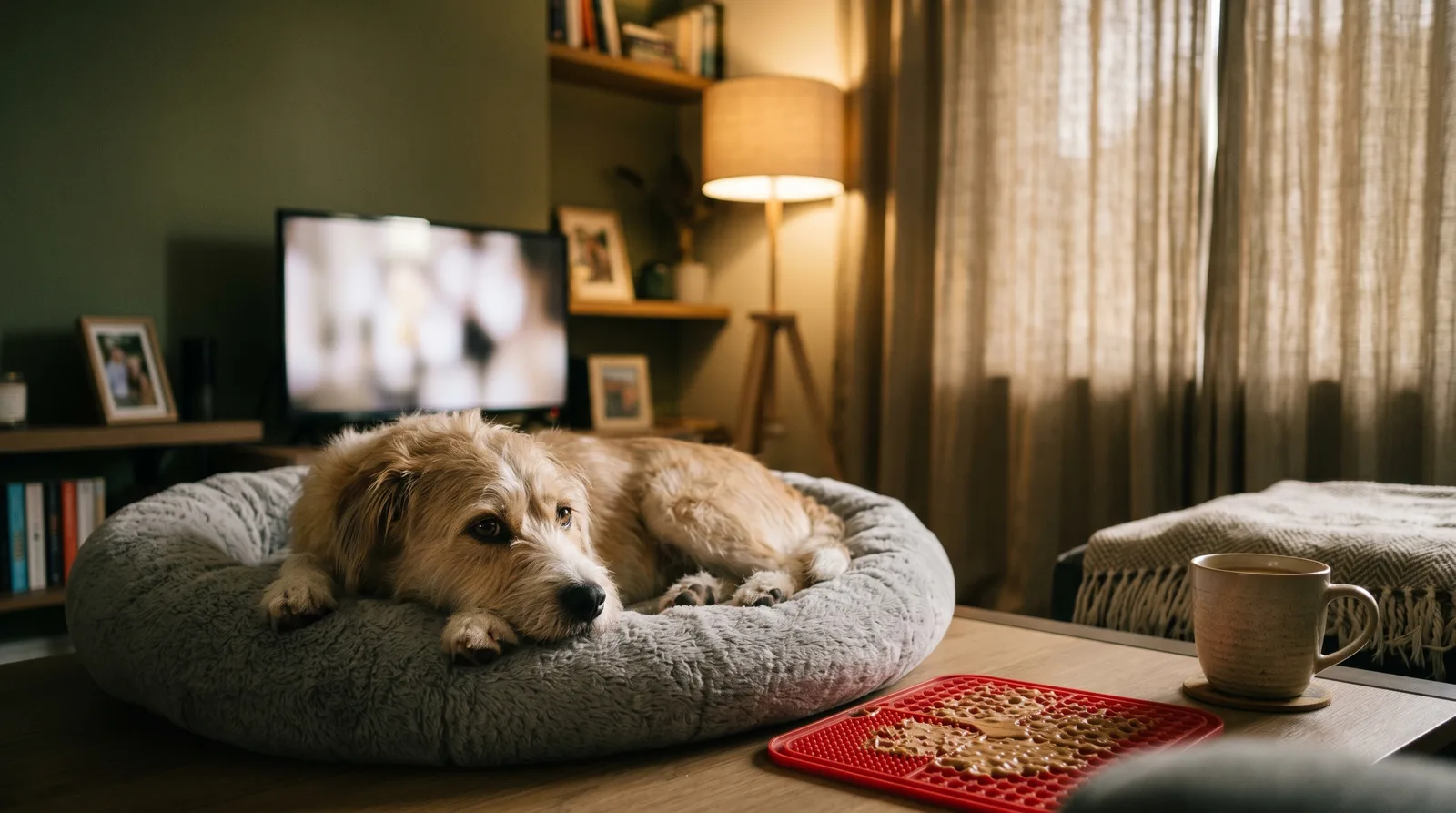

If your dog falls apart every fireworks season, the quiet months are your secret weapon. Sound desensitization is the real, lasting work: gently teaching his nervous system, long before the sky starts banging, that those sounds are nothing to fear. It takes weeks of tiny steps, which is exactly why now, with no fireworks on the calendar, is the perfect time to start. Your dog isn't naughty when he panics, he's scared, and sound desensitization is one of the most reliable ways to make that fixable.
This guide walks through what the method actually is and gives you a simple, force-free plan you can start this week.
What sound desensitization actually is
Sound desensitization is the slow, kind process of exposing your dog to a scary sound at a level so low it doesn't frighten him, then very gradually turning it up over many sessions while he stays calm. Done right, his brain quietly relearns that the sound is harmless.
On its own, that is only half the magic. The other half is counterconditioning: while the quiet sound plays, you make something wonderful happen, food, a game, a snack he loves. So you are doing two things at once. Desensitization keeps the sound low enough that he never tips into fear, and counterconditioning teaches him that the sound actually predicts good stuff.
In plain terms: you start far below the volume that scares him, you pair every quiet bang with something he loves, and you inch the volume up only as fast as he stays relaxed. Over time, "that sound means danger" rewrites into "that sound means dinner."
This is the same engine behind all the work in our pillar guide on dog noise phobia, fireworks, and thunderstorms. It's slow on purpose, and it's the opposite of blasting him with the full-volume version and hoping he copes.
Why the off-season is the right time
Real desensitization can't be rushed, and it can't be done in a panic. You need stretches of calm where the only firework sound in your dog's world is the one you're controlling, at a volume you've chosen. That's impossible on July 4th and impossible in the run-up when neighbors start setting things off early.
So the quiet weeks of the year are the gift. Start six to eight weeks ahead of a known noisy night and you'll have room to climb the volume ladder one tiny rung at a time, with days to spare if your dog needs to linger on a level. Begin too late and you're back to management on the night, which helps, but doesn't change how he feels.
If a big night is already close, don't force the training. Lean on a safe den and good muffling for now, the steps in dog scared of fireworks, and start the slow sound work once things settle.
The sound desensitization plan, step by step
Here is the whole method as a simple sequence. Work through it gently, at your dog's pace, and remember that staying below his threshold matters more than making fast progress.
- Get a good firework-sound recording. Find a clear recording you can control the volume on, a video, a sound app, or a playlist. You want real bangs and whistles, not music, and a track long enough to play quietly in the background. Test it once on your own first so you know what's coming.
- Find the starting volume he doesn't react to at all. Play it so quietly it's barely there, then watch him. You're looking for the level where he notices nothing: no freezing, no ear flick, no glance at the speaker. If he reacts even a little, turn it down further. That whisper-quiet level is your true starting point.
- Pair the quiet sound with something great. While the sound plays softly, make good things happen: scatter some food, hand him a snack, start a favorite game, or set out a stuffed lick mat. The sound should predict the good stuff every time, so his brain learns quiet bangs mean dinner is coming.
- Keep sessions short and end while he's relaxed. Two to five minutes is plenty. Stop while he's still loose, happy, and eating, not when he's tiring or worried. Short, frequent sessions build calm far better than one long one, and finishing on a good note makes him look forward to the next round.
- Raise the volume one tiny step at a time. Only nudge it up a hair, and only once he's completely relaxed at the current level across several sessions. Think of it as a long, gentle ladder with tiny rungs. If in doubt, stay where you are for another day or two. Slow is fast here.
- If he reacts, you went too fast, so drop back down. If he freezes, stares, stops eating, or looks worried, the volume is too high for today. That's information, not failure. Turn it straight back down to a comfortable level, get a few easy, happy reps, and end there. Next time, climb more slowly.
What "staying below threshold" looks like
Your dog's threshold is the line between "notices the sound but is fine" and "scared." Everything useful happens below it. A relaxed dog has a soft body, takes food easily, and shrugs the sound off. A dog who's tipping over goes still, stops eating, fixes on the speaker, pins his ears, or tries to leave. The moment you see that, you've found the ceiling for today, so come back down. You're not testing how much he can take, you're proving to him that he never has to take much at all.
When the recording isn't enough on its own
Recordings are brilliant, but they're not a perfect copy of the real thing. Live fireworks also bring flashes, a smell of smoke, and a physical thump you feel in your chest. So use sound desensitization as the foundation, then keep your management ready for the night itself: a safe den, muffled sound, calm company. The two work together. The off-season training lowers the underlying fear, and good management on the night keeps him under threshold when the real bangs arrive. Our July 4th plan covers that night, hour by hour.
The same exact method works for thunder, too. If your dog worries when the sky darkens, you can desensitize him to recorded storm sounds the same way, low and slow, paired with good things. There's more on the build-up cues that make storms tricky in our guide to thunderstorm anxiety in dogs.
Go gently, celebrate the tiny wins, and trust the slow work. A dog who used to bolt at the first bang can, with weeks of quiet, kind practice, learn to lift his head, look at you, and wait for his snack. He isn't broken and he isn't naughty, he's scared, and sound desensitization is how you help him feel safe. If the fear is severe, your vet or a qualified force-free behavior professional can help.
This is training guidance, not veterinary or medical advice.