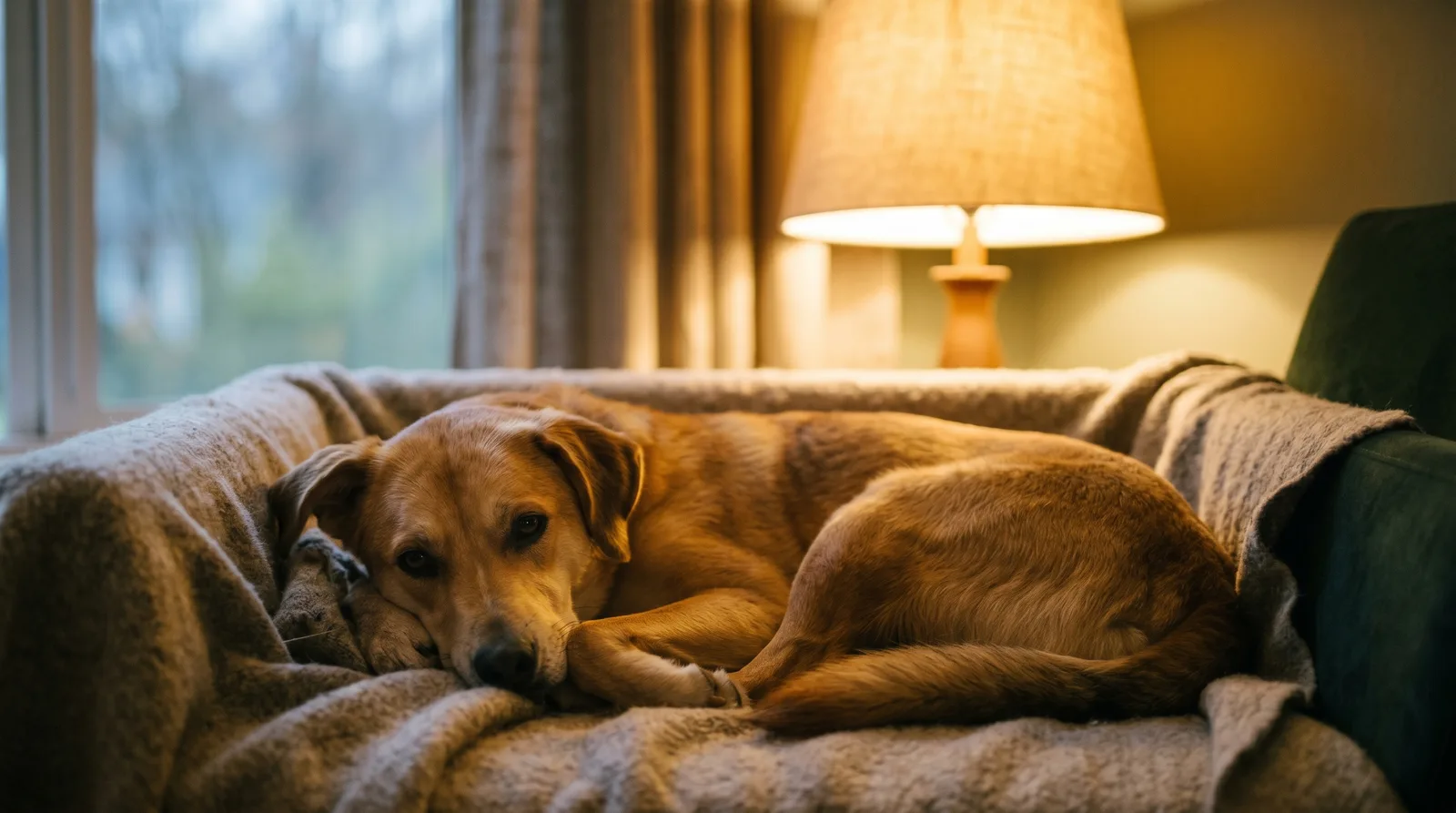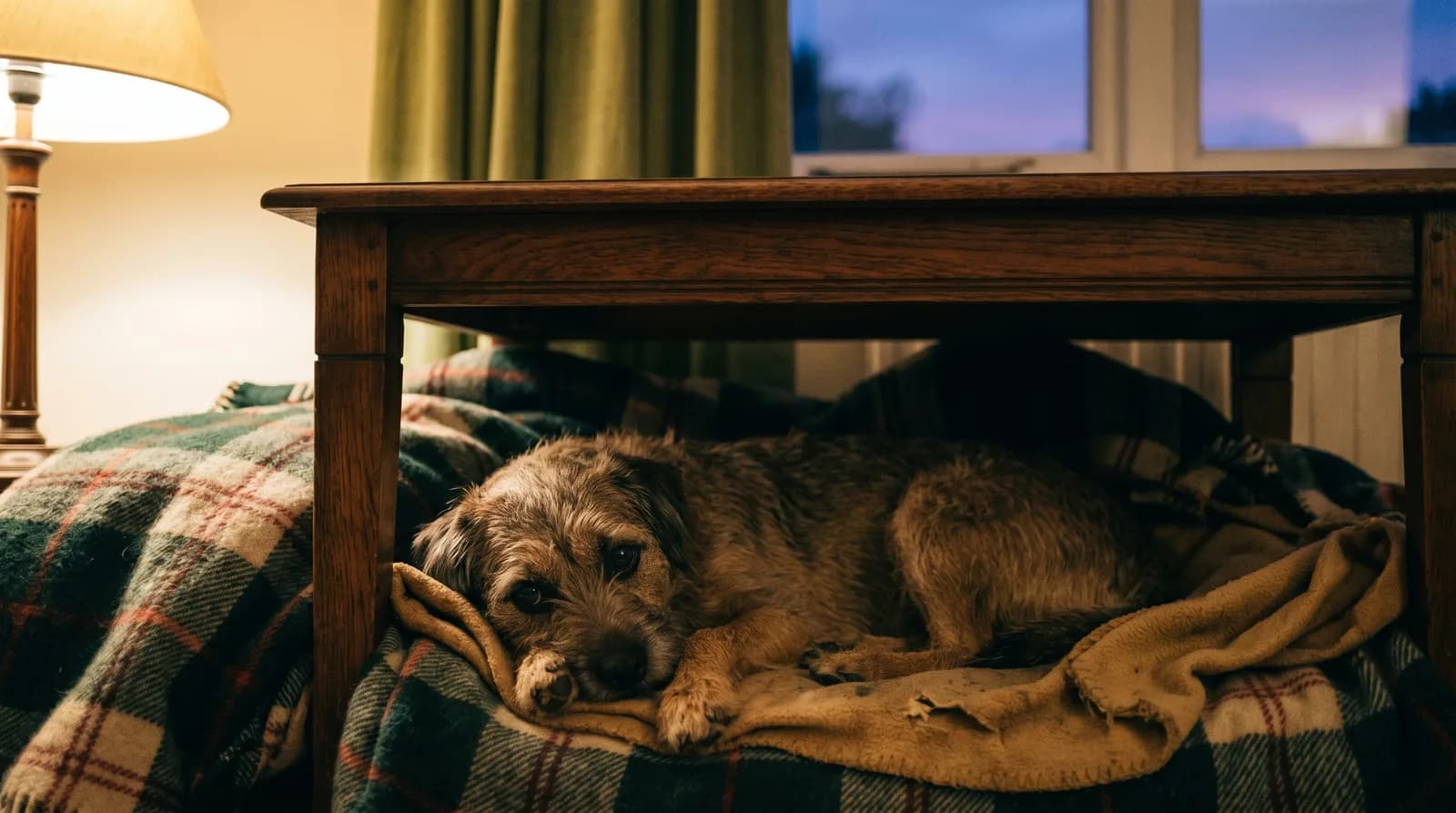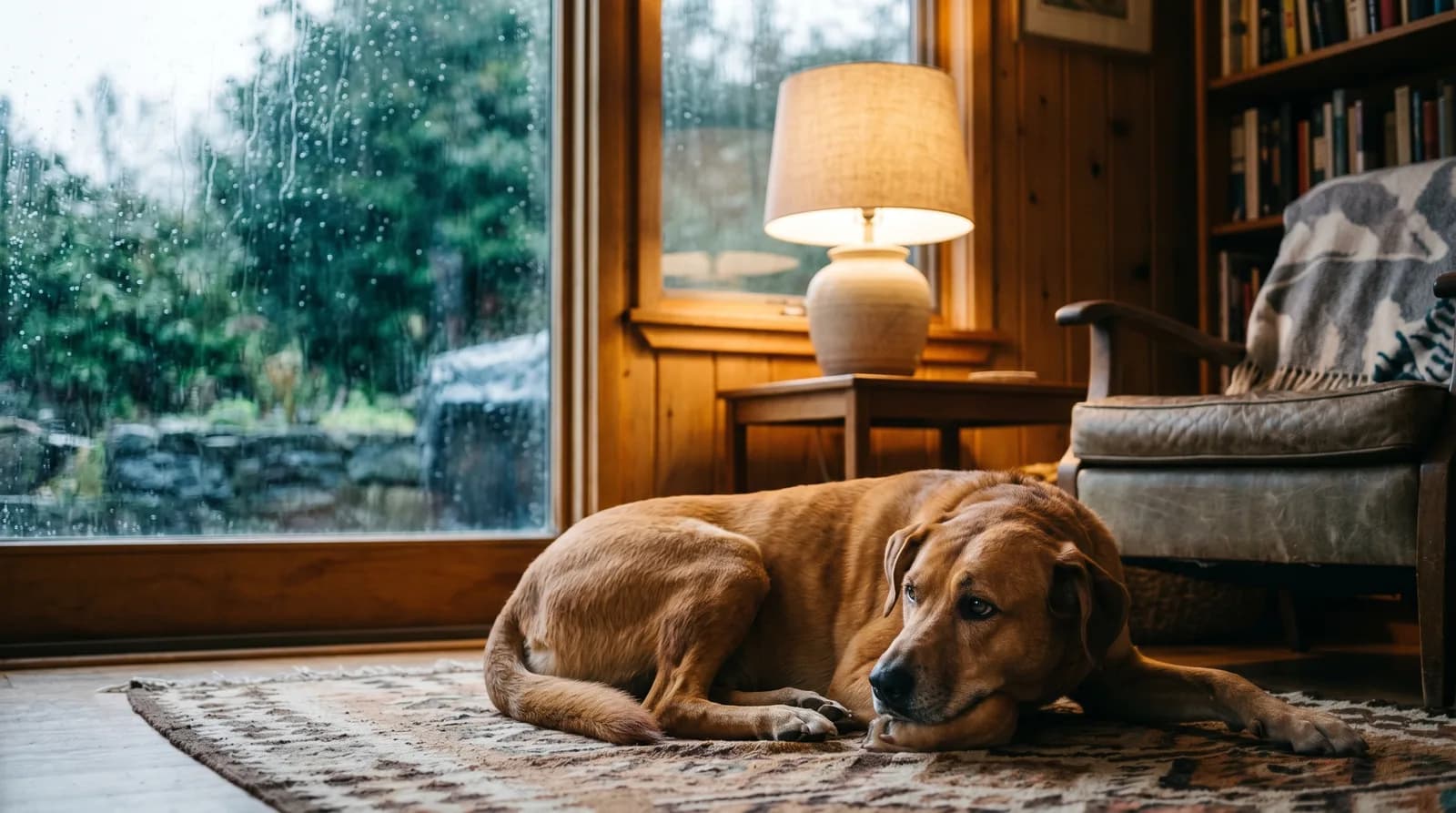
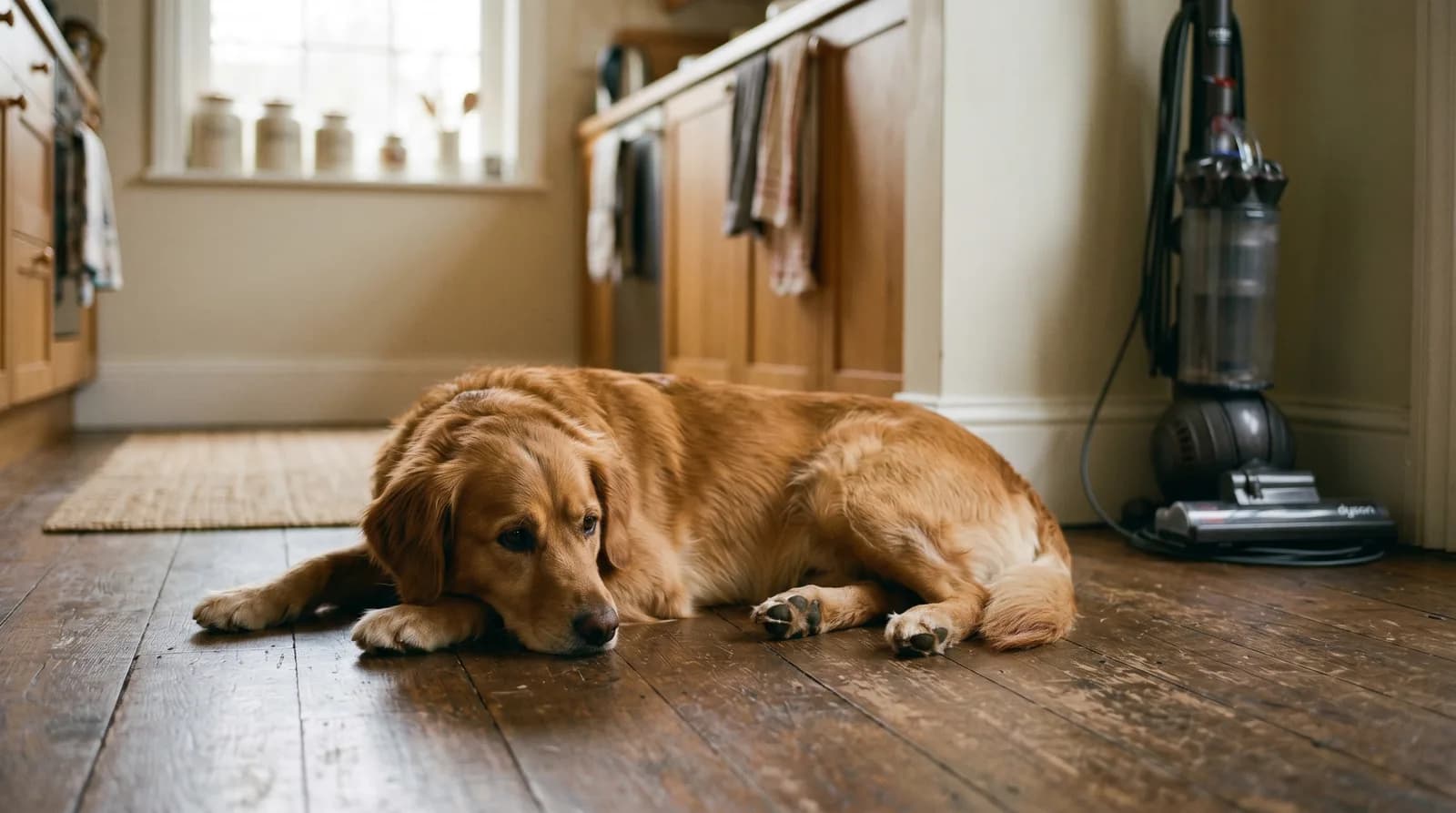
If your dog bolts from the room the second you reach for the vacuum, or flattens himself at the chirp of a smoke alarm, you are not imagining it and you are not making him soft. A dog scared of loud noises around the house is genuinely frightened, not stubborn and not naughty. Ordinary sounds, the blender, a dropped pan, the doorbell, the garbage truck, can feel like ambushes to a noise-sensitive dog. The hopeful part: your dog isn't naughty, he's scared, and that's fixable. With a calm, force-free approach you can help your home feel a lot safer to him.
Why a dog scared of loud noises panics at home
Household noises hit a sensitive dog right where it hurts: they are sudden, often loud, and they tend to come with no warning. A pan slips out of your hand and clangs. The smoke alarm chirps once at midnight. The vacuum roars to life behind him while he was dozing. To a dog who already finds sound overwhelming, his own living room can start to feel like a place where bad surprises happen for no reason.
There is usually a logic to which sounds frighten him. The worst offenders share a pattern: they are unpredictable, they are inescapable, and they sometimes pair with movement, like the vacuum that chases him across the floor or the garbage truck that rumbles and beeps and hisses all at once.
This is the quiet, everyday face of noise sensitivity, and it matters as much as the big seasonal scares. If you want the full picture of what is happening in your dog's head, our pillar guide on dog noise phobia, fireworks, and thunderstorms walks through how this fear works and why it can spread from one sound to many.
The key idea: work below his threshold
Here is the single most useful concept for helping a noise-sensitive dog. His threshold is the level of noise at which he notices the sound but can still eat, think, and recover. Everything productive happens under that line. Push past it, with the vacuum at full volume right next to him, and you are not training, you are just frightening him.
So the whole game is to shrink the scary noise down to a version he can handle, the vacuum two rooms away, the blender for a single second, then pair that small, manageable dose with something he loves. This is desensitization and counterconditioning, the same gentle method that helps with fireworks and thunder, applied to the sounds of your own home. Over many tiny reps, his brain slowly rewrites "that noise means danger" into "that noise means good stuff appears."
The opposite approach, flooding him with the full-volume sound and hoping he gets used to it, almost always backfires. It keeps him over threshold, and a dog over threshold can't learn anything except that the noise is as bad as he feared.
A note on punishment, because it is tempting: you cannot punish a feeling away. Telling off a frightened dog, or startling him to "snap him out of it," only adds "and my human turns scary too" on top of an already frightening moment. Fear plus more fear never adds up to calm.
A step-by-step plan for household noises
Here is the order I would work in. Take it slowly, and remember that management, simply stopping the ambushes, helps your dog feel safer starting today, long before the deeper training is done.
- List his specific triggers. Notice exactly which sounds set him off: the vacuum, the blender, dropped pans, the smoke alarm chirp, the doorbell, the garbage truck, the kids on the stairs. Write them down so you are working on a short, specific list, not a vague worry.
- Manage and warn so he is not ambushed. Before a known noise, set him up to feel safe. Pop him in his den with the door open before you vacuum, swap the smoke alarm battery before it chirps, and build a heads-up routine so sounds never jump out of nowhere.
- Pair the noise at a low or distant level with something great. Once he is calm, introduce a tiny version of the trigger, the vacuum running two rooms away, the blender for one second, while something wonderful appears: a piece of food, a favorite game. Keep it quiet enough that he can still eat.
- Build a predictable routine so noises become less of a surprise. Vacuum around the same time each day, blend after breakfast rather than during a nap. A rhythm he can predict turns random bangs into ordinary, familiar background events.
- Reward calm and never punish hiding. When a noise happens and he stays settled, quietly mark it with a calm word and a snack. If he heads for his den instead, let him, that is him coping well.
- Go slow, one trigger at a time. Get one sound down to barely registering before you move to the next. Tiny steps, one trigger at a time, always below the level that tips him over.
Setting up your home so noises feel safer
Alongside the training, a few setup changes lower the volume on his fear right away.
Build a safe den. Give your dog one cozy, enclosed spot he can retreat to: a covered crate, a nook under the stairs, a quiet inner room with no windows, wherever he already chooses to hide. Leave it open so it never feels like a trap, make it comfy, and let it be his. A stuffed lick mat or a long-lasting chew in there on calm days helps him learn to love the spot.
Soften the sound and the surprise. Steady background sound, a fan, the TV, or calm music, takes the sharp edge off sudden bangs. Catch that smoke alarm chirp before it starts, close the window if the garbage truck is due, and give kids a gentle heads-up to keep the indoor chaos down a notch. A snug body wrap is something some dogs find comforting, purely as optional comfort to try on a calm day, never something to force on him.
Lower the underlying stress. A dog who is generally calmer, with good sleep, enough sniffy outdoor time, and food enrichment to chew on, has more in the tank to cope with the next surprise. None of this is the whole answer, but it builds the steady, settled baseline that makes the training work better.
Keep the fear from spreading
Everyday noise fear has a habit of creeping outward if it goes unaddressed. A dog who started out scared of the vacuum can slowly start reacting to the blender, then the doorbell, then the garbage truck. That is exactly why it is worth taking those first household flinches seriously: the same calm methods stop the fear before it generalizes across your whole home.
The good news is that this fear sits on the very changeable end of dog behavior. The skills you build here are the same ones that help with the bigger scares. If your dog also struggles with storms or bangs from outside, our guides on thunderstorm anxiety in dogs and sound desensitization before fireworks season carry the same approach over to those triggers, and our dog scared of fireworks plan covers the loudest night of the year.
You have not failed your dog because he panics at the vacuum, and he is not broken. With a safe den, a bit of management so he is never ambushed, and patient practice one sound at a time, most dogs learn that their home is a calm place after all. He's scared, not naughty, and that's something the two of you can work on together. If the fear is severe, your vet or a qualified force-free behavior professional can help.
This is training guidance, not veterinary or medical advice.