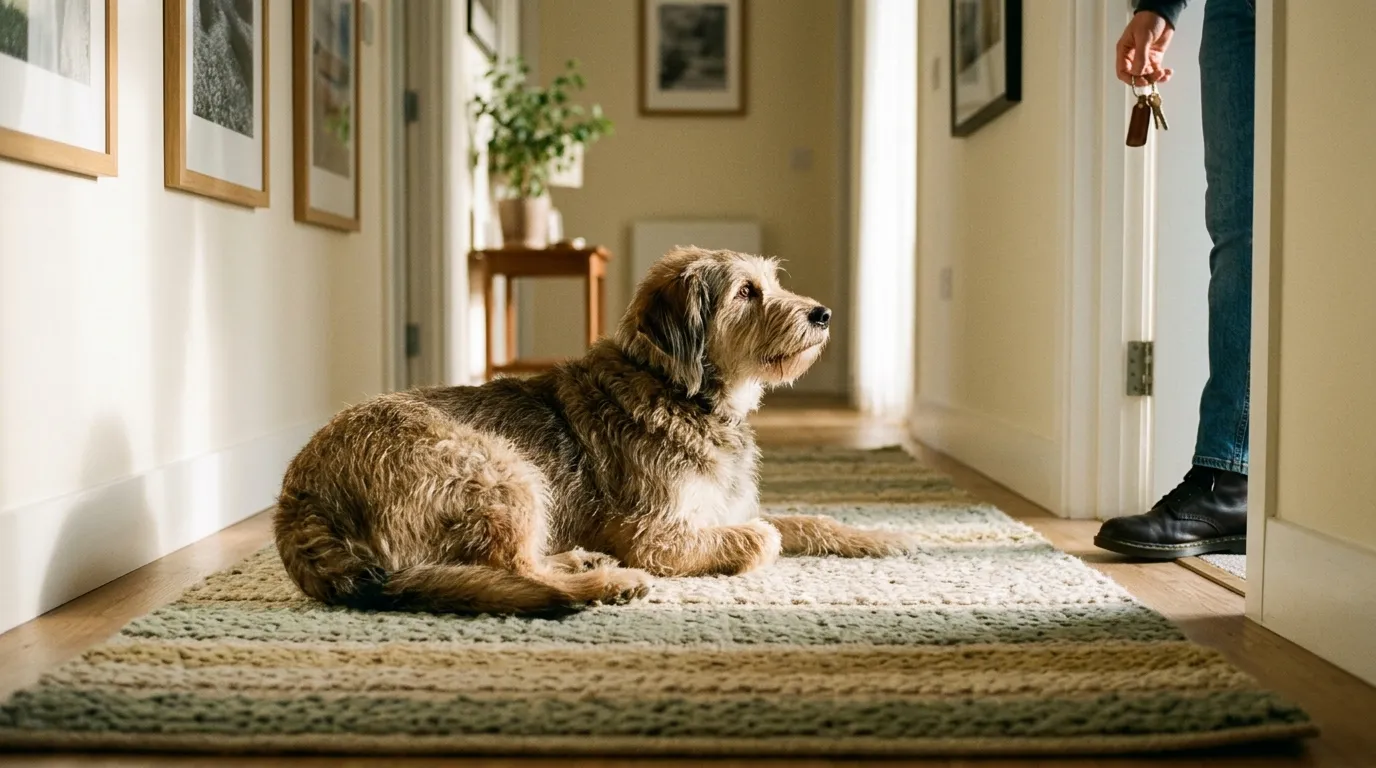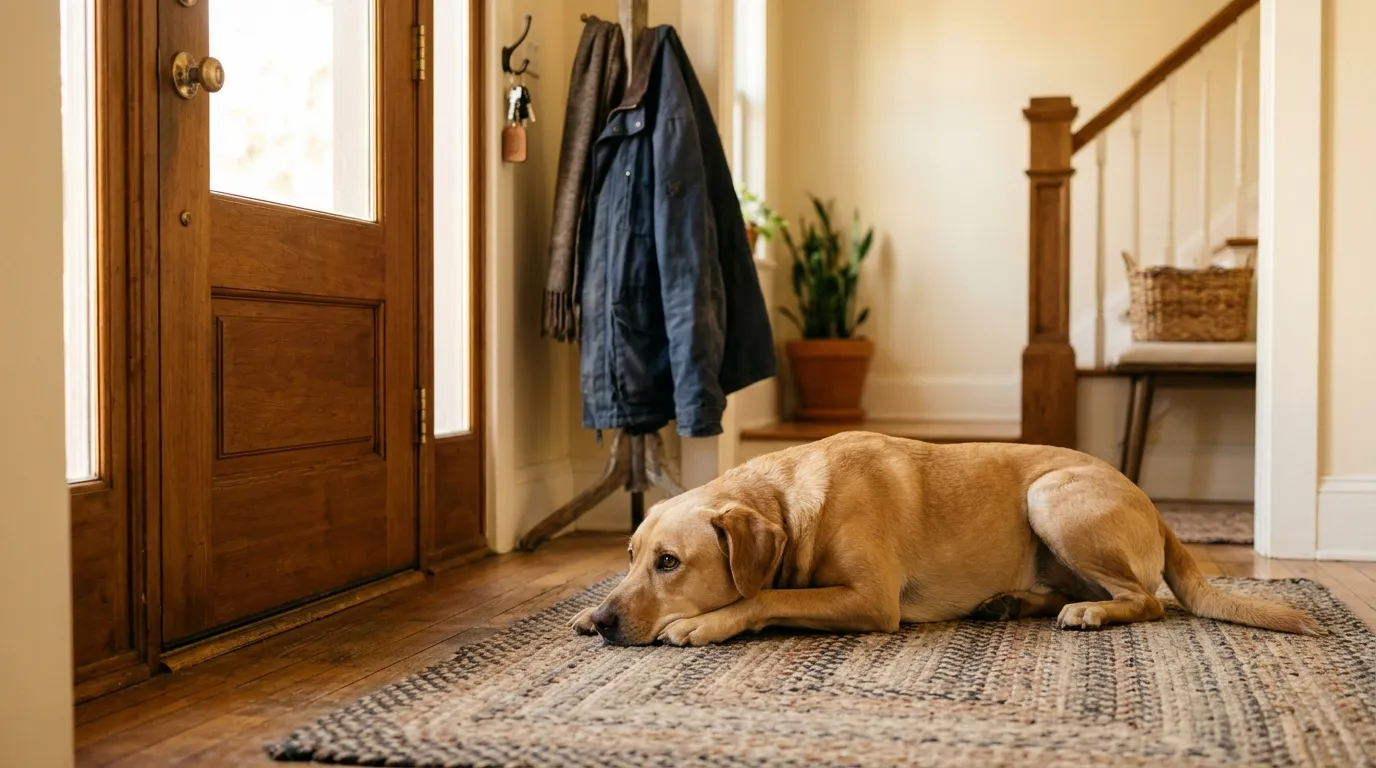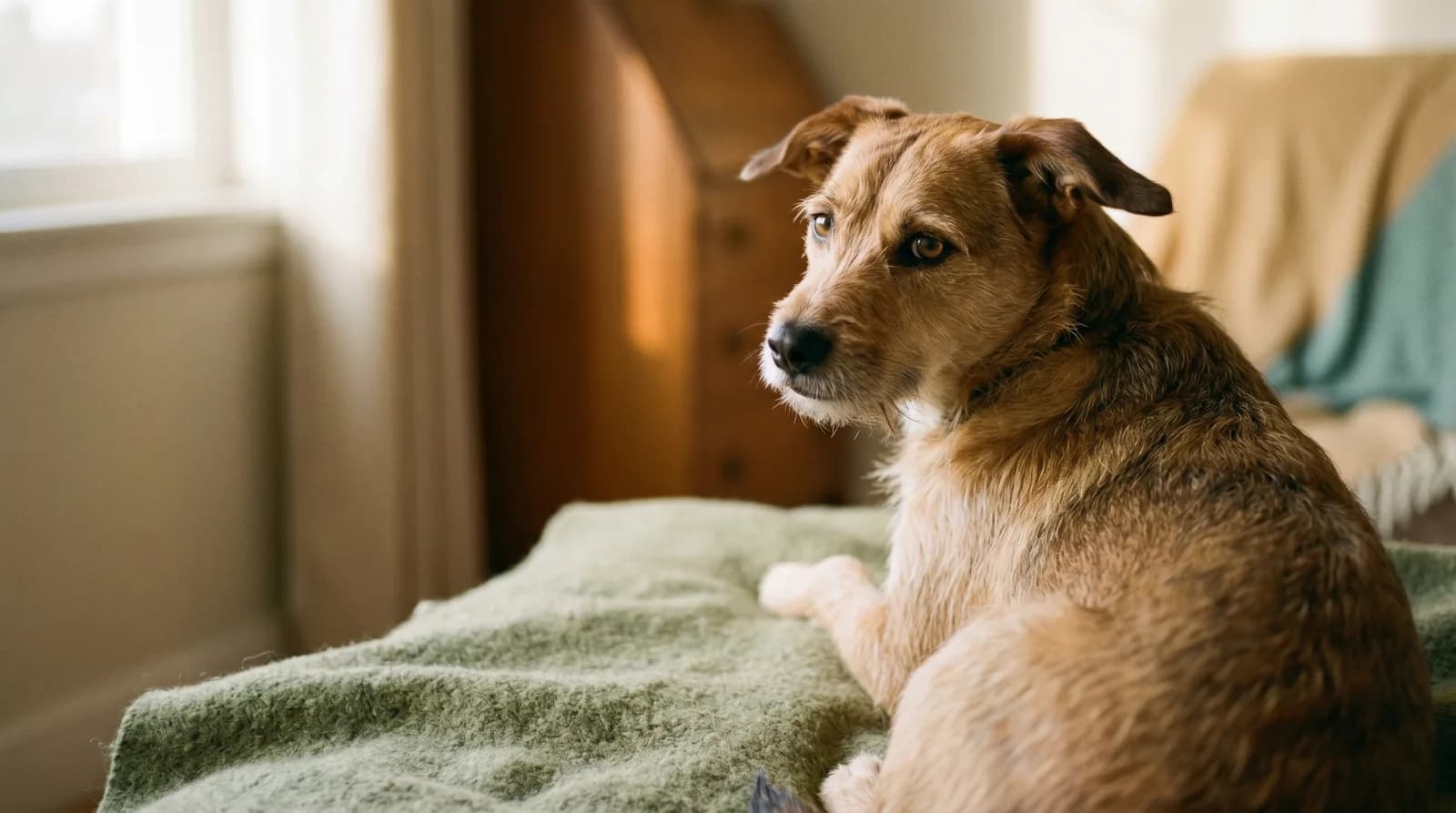
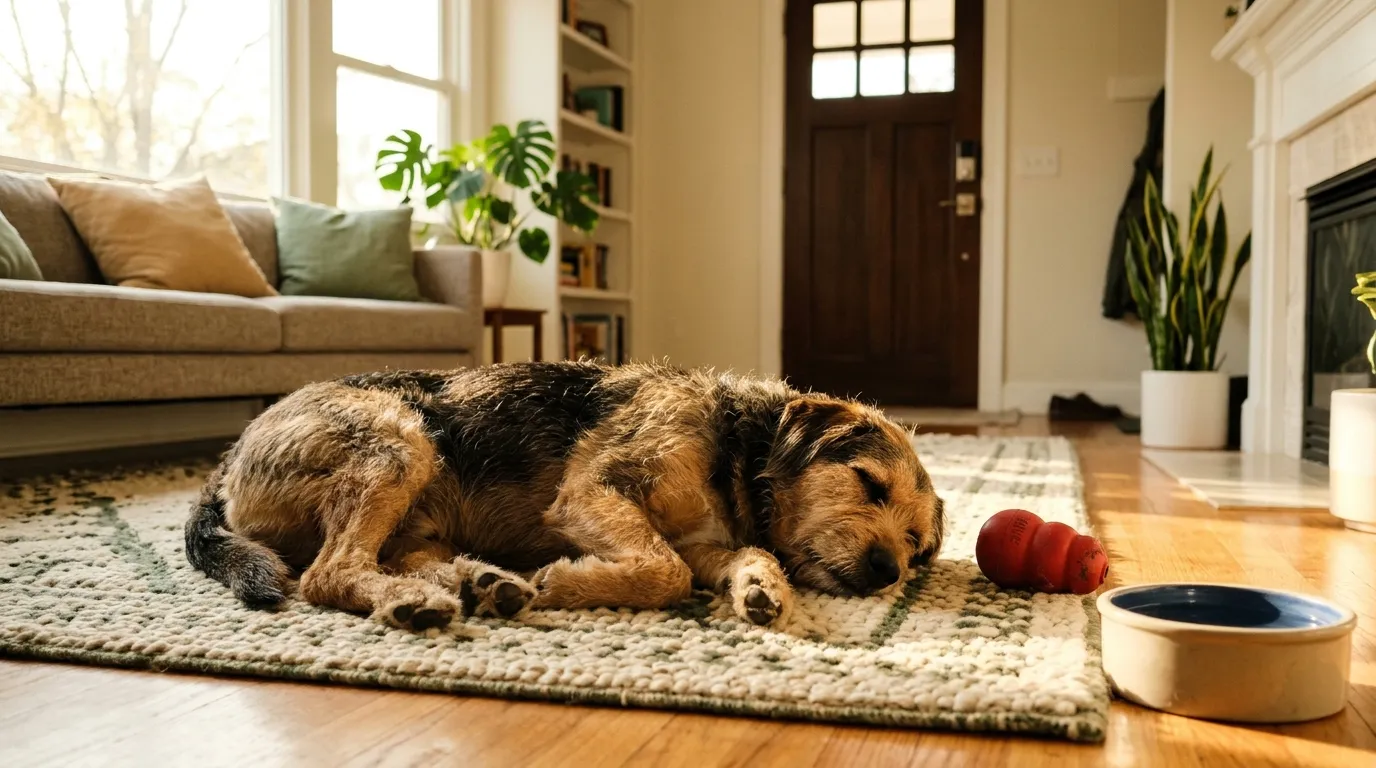
Most adult dogs shouldn't routinely be left alone for more than about four hours, which is the limit the RSPCA, Dogs Trust and PDSA all give. Puppies need far less: the American Kennel Club (AKC) suggests about one hour per month of age from three months, and it allows adult dogs more, up to six to eight hours with a bathroom break.
So the honest answer to how long a dog can be left alone depends on whose advice you follow, your dog's age, and, most of all, how your dog feels when the door closes. If you've been worrying about this before going back to the office, you're asking exactly the right question.
How long can a dog be left alone, according to welfare charities
Here's what each organization actually says, in their own words:
- RSPCA: "We recommend that you don't leave your dog alone for more than four hours; for puppies much less." (RSPCA, separation-related behavior). Its general care page adds the line I'd tape to every fridge: "Never leave your dog alone long enough for them to become distressed." (RSPCA, company)
- Dogs Trust: "Generally, if they're relaxed, we'd recommend a maximum of four hours on their own," and if you'll be out longer, "it's best to organise for someone to pop in." (Dogs Trust, separation anxiety)
- PDSA: "Four hours is the longest that dogs should routinely be left alone for but every dog will be different." It adds that four hours "would generally be too long for a very active, young puppy but might be fine for an older dog." (PDSA, preventing separation anxiety)
- AKC (US): for dogs over six months, a "maximum 6-8 hours," and "even adult dogs shouldn't be home alone for much longer than six to eight hours without a chance for a bathroom break." (AKC, leaving a puppy alone)
Where they differ
The three UK charities agree on four hours. The differences are in the small print:
- Dogs Trust ties its four hours to a dog who is relaxed. For a dog who is anxious about being left, it says "Ideally, no," because "Separation anxiety will get worse if you keep leaving your dog alone."
- PDSA says "routinely," and accepts that there might be "the occasional time" you need to leave your dog for longer.
- The RSPCA is the strictest on puppies and adds the distress rule, which can mean far less than four hours for some dogs.
- The AKC sets a much higher ceiling and frames it mostly around the bladder: how long a dog can physically hold it.
That last point is the real gap. Being able to hold it for six hours doesn't mean a dog is comfortable for six hours. A dog who paces and whines for most of the afternoon has gone past his limit, whatever the clock says.
Puppies vs adult dogs: a table by age
The AKC gives the age-by-age hours. The UK charities don't give a number per age, so the third column shows what they say instead.
| Age | AKC: time alone | What UK charities say | What to focus on |
|---|---|---|---|
| Under 10 weeks | 1 hour | RSPCA: "for puppies much less" than four hours. RSPCA toilet training: take puppies out "every 45 minutes to an hour, depending on the puppy's age" | Short moments in another room while you're home |
| 10 to 12 weeks | 2 hours | Same as above | Brief trips out of the house, coming back before he's unsettled |
| 3 to 6 months | About 1 hour per month of age (3 to 6 hours) | PDSA: four hours "generally too long for a very active, young puppy" | Building time alone slowly, with someone to let him out midday |
| Over 6 months | Maximum 6 to 8 hours | RSPCA, Dogs Trust, PDSA: about four hours, routinely | Calm absences he can handle, with breaks on long days |
Two things to keep in mind when reading the table. First, the RSPCA notes that dogs "don't have full bladder capacity until they are approximately 12 months of age," so a six-month-old who can technically hold it may still be pushing his limit. Second, the AKC hours describe the most a puppy can manage, not a starting point. PDSA suggests starting by leaving the room briefly and then to "gradually build up to spending more time away from your puppy."
Older dogs can need shorter stretches again, especially if they need to go out more often or have a health condition. Your vet is the best person to tell you what your senior dog's body can manage.
Signs your dog is alone for too long
Your dog's behavior is a better guide than any number. According to the RSPCA, "Research suggests that 8 out of 10 dogs find it hard to cope when left alone." Signs to look for, taken from the RSPCA and Dogs Trust lists:
- Chewing or scratching near doors and windows
- Barking, howling or whining (often the first you hear of it is a neighbor mentioning it)
- Peeing or pooping inside when he's otherwise house-trained
- Pacing, trembling, panting or drooling
- No interest in the food toy or chew you left him
- Spending a lot of time by the door you left through, or looking out of windows
- A very over-the-top greeting when you come home
Many of these happen when nobody's watching. A cheap home camera on your phone shows you what really goes on: a dog who naps for three hours and then starts pacing around hour four has told you exactly where his limit is today. If you're not sure whether what you see is stress, the signs of anxiety in dogs guide walks through the body language.
If he's struggling within minutes of you leaving, the issue is less about hours and more about being alone at all. That's separation anxiety, and our guide to separation anxiety in dogs explains what's behind it.
Options when you need to be gone longer
Most people can't be home every four hours, and that's okay. PDSA lists several ways to break up a long day, and Dogs Trust suggests the same mix for anxious dogs:
- Pop home at lunch, if your commute allows it. Even 20 minutes for a toilet break and a sniff around the block splits a long day in two.
- A neighbor or friend who checks in. This is often the cheapest option, and a familiar face can be easier for a sensitive dog than a stranger.
- A dog walker for a midday walk. In the UK, PDSA points to the National Association of Pet Sitters and Dog Walkers to find one.
- A pet sitter who comes to your home and stays a while. This suits dogs who find new places or other dogs stressful.
- Doggy daycare. PDSA reminds you to keep vaccinations up to date because there will often be more than one dog. Daycare works well for sociable dogs, but a busy group all day can be a lot for a dog who's nervous around other dogs, so try a short day first.
- Take him with you when you can, to a dog-friendly office, a friend's house or on errands.
A mix usually works best: a walker two days a week, a neighbor on another, and working from home the rest.
How to help your dog cope with longer absences
Time alone is a skill your dog learns, and most dogs get better at it with patient practice. The approach that works is to keep absences shorter than the point where he gets upset, then add time slowly once he's calm. Our separation anxiety training schedule shows what that looks like week by week, including when to step back.
How fast it goes depends on your dog. Some move along quickly, others need months to get past the first half hour, and both are normal. Before a longer absence, a good walk and a calm routine help, and so does leaving him something to chew in the spot where he likes to rest.
If he's struggling with even short absences, you don't have to figure it out alone. You can take the free quiz and see how the plan works for separation anxiety: your coach makes a week-by-week plan around your dog's starting point and your schedule. And if you'd rather see a specialist in person, our page on separation anxiety trainer cost lays out what that costs.
This is training guidance, not veterinary or medical advice. If your dog injures himself when left alone, or the change in his behavior came on suddenly, please talk to your vet.